Category Archives: Music

Rome Fortune on his debut album, dinner with Oprah and life after rap

rome-2-22-2016-1200x630

“On his debut album, Rome Fortune raps that he refuses to be pigeonholed.

It’s a straightforward message, but also something that has been evident in his ever-growing body of work. When he broke through in 2013 with Beautiful Pimp, Fortune unspooled his laidback lyricism over beats by Atlanta’s then-dominant Hoodrich Production Group (Dun Deal, Childish Major, DJ Spinz, C4) and established himself as part of the “New Atlanta” wave that was redefining the city’s rap scene. And while he’s at ease collaborating with the likes of Young Thug, iLoveMakonnen and OG Maco, he’s consistently looked outside of his city — and rap entirely — for collaborators, recording with Four Tet, Toro y Moi, Suicideyear and others…

With Jerome Raheem Fortune due out on February 26 via Fool’s Gold, we caught up with Fortune about the album, his unique relationship with his fans and his plans for a life after rap.”

Read more at FACT Magazine.

Bryson Tiller presents his evolution of rap and soul at Fillmore

img_4481

“The past decade of rap and R&B has been marked by the hybridization of both genres: rappers who sing, singers who rap, and, in the case of T-Pain, a “Rappa Ternt Sanga.” If T-Pain and Kanye West opened the door for this type of crossover, and Drake knocked the door down, then newcomers such as Bryson Tiller are walking through the Kool-Aid-Man-size hole left in their wake.

So although Tiller is not the first to bring rap sonics to R&B songcraft, he has been one of the best at branding. His debut album, “Trapsoul,” is also a self-described genre: Southern street rap meets soul, with less time spent in the trap and more time spent in the bedroom. On Sunday night, Tiller brought the “Trapsoul” movement to the Fillmore Silver Spring, performing about an hour of material for a sold-out, grown-and-sexy crowd.”

Read more in the Washington Post.

She may not know it all, but Alessia Cara knows how to put on a show

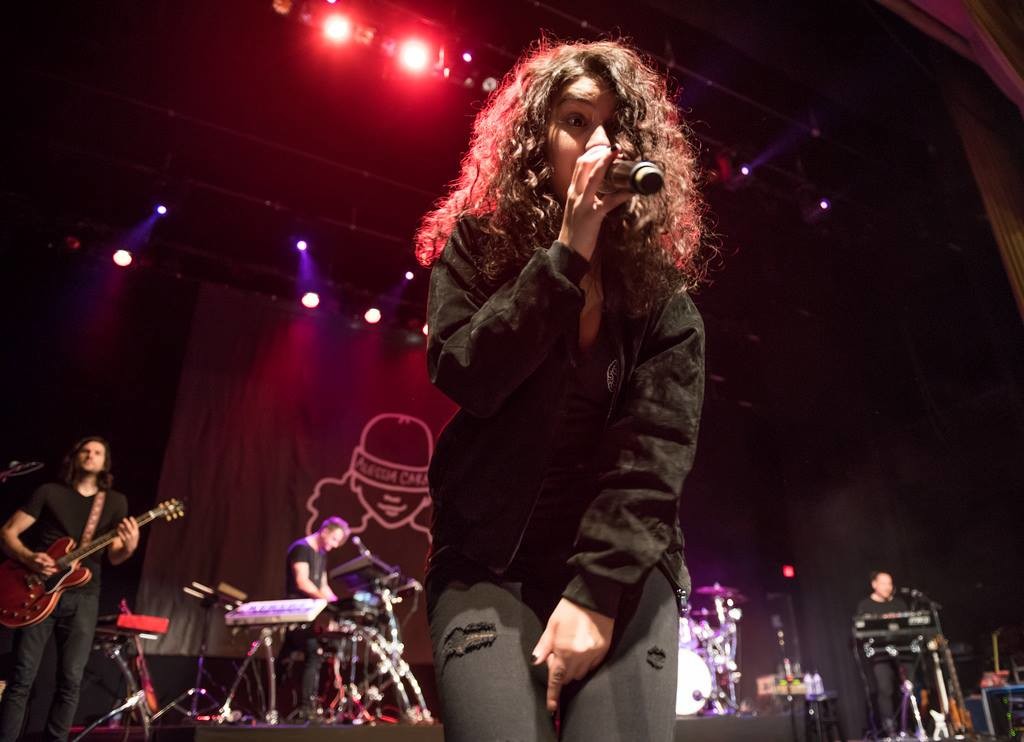
alessia-cara-lincoln-theater-07-1024x742

“No blizzard is going to stop us this time,” Alessia Cara promised a sold-out crowd at the District’s Lincoln Theatre on Saturday night, after postponing the show because of January’s winter storm. True to her word, inclement weather — and a voice worn down by her first headlining tour — would not stop Cara, who captivated a youthful crowd with an hour of new-school, blue-eyed soul.

The Lincoln adds a touch of glamour and grandeur to any concert — Cara’s was originally scheduled for the 9:30 Club — but she wasn’t having it. Wearing black basics and ripped black jeans, she bounced across the stage as if she were still singing in her bedroom, as if she were any teenager in the audience.

Read more in the Washington Post.

Post Malone’s underage, suburban crowd was a perfect match for him

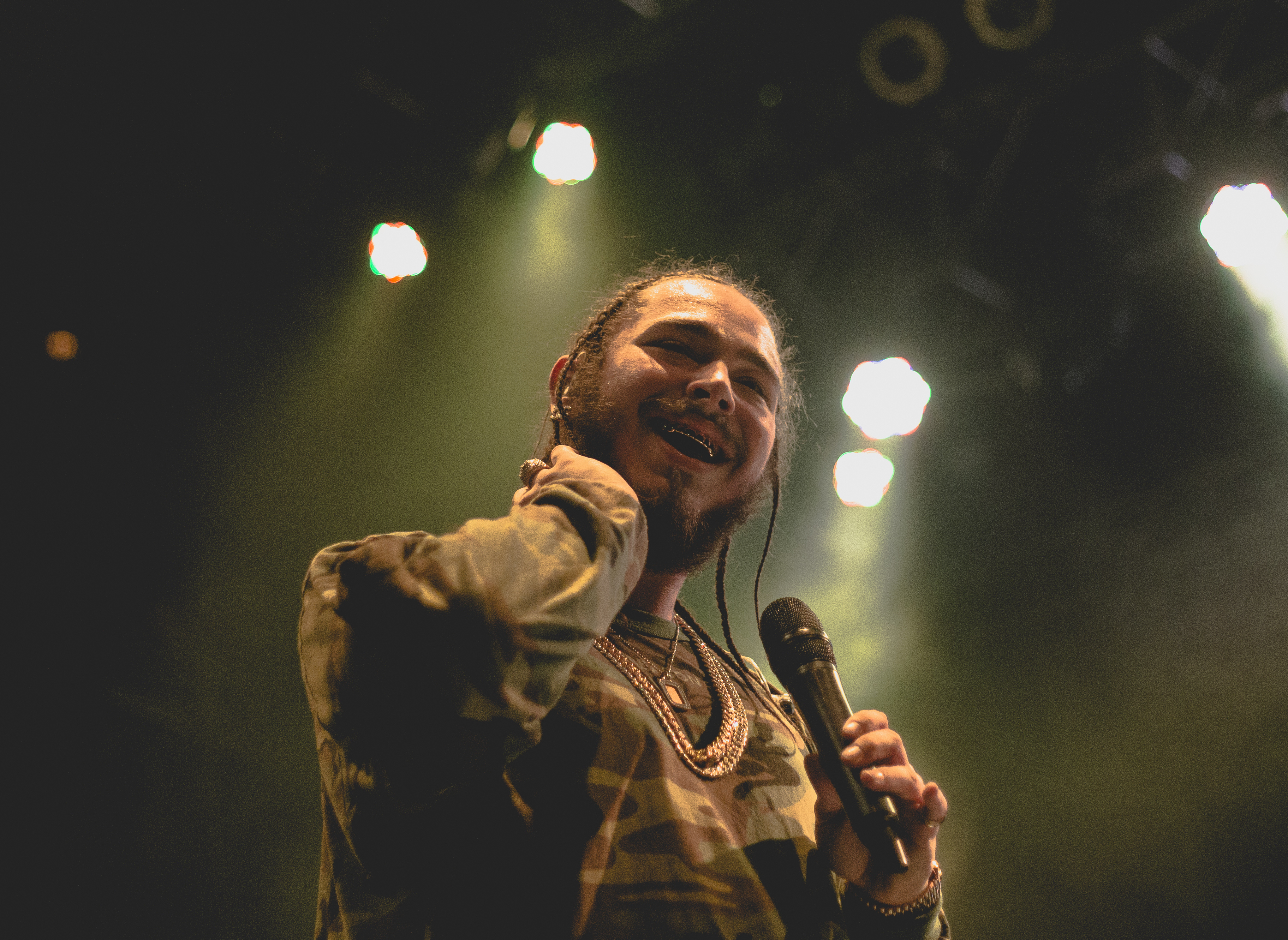
post

“On Friday night, the Fillmore Silver Spring hosted the “Welcome to the Zoo” tour. Ostensibly named after headliner Fetty Wap’s Zoo Gang collective, “Welcome to the Zoo” also served as a warning of what was to come.

As the sold-out crowd made its way into the venue, the scene was set: a mostly underage audience comprised of hundreds of teenage girls in their summer-festival attire, despite the freezing weather; their male counterparts seemed content to be cool while warm, layering jackets over throwback jerseys. After breaking through to the main floor, elated concertgoers proceeded to party, human chains snaking their way through the crowd as kids ping-ponged into each other like drunken toddlers.”

Read more in the Washington Post.

Wet has plenty of buzz, but can’t keep the U Street Music Hall crowd quiet

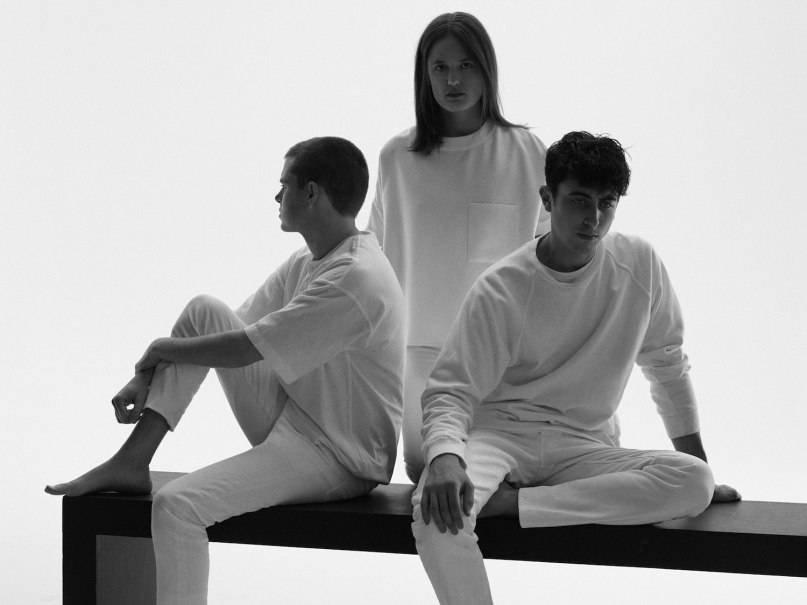
wet-band-pop

“Washington’s snow emergency may have been lifted Wednesday night, but the city was still not back to normal. Buses were delayed, parking was sparse, and every intersection presented a new challenge made of snow, sludge and ice. But after being snowbound for a few days, none of that could keep a sold-out crowd away from U Street Music Hall to see Brooklyn three-piece Wet…

On Wednesday, though, the sound felt more like background music for conversations, of which there were plenty, thanks to a talkative crowd. It seems that U Street Music Hall has replaced the Rock and Roll Hotel as the venue where Washington’s youths go to talk over buzz bands.”

Read more in the Washington Post.

Personal favorites 2012: Music

I’m dusting off the ol’ personal site for Yet Another Best Of 2012 list. I understand the criticism of such lists — that they’re masturbatory and/or arbitrary, they reinforce conventional wisdom, etc — so rather than crafting a few Top Tens (as I originally intended), here are some of my favorite songs, albums, artists, and musical trends of the year.

R&B of all flavors

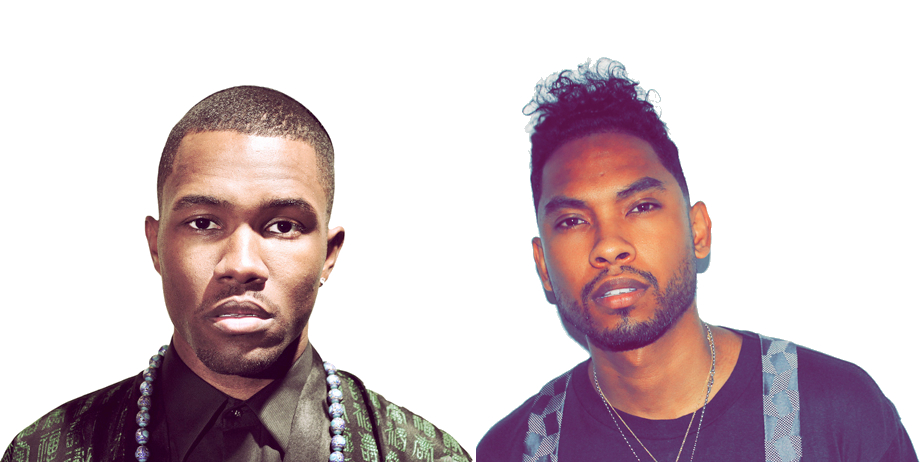
Last year, the debuts of artists like Frank Ocean and The Weeknd resulted in heaps of chin-scratching think pieces about “hipster R&B” (or worse “PBR&B”). Ocean’s triumphant Channel Orange, and to a lesser extent, Miguel’s impressive Kaleidoscope Dream, continued to feed the “state of modern R&B” discussion, which is as boring to me as the related and equally asinine “real hip-hop” discussion. Genres are only useful as ways to ease description, preventing every music conversation from devolving into talk of “excessive vamping” and other music genome qualifiers. Genres aren’t boxes, and great music doesn’t usually start from a conceptual standpoint (“I’ll make X but use Y instead of Z”).

There is room in R&B for albums like Channel Orange and Kaleidoscope Dream, as there’s room for Jeremih’s sultry, R. Kelly-indebted Late Nights with Jeremih or How To Dress Well’s gauzy, deconstructionist Total Loss. And there’s always room for Rihanna’s empty-vessel hit parade: Unapologetic is her latest collection of “Good Girl Gone Bad” anthems, delivered on schedule and with corresponding media frenzy.

R&B is thriving in both the mainstream and the underground. Two of the best pop songs of the year, Usher’s Diplo-produced ‘Climax’ and Justin Bieber’s Timberlakish ‘Boyfriend’ are steeped in very different traditions (even if the respective albums didn’t live up to the promise of the lead singles). Meanwhile, vocal talents like Nina Sky and Solange Knowles, producers like Two Inch Punch and Nguzunguzu, and electronic duos like AlunaGeorge and Evy Jane continue to push and pull the form in exciting new directions.

Lana Del Rey

It’s hard to believe that the blogosphere furor over Lana Del Rey’s music industry machinations happened over a year ago. I will admit that my initial review of Born To Die was far from charitable; acknowledging a backlash doesn’t always prevent one from getting caught up in it.

After nearly a year of debating and discussing the woman formerly known as Lizzy Grant, I’ve come around on Born To Die. As a mea culpa, here’s how I feel now (via my blurb for FACT’s best albums list):

The debut album from the most divisive pop star in some time did nothing but further polarize the conversation. Unfortunately, the conversation usually revolved too much around the idea of Lana Del Rey and not the music of Lana Del Rey. Whatever your opinions on retro-fetishism and her “gangsta Nancy Sinatra” PR spin, Born To Die is a phenomenal accomplishment: 15 songs (including bonus cuts, but not counting the expanded Paradise edition) with few if any missteps, a malleable but distinct voice, a well-oiled pop soundtrack that seamlessly fuses its many influences, and a pair of zeitgeist-defining songs (‘Blue Jeans’ and ‘Video Games’). When was the last time a record — and a major label debut, at that — could say all that?

Rappers who happen to be gay (not “queer rap”)*

Let’s get this out of the way: Mykki Blanco, Le1f, Zebra Katz, Azealia Banks, and Angel Haze are young, black, and queer — but appending “Gay/bi/queer rapper” to every mention of their names is ghettoizing and reductive (not unlike predecessors “female rapper” and “white rapper”). As artists, their sexuality is an intrinsic part of their work, but it does not define it. Grasping at straws, one could point to their reliance on electronic dance music-friendly beats, but in a year that saw Hudson Mohawke producing for Kanye and Little Dragon working with Big Boi (to name just two examples), that’s not unique to this group.

In the mind-numbingly hetero-normative world of hip-hop, openly gay rappers have had a certain novelty to them.** But the time of novelty is over. Each of these artists has proven that their sexuality is not some sort of gimmick (a ridiculous double standard), and that they’re individual artists, forging their own paths. Mykki Blanco’s ‘Wavvy’, Le1f’s ‘Wut’, and Zebra Katz’s ‘Ima Read’ share certain signifiers, but they all come from very different places. For Azealia Banks and Angel Haze, the fight for equal footing seems doubly hard, but neither seems content to be “the next Nikki” or “the next Kim.”

Mainstream hip-hop is as top-heavy as ever: there’s Jay-Z, Kanye, Drake, Rick Ross — and then everybody else. For her part, Nicki Minaj seems less and less concerned with actually rapping, while Lil Wayne has kick-flipped his way into irrelevance. The rosters of MMG, YMCMB, and GOOD are loaded with middling talent, and despite Kendrick Lamar’s star-making debut, the rest of Black Hippy are far from sure things. A$AP Rocky faceplanted on Long.Live.A$AP, and don’t get me started on Trinidad Jame$. Hip-hop is in dire need of rappers with personalities and identities, and these new talents have both in spades. They also just “happen to be” gay.

* I realize that grouping these artists together is part of the problem, but here we are.
** The largely-positive response to Frank Ocean’s “coming out” was a step in the right direction.
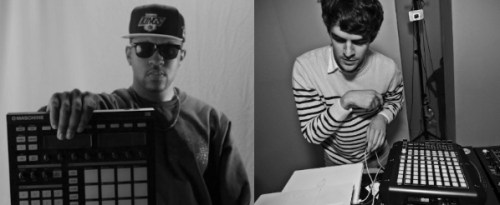
Ubiquitous producers: Mike WiLL Made It and Ryan Hemsworth

After emerging in 2011 with the monstrous ‘Tupac Back’, Mike WiLL Made It had the type of 2012 that Lex Luger had in 2010/2011, scoring more than his share of mainstream hits with a melodic, synth-heavy Southern style that is equal parts trap menace and drugged-out ambience. The highlights include ‘No Lie’ (2 Chainz and Drake), ‘Turn On The Lights’ (Future), ‘773 Love’ (Jeremih), and a pair of moody strip club anthems in ‘Bandz A Make Her Dance’ (Juicy J) and ‘Pour It Out’ (Rihanna). He also received a credit on ‘Mercy’ (who didn’t?), and produced tracks for Gucci Mane, Young Jeezy, French Montana, and Brandy.

Mining similar sonic space (but in less commercial avenues) is Canadian wunderkind Ryan Hemsworth. The prolific producer dropped a pair of intriguing EPs (the self-released Kitsch Genius and Last Words for Weditit), but his calling card remains sublime edits of hip-hop and R&B tunes. Subtle, charming, and creative (Chrono Trigger samples, anyone?), his remixes of Frank Ocean’s ‘Thinkin Bout You’, Tinashe’s ‘Boss’, and Jeremih’s ‘773 Love’ (as mentioned, produced by Mike Will) kept popping up in mixes and podcasts, of which he assembled a dozen himself.

For both producers, the test for 2013 will be whether or not they can continue growing as artists, avoiding the pitfalls of establishing and relying on a “signature sound.” True masters are always surprising; when was the last time Kanye pitched-up a classic soul sample?

Can't-miss events at DC's Forward Festival

Today marks the start of the Forward Festival, DC’s own five-day celebration of electronic music, art, and culture. Now in its fifth year, Forward’s lineup is arguably its best yet, with wide-ranging events staged in venues across the city. Not just a music festival, Forward also features educational panels, workshops, and film screenings. If you bought a festival pass and plan to devote the rest of the week to Forward, you’re in for a treat. But what about those dabbling in the festival? Here are my picks for Forward’s standout events.

Wednesday

Even though the existence of monthly Moombahton Massives has lessened their sense of urgency, the party is still an essential part of DC’s homegrown genre. The 14th (!) edition of MM brings, as usual, Nadastrom and Sabo alongside Toronto’s Slowed crew, Torro Torro and Lucie Tic.

Thursday

While U Hall keeps the party going with techno pioneer Jeff Mills, my money is on something different, as Distal and DFRNT perform at Patty Boom Boom. Nothing says “forward” more than future bass DJs taking over a venue whose soundsystem usually pumps out reggae and dancehall.

Friday

Predictably, my pick for Forward’s best showcase isn’t house or techno, but bass. Head over to the Warehouse Loft for the type of lineup rarely seen in DC, including Freq Nasty, Silkie, B. Bravo, and the (underbilled) Jacques Greene. The $30 ticket is more than justified by the five rooms of music, live art, and dancers – both aerial and with fire, and the fun goes until 5am.

Saturday

Finally, it’s block party season! Join the Forward family at a private lot for a free party that features a host of DC’s up-and-coming DJs.

Sunday

If you’re still standing on Sunday night, keep an eye on Meltdown. It’s next to the Rock and Roll Hotel, the lineup is a closely guarded secret, and it’s free. As the Facebook event says, “Only the strong survive.”

The underground kings of Fade to Mind

If Night Slugs was the finest label of 2010, a case could be made that sister label Fade to Mind wore the crown last year. While not matching the output of the prolific London imprint in quantity, Fade to Mind has made a mark by documenting the most exciting developments in American club music.

The brainchild of LA’s Kingdom and Texas producer Prince William, Fade to Mind is more than a label: it’s a collective of like-minded artists who produce club music that maintains the rough edges of its underground origins. Fade to Mind doesn’t seem interested in “mainsteaming” these cultures as much as uniting underground scenes from LA to New York and all points in between.

After releasing a limited-edition, bootleg mix CD, Fade to Mind’s first official release was the superb Timesup EP by standard bearers Nguzunguzu. The EP is an exploration of mutated bass music that oscillates between sensual and creepy. The video for standout “Water Bass Power” features the off-kilter, aquatic weirdness that defines seapunk.

New Jersey’s MikeQ has become synonymous with the the recent re-emergence and popularity of ballroom music. Fittingly, his first major release, Let It All Out, was Fade to Mind’s second. The EP is an introduction to vogue staples like the Ha beat and speakers like Kevin JZ Prodigy; it even includes a remix by genre originator Vjuan Allure. Continuing to delve into ballroom, the label just dropped a free EP from Massachusetts producer Rizzla, who, along with spinning the Ha (“Badmind Ha”), takes on tropical rave (“Psychoton”). In true ballroom style, “Dick” is a sexed up club track based on a Lil’ Kim sample that you can figure out from the title.

[wpaudio url=”/wp-content/uploads/2012/04/03 DICK.mp3″ text=”Rizzla – Dick” dl=1]

Fade to Mind hasn’t stopped there, also releasing an EP by the label’s lone European (for now): Gremino. The Finnish producer’s Let’s Jack is a percussive, aggressive take on techno and grime. The breakbeats on “Lush” shake foundations and the midrange pulses on the title track are haunting. Rounding out the collective’s lineup are artists Total Freedom, Cedaa, Clicks & Whistles, and Fatima Al Qadiri, collaborators who will hopefully be releasing music through the label soon.

Want to hear what Fade to Mind is all about without going to their LA-based monthlies? These twin mixes from the label heads do the trick. Just rest assured you’ll be hearing more from Fade to Mind sooner than later.

[wpaudio url=”http://fadetomind.net/audio/ftm_mix_001.mp3″ text=”Prince William – Fade to Mind Mix 001″ dl=1]

DC's Lenorable releases spooky new EP "The Prince"

Lenorable is part of DC’s burgeoning post punk scene, balancing out the shoegaze sensibilities of contemporaries of Screen Vinyl Image and Washerwoman with chilling cold wave. Their latest effort is a Kickstarter-funded EP entitled The Prince, inspired – appropriately – by a visit to Edgar Allen Poe’s Baltimore grave site. Nevermore Furthermore, each of the EP’s three songs is thematically derived from one of Poe’s works.

The title track, a rumination on The Masque of the Red Death, is powered by an angular guitar riff and Lisa Reed’s haunting vocals (including the staccato “pity isn’t welcome here / fortune brings certain fear”), and is accompanied by a simple but effective video.

The nearly seven-minute long “Ligeia” follows suit, amping up the drama while surprisingly danceable (or sway-able, as the case may be). Rounding out the EP is “Inquisition,” a fun-house opium trip based on The Pit and the Pendulum that is heavy on warped vocals but gently melodic. For this goth-tinged duo, Edgar Allen Poe proves to be a fitting muse. Lenorable celebrates the release of The Prince tonight at the Black Cat, where they’ll be joined by Last Tide and Dangerosa.

An introduction to ballroom beats with genre innovator Vjuan Allure

The ballroom community is an underground culture that harks back to days when gay dance parties were strictly private affairs. But don’t let the name fool you: these functions aren’t formal waltzes in black tie, they’re LGBT catwalk performances and battle dances set to a hyper-kinetic blend of electronic beats. “The music is very dramatic, very to the point,” says DC-based DJ/producer Vjuan Allure. “You don’t have time to warm up: you get out there and bring it, and the music comes out that way. As soon as it starts, it’s already hot.”

For most people, their experience with ballroom began and ended with Madonna’s 1990 hit “Vogue.” But like all underground scenes appropriated by mainstream provocateurs, the culture lived on and continued to evolve. Ballroom is currently undergoing a renaissance, as producers and DJs like Vjuan craft tracks for the function and beyond. And it all started about a decade after Madonna’s crossover hit.

Back in 2000, Vjuan Allure was playing a ball in Detroit. He had hauled cases of vinyl from the DC suburbs for the event, but was dismayed when the host only wanted to hear six songs. This was a tipping point. Vjuan had been frustrated with the scene’s musical stagnation, i.e. balls that played the same music, function after function. Upon returning home to Beltsville, Maryland, Vjuan remixed seminal hit “The Ha Dance” by Masters at Work (the original is below). With that, the ballroom beats genre was born: music written and remixed specifically for the ballroom, and for the exciting vogue femme style in particular. “I started making hot beats, period,” says Vjuan, “and the ballroom went along for the ride.”

Vjuan Allure is the epitome of the DJ-as-world traveler. Born in Puerto Rico, he grew up between New York and Atlantic City. A dancer first, he started clubbing in New York around when he was 11 years old; with his mother traveling for business, he stayed with an aunt who was more liberal towards his nighttime activities. Despite his young age, he befriended dancers and bouncers, immersing himself in the scene. In college, he moved to Naples, Italy as part of a cultural exchange program, and his wealth of stockpiled music began his DJ career. “They wanted me to play hip hop, which is fine, but I wanted to play house,” he says. He started to build a following, but had to come back to the states as things were taking off. Almost on cue, he returned to Italy in 2002, just as his career was taking off stateside.

On the second day back in Italy, Vjuan had a revelation in the club. “That beat sounds real familiar,” he thought. “And then my voice came on.” Spinning his head in time with the record, he saw his name and realized the extent of his growing popularity. What followed has been a career as a leading figure in the re-energized ballroom scene.

Although he lives just outside of DC, Vjuan has recently found greater affinity to the music of Baltimore. Vjuan has worked with Scottie B, remixed for Unruly Records, and became a resident at Ultra Nate’s Deep Sugar party. “When I heard Bmore club, I was immediately in love with it.” Although club music isn’t played at balls, there is similarity in the hard-hitting, non-stop beats; Vjuan’s remix of “Lose Your Fvkin Mind” by Schwarz is a perfect example of this symbiosis.


After creating the ballroom beats genre over a decade ago, the underground is again breaking through. But instead of Madonna, the heralds of this crossover have been DJs like Kingdom and MikeQ and labels like Night Slugs and Fade to Mind. Vjuan provided a remix for MikeQ’s debut EP on Fade to Mind, and his remix of Bok Bok’s grimey “Silo Pass” will be released this year. His frenetic tour schedule will bring him to Japan, Sydney, London, Italy, and Miami, but rest assured, no one will be asking to hear hip hop or the same old ballroom standards: “They’re bringing me for me.”

[wpaudio url=”https://postcultural.com/wp-content/uploads/2012/02/Vjuan Allure – Exclusive Mix for Postcultural.com.MP3″ text=”Vjuan Allure – Exclusive Mix for Postcultural” dl=1]

1. Throw Ya Hands – Vjuan Allure
2. En Na Er Gi Bounce – Vjuan Allure
3. Gurlz – Vjuan Allure
4. Getting In – Vjuan Allure
5. 10,000 Screams – Vjuan Allure
6. What Are You Lookin At – Vjuan Allure
7. Colon Loads – Vjuan Allure
8. Lose Ur Fvkin Mindz – Schwarz (The Vjuan Allure Lobotomy Mix)
9. Wanna Carry – Vjuan Allure
10. Big Nasty – Vjuan Allure