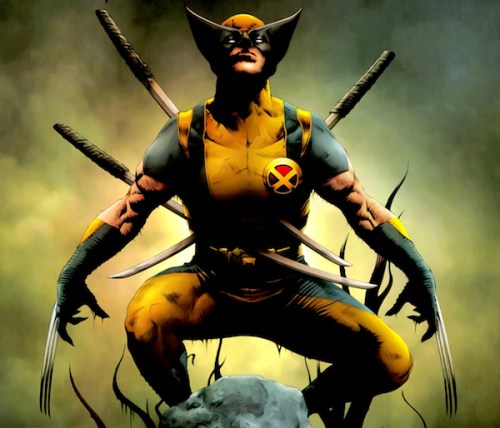
Ready for the weekend #12

I’ll keep this simple: Happy Friday the 13th.

Photo courtesy Photography Served, via @FFFFound

The Plan

  • Friday: The most fun you can have for $10 (while keeping your clothes on): it’s synth pop night at Subterranean A, with Adventure and personal favorites Body Language.
  • Saturday: Another season of roller derby comes to a close with the Season 5 Championship at the Armory (let’s go, Scare Force One). It’s also Nouveau Riche night, with a free Smirnoff bar until 11 (let’s go, cirrhosis).
  • Sunday: Lykke Li sold-out 9:30, and if you have tickets, make sure to catch opener Grimes. No Love Lost is around the corner at Velvet Lounge; get on the bandwagon before NLL’s impressive summer plans.

The Soundtrack

Simple Things is a nu-disco duo made up of DJs Space Agent and Wally JoJo (government names Nicole Patten and Will Givens). They recently opened for Anoraak and In Flagranti at U Hall, and their image-consciousness and dedication to their craft are both impressive. Their “Machines That Sing” mixtape is an hour at la discoteca, including two takes on their namesake song. Check it out, and keep an eye on these two.

Music video revival: meet CANADA

During the 90s, the music video reached its pinnacle as an art form. Directors like Mark Romanek, Spike Jonze, Michel Gondry and Chris Cunningham established distinct visual styles, thanks to big budgets and bigger ideas. A successful career in music videos could even launch a film career, as it did for Jonze and Gondry; it was a great time to be a music video director! Inevitably, the bottom fell out: between MTV’s dwindling music video airtime and record company budget cutting, music videos went back underground.

Thankfully, the medium is too rich for something like “music industry collapse” to kill it. Just look at Barcelona’s CANADA: a trio of directors (Luis Cerveró, Nicolás Méndez & Lope Serrano) who are making some of the most innovative – and provocative – videos in over a decade.

Last year, the video for Spanish exotica artist El Guincho’s “Bombay” (directed by Méndez and produced by the collective) was a surprise hit. With El Guincho as Carl Sagan, the clip is a journey through the cosmos. A collage of found footage and surreal images, “Bombay” is teeming with sexual energy. While fleeting glimpses of breasts dominate the video (either painted, with sparklers, or au naturel), it’s more titillating than pornographic.

The brand new video for “Ice Cream” by math rockers Battles has the same vibrant style (on first viewing, I immediately thought of “Bombay”). Once again, CANADA goes for sexy, opening with a nude girl eating ice cream in a bath tub and including shots of girls licking things like pine cones. And don’t forget the climatic, ladies-only paint fight. The real fun in “Ice Cream” is found in CANADA’s playful use of double exposure. Watch out for a man cliff diving into a woman’s bikini, or a brilliantly choreographed sequence where a woman dances with herself.

CANADA is saving the music video, one clip at a time. Check out their gallery for more, but here is their effort for Scissor Sisters’ “Invisible Light:” another NSFW mind trip!

The Verge: Dawn Golden and Rosy Cross


Photo courtesy Jim Newberry

Despite the laborious name, Dawn Golden and Rosy Cross is the work of just one man: 24-year-old Chicago producer Dexter Tortoriello. Last year, Tortoriello garnered praise for his work as half of Houses (with partner Megan Messina). Houses’ quickly assembled All Night is ambient electronic music (chillwave, if you must): a very de rigueur mix of programmed drums, atmospheric synths and dreamy vocals.

As Dawn Golden and Rosy Cross, Tortoriello cuts through the gauzy haze of Houses with a scalpel. The instrumentation has the same starting point, but with dramatically different results. Rather than nostalgia, the tone here is paranoia; the music is more immediate, if a little uneasy.

Dawn Golden’s Blow EP opens with “On the Floor.” What starts as melodic and light turns unnerving (a shift captured by the creepy video), with pounding drums and white noise that is somewhere between static and screaming. Before the listener can decipher it, the song powers down – a 90 second introduction of things to come.

The standout track is “Blacks.” The song is driven by pneumatic, industrial percussion, which is juxtaposed by Tortoriello’s airy vocals and accents of precise strings.


Throughout the EP, programmed drums appear as skittering attacks, as on “Blacks.” On “Blow,” they make the song more ‘nightmare’ than ‘dream.’ On “White Sun,” the drums progressively consume more and more of the song’s oxygen, which has a piano melody on reminiscent of that on “Something I Can Never Have” (blame it on heavy doses of Nine Inch Nails in my diet, but it has the same melancholy feel).

[wpaudio url=”/wp-content/uploads/2011/05/White-Sun.mp3″ text=”Dawn Golden and Rosy Cross – White Sun” dl=0]

The instrumental “Lamont” sounds like a Houses song, but with the optimism of a Postal Service offering. The EP closes with “Black Sun,” a collage of piano, live drums, and natural ambiance that gives way to horns. Blow is only 19 minutes, but the songs have an addictive quality that demand repeat listenings. Houses introduced Dexter Tortoriello to the music world, but Dawn Golden and Rosy Cross better realizes his potential.

EP Roundup: Moombahton Edition

The moombahton movement continues, and while I can’t offer daily reviews (like some people), occasionally a few releases will come along that require special attention. On these three new releases, each moombahnista’s background shines through in service of personal, powerful tunes.

Pickster & MeloArizonaton

Pickster and Melo have held down the moombahton scene in Phoenix since the beginning. Together, the pair have had well-received songs on Summer of Moombahton and the Moombahton Massive III EP.

The Arizonaton EP opens with the soulful “Fat Booty,” which is built around the Aretha Franklin sample (“One Step Ahead”) that drives the Mos Def classic “Ms. Fat Booty.” Melo’s “Es Dificil” is a flip of a song by reggaeton performer De La Ghetto; this is the type of edit that only a DJ with deep reggaeton roots can pull off, which Melo has. Arizonaton has something for everyone, including the requisite moombahcore banger “Going Out to the Hardcore.”


Billy the Gent / Long Jawns / JWLSVibrate Chick

Billy the Gent is a producer to watch. Just a year ago he was killing ’em with wobbles and now he’s at the center of the moombahton scene. His secret? A firm grip on the zeitgeist and an easygoing, collaborative attitude; this is a dude everyone wants to work with.

With longtime collaborator Long Jawns, the Gent crafted “Vibrate” out of the Petey Pablo track of the same name. “Vibrate” is a perfect, booty-dropping peak hour track. Miami’s JWLS offers a remix of “Vibrate” and works with Billy on “Chick Like This.” The marching drums and gunshots on the latter are simply vicious; I want this song to play whenever I enter a club.


Philadelphyinz / Uncle Jesse / Obeyah8 Inches of Moombahton

May 19th is a special all-Moombahton edition of Tropicalismo in Philadelphia; 8 Inches of Moombahton marks the occasion.

Apt One continues to morph house tracks into smooth moombah ones. While David Heartbreak gave “Witch Doktor” a shot previously, Apt One’s take is superior. Skinny Friedman’s “Alison Brie Running in Slow Motion” is space-funk-moombahton, made even better by the best name I’ve seen in a while (knowing the reference helps). Obeyah gets to the heart of moombahton, slowing down “Like This,” while Uncle Jesse’s percussive “Art Attack” relies a little too much on the “bloodclot” sample.

Download: Arizonaton
Download: Vibrate Chick
Download: 8 Inches of Moombahton

To Hell and back with "Wolverine"

wolverine_001

Wolverine is very busy these days, appearing in a handful of X-books, leading the brand new X-Force, working in the Avengers, and anchoring a couple of his own titles. Continuity be damned, the Best There Is At What He Does is at the center of the Marvel universe for a reason: he’s a vessel for whatever violent, mysterious storyline a writer can imagine. In the first arc of the re-launched Wolverine book, he became a vessel of an entirely different kind.

“There’s two kinds of Hell. There’s the one down there with the devil and the fire and all that mess. And there’s the one up here. The one we make for ourselves.”
John Wraith

The first part of “Wolverine Goes to Hell” begins with a flashback: Wolverine meeting with former Weapon X member John Wraith, now a preacher in a small town. The two discuss the twisted path that brought these two killers to the church’s steps. On the topic of faith and hope, Wraith promises that Wolverine will be tested – foreshadowing Wolverine’s imminent journey.

Flashforward to three weeks later. Pastor Wraith tends to his flock, but someone – or something – is after him. He heads into the forest, automatic rifle in hand, finally confronting (you guessed it) Wolverine. But not the usual fun-loving Canuck: this version spews venom and fire, and Wraith knows it’s not his friend Logan – it’s Hell.

Meanwhile, Logan’s newest flame, Melita, is pursued by a different group of demons. She’s able to fend them off before being rescued by everyone’s favorite shapeshifter, Mystique. It is clear larger forces are at work. As a coda, Wolverine meets his first adversary in this story: Satan. The art by Renato Guedes and Jose Wilson Magalhaes paints a vivid image of Hell, here and throughout the series. Considering the viscera of Uncanny X-Force, the pair really have to work to capture this twisted vision of the underworld.

wolverine_001_032

“Everyone I ever killed is waiting for me. Waiting to tear me apart.” Wolverine

Satan intends to have fun torturing Logan’s soul, and admittedly, it’s been a long time coming. He’s killed so many that the burden of what awaits him (in this Judeo-Christian framework, at least) must be staggering. But Logan refuses to yield, despite the pain and anguish, fighting off whatever the devil sends at him. As it is in life, it is in Hell.

Above ground, Mystique and Melita form an uneasy alliance. Wolverine’s body is at large, and on a rampage: he gets to Yukio before the women can explain the situation. Luckily, help is on the way, from some guys who have experience with this sort of thing: the Ghost Riders. And as Logan’s soul faces one his deepest sources of pain – the loss of Mariko – another helping hand appears: Puck. Logan’s old Alpha Flight ally clues him in to the situation, the stakes, and what will be lost if he gives up. Not that giving up was ever an option.

“I deserve Hell. I deserve it all.”Wolverine

As Logan’s soul confronts the devil, his demon-infested body continues on a killing path, heading for Utopia and the X-Men. Chapter 3 illustrates these two journeys as parallels: the torment on Logan’s soul writ large on his friends and family. Seriously injuring Angel, Iceman, and Colossus, Wolverine is finally subdued by the Ghost Riders.

wolverine_004_020

In Hell, Logan confronts a different family: his father, Thomas Logan, and his would-be brother, Sabertooth. These confrontations, and what they mean for Logan’s psyche, are not fully developed; these two are just another pair of stepping stones – like Mariko – on his journey. Predictably, Logan defeats Satan and literally climbs out of Hell, seeking those that put him there and hurt his loved ones. He knows he’ll be back, and he’s found peace in that. But for now: revenge.

Logan is free of Hell, but demons still control his mind. A team of Cyclops, Magneto, Emma Frost, and Namor join the fray, with a score of “Plan Bs” in tow. Foreshadowed in the beginning of Chapter 6, Cyclops has developed plans to kill Wolverine for this very situation, plans which they intend to use. Under Magneto’s control, Wolverine’s life hangs in the balance (with a laughably bad panel by Daniel Acuña undercutting the drama).

wolverine_006_032

This is the final showdown: Logan’s soul has already beaten the Devil, but can he beat the demons that still haunt him, even as they lay waste to his mind? To do that, he’ll need every piece of his psyche: Wolverines, assemble!

wolverine_007_006

As the X-Men heavy hitters try in vain to put him down, Demon Wolverine won’t let up. One last ditch, non-fatal plan is proposed, with the X-Women who mean the most to him (and Emma) joining the battle being waged internally. Melita, Kitty Pryde, Rogue, and Jubilee don psychic shogun gear and get to work, but it’s an even better friend who will help save the day.

“This is the only way to save you from Hell, mein freund. We’ve got to burn these demons out… with some fire of our own.”Nightcrawler

The final chapter in the story is a powerful one. It’s romantic, dramatic, and even funny. The pieces of Logan’s mind are emblazoned on doors, their secrets held inside. “Sexual Fantasies,” “Hopes and Dreams,” “Reasons to Hate Myself,” “X-Men I’ve Had Sex With,” “How I Cheat At Cards:” this is Logan’s humanity on display. What else would be at the center than Jean Grey?

The cleansing power of the Phoenix requires loss: from the ashes and all that. To win this final battle, Logan must finally let Jean go. As his body is attacked with everything the X-Men have, he faces one last decision: does he want to live? In a reference to “Here Comes Tomorrow,” (New X-Men #154 and Wolverine #8 below for reference) the Phoenix saves the day, entreating Logan to live, letting go rage, revenge, and his own demons. But what fun would that be?

nxm-154-22

wolverine_008

wolverine_008_032

Album Review: Tyler, the Creator – Goblin

If Odd Future has taken over the world, Tyler, the Creator is the evil mastermind. Hip-hop needs provocateurs – NWA, Kool Keith, Eminem – polarizing artists that both shock and entertain. Tyler and Odd Future are the next in this line, set apart from their peers by their barely legal ages, Internet-age productivity and Wu Tang-like devotion to their brand.

Goblin is the collective’s first proper album, released on trendspotters XL. Continuing his conversation with his fictional/internal psychiatrist, as on Bastard, Tyler opens with a nearly seven-minute title track, a spoken-word diatribe about the downside of his meteoric rise (“I don’t even skate anymore, I’m too fucking busy.”). This isn’t new territory – see Kanye, Drake, Childish Gambino, etc. – but like those artists, Tyler has a well-developed image and style.

The Odd Future movement revolves around self-gratification, not breaking new ground. Tyler’s closest comparison is Eminem, with his odes to sexual violence, suicidal fantasies, and parental disappointment. Like Eminem, he reiterates the obvious to his critics: his lyrics are fictional, going as far to call out “white America” (the target of the first song on The Eminem Show). Tyler even adopts his cadence at times.

Tyler is all about contrasts and juxtapositions, reveling in dualities. Admonishing the listener one moment for taking him too seriously, and then grabbing them by the throat and forcing them to recognize him the next. First self-confident at his accomplishments in the last six months, and then suicidal over his existential, self-esteem issues. “Tron Cat” includes jazzy, la-la-la breaks: momentary respites from grimy negativity like “rape a pregnant bitch and tell my friends I had a threesome.”

Posse cuts present contrasts, as well. The swagged-out “Bitch Suck Dick” has the bombastic production of a Soulja Boy track, while “Window” is clouded and syrupy – a barely-there beat that lets the storytelling do the heavy lifting. Advance single “Sandwitches” gets a spit-shine and a proper release; the Odd Future anthem pairs Tyler with Hodgy Beats. The duo returns on “Analog,” one of Tyler’s smoothest songs yet. Companion pieces “She” and “Her” are Tyler’s unique attempts at ballads: nakedly confessional tales of high school love and loss. “She” features crooner and break-out candidate Frank Ocean, who shines, as usual.

Tyler is the first to admit that he isn’t the best rapper. His flow is lazy and repetitive at times, and he’s obsessed with the same topics. These are largely products of his age. Behind the boards, he already has developed a trademark sound: queasy, horror movie boom bap. His greatest pressure to improve will probably come from within Odd Future: standout track “Transylvania” is the only produced by someone else: Left Brain.

Goblin is a fine sequel to Bastard. Musically, they go hand-in-hand. Lyrically, Tyler’s work is informed by the last year and a half, as he joins his fame-challenged peers. No doubt, the album is uneven. But Goblin is another testament to Odd Future as the most exciting and vital artists of their generation. Bastard announced Tyler to the world. Goblin ensures that this is just the beginning.

Live: James Blake at the Rock and Roll Hotel

The Rock and Roll Hotel was the most ill-suited venue to host James Blake, as it did on Sunday night. The shoebox-shaped venue isn’t blessed with the best sound system (that would be U Street Music Hall) or even decent sight lines (like the Black Cat). Worst still, the venue is, as the Washington Post’s Chris Richards noted, the place “where 20-somethings pay to be seen (and heard) while the latest Pitchfork-approved talents try to justify their hype onstage.” For an artist like Blake, who makes minimal, down-tempo music, I was apprehensive about the show, to say the least.

Photo © Mike Katzif

Despite the venue’s many faults, the show was nothing less than superb, thanks wholly to Blake and company’s captivating performance. The former funeral home was at its most tomb-like, with a mostly appreciative, respectful crowd. Moments of pin-drop silence punctuated the set; Blake often had to whisper “thank you” before the crowd would reward him with boisterous applause.

As his self-titled album does, the set began with the clicks and pulses of “Unluck,” its discrete pieces seemingly dancing to their own drummers before gracefully fitting together. On “Give Me My Month,” Blake gilded the hymnal with jazzy piano flourishes, and followed it up with the instrumental “Tep and the Logic,” a B-side that features waves of tremolo guitars and not much else.

After a bit of a false start, the amiable Blake launched into “I Never Learnt to Share.” His lilting vocal harmonies resembled weeping more than anything. The song was the night’s first example of what “post-dubstep” might mean: a slowburning melody that gives way to unrelenting sub-bass and synths.

Throughout his set, Blake shifted from moments of sparse simplicity to ones of overwhelming, enveloping sound, and back again. After “I Never Learnt to Share,” the gentle fingerpicking of “Lindesfarne” followed a transcendent moment with a contemplative one.

Transferring Blake’s recorded works from the bedroom to the big room is no small feat, yet Blake and compatriots Rob McAndrews (guitar) and Ben Assister (percussion) handled it deftly. Performing “Klavierwerke” (off the EP of the same name) live was impressive on its on, with its Burial-esque dubstep groove, hi-hat click track, and sped-up, funky breakdown.

The set definitely pushed the limits of Rock and Roll’s sound system. Thankfully, the speakers popped only once, and a brief power outage provided a moment of levity, during “Limit to Your Love.” On that song, with its propeller bass and an beefed-up drum break, Blake has done to Feist’s ballad what Jimi Hendrix did to Bob Dylan’s “All Along the Watchtower” (admittedly on a much smaller scale).

Blake demurely closed the set with “Wilhelms Scream,” which had a crisper guitar and punchier sonics than the recorded version. Returning for an encore, Blake played a new, untitled song, solo with synthesizer. The church organ and “we can hope for heartbreak now” lyric ended the night on a poignant note. The Rock and Roll Hotel wasn’t perfect, but James Blake was, living up to the hype (and then some).

Ready for the Weekend #11

Hopefully you survived Cinco de Mayo (aka St. Patrick’s Day’s lame cousin) and you’re ready for the weekend, because it should be a good one.

Image courtesy but does it float via @FFFFound

The Plan

  • Friday: It’s a weekend of sold-out shows. Tonight is Tame Impala and Yuck. Failing (or in addition to) that, Wolf + Lamb and Soul Clap hit U Hall in support of their DJ Kicks mix; it’s an important night for dance music.
  • Saturday: Next up on Shows You Should Be At: CSS and Sleigh Bells co-headline at 9:30 Club. The perfect after-party, KIDS, is right down the street at DC9.
  • Sunday: Two Next Big Things visit the nation’s capital: Donald Glover / Childish Gambino is at the Black Cat and James Blake is across town at the Rock and Roll Hotel. Predictably, both have been long sold out.

The Soundtrack

Low-Bee made his bones as half of Hollertronix with Diplo, so you know his party-starting skills are top notch. On Heavy Warmup Vol 6, Bee gets busy with some old school hip hop jams before breaking into some new school dancehall vibes. The perfect soundtrack for a BBQ this weekend.

From guilty pleasure to must watch: thoughts on "Justified"

When I wrote about Justified before this season, I called it a guilty pleasure. It was another procedural-serial hybrid with a main character bigger than the institution he’s a part of (a post-Wire faux pas), albeit taking place in a unique setting. But after the culmination of the show’s second go-around in Kentucky’s Eastern District, I’m reconsidering that designation.

The second season of Justified built upon the solid foundation of the first, literally picking up right where the first left off. Raylan and Boyd became further entwined, as Raylan’s Miami cartel problems became Boyd’s: a cartel member deprived Boyd the privilege of killing his father Bo. Surprisingly, this issue was cleared up rather quickly, putting to bed a storyline that began when Raylan capped Tommy Buck in the pilot.

Raylan sorts through the paperwork and testimony that results from one of his bloodbaths, getting back to marshal business, and Boyd continues life on the straight-and-narrow. Without his flock (who were summarily killed by Bo’s crew), Boyd returns to the mines, content to live a humble existence from the comfort of Ava’s attic. Neither Raylan nor the audience is sure whether Boyd has honestly turned over a new leaf or not, the type of complexity the first season offered.

The second season’s major plot line concerned the Bennetts, a local crime family that shares a “Hatfields and McCoys” relationship with the Givens clan. Matriarch Maggs Bennett is played by Margo Martindale, a true delight who has been featured on The Riches and Dexter. Maggs was infinitely more compelling than Bo as a crime boss, her relationship with her family richer and more complicated. With her three sons, corrupt sheriff Doyle (Joseph Lyle Taylor), wannabe gangster Dickie (Lost‘s Jeremy Davies), and the dimwitted Coover (Brad William Henke), Maggs dominates the fictional Bennett County.

Raylan is no stranger to the Bennetts, but only becomes professionally interested when state troopers need a hillbilly whisperer to track down a sex offender deep in Bennett territory. A local hustler named McCready had anonymously called in the law. Between that and encroaching on Maggs’ weed business, McCready ends up with a bellyful of poison. This leaves his daughter Loretta (the scene-stealing Kaitlyn Dever) an orphan under the protective watch of Maggs. Meanwhile, the Bennetts work towards their big plan, which ends up being a land deal with mountaintop miner Black Pike. The whole affair feels like an Appalachian Chinatown.

Meanwhile, Boyd is dragged back over to the dark side, first as the hired protection for Black Pike and then as a full fledged outlaw. Was it inevitable? Was it premeditated? Or was it the result of the constant doubts of Raylan, et al? The evolution of Boyd’s character this season was always captivating, from his solemn shots of whiskey as a coal miner to bursts of violent anger (one involving a pickup truck left me breathless).

For his part, Raylan stays busy, attempting to mend his relationship with Winona while simultaneously being a marshal and keeping tabs on Boyd and the Bennetts. He spends the entire season in the doghouse, with Art content to play the fatherly “I’m not angry, I’m disappointed” card. The writers didn’t rely on Raylan’s quick and itchy trigger finger, and the show benefited greatly from it. The show is still violent – with more blood and a higher body count that last time – without being exploitative or redundant.

The first season introduced us to the world of Justified, and the second season got to its heart. The longstanding blood feuds and the us-versus-them mentality toward outsiders give a distinct flavor to this Kentucky drama, and meditations on “the sins of the father” give it a poignant edge. This season, Justified truly surpassed itself – and its competition.

http://www.hulu.com/watch/212847/justified-season-2-overview#x-4,vclip,2,0

Future Grooves: LOL Boys

Markus G. from Montreal and Jerome P. from Los Angeles are LOL Boys. Like contemporaries Munchi and Nguzunguzu, their approach to creating electronic music is ADD-addled and hyperactive: a mishmash of styles and sounds that is addictive and entrancing. As their name suggests, this is music for and by the Internet Generation.

LOL Boys burst onto the scene with last year’s “123,” a single on Palms Out Sound. The track opens with a bit of tribal guarachero before the heavy triplet feel gives way to a half-speed tropical jam. The Latin influences and schizophrenic genre mixing are keys to the LOL Boys sound.


Their self-titled EP (released last month on Discobelle) opens with a synth right out of the intro to Prince’s “Let’s Go Crazy” – which the LOL Boys promptly do. “Blockz” is percussive but not abrasive: warms tones mingle with otherworldly arpeggios. True to their tongue-in-cheek style, the video is a psychedelic seizure of animal graphics: it’s basically an animated Magic Eye.

LOL Boys’ four tracks present entirely different experiences: “Aisle Seat” is some mellow moombahton, “Intuition” combines a juke beat with explosive rave ambiance, and “Runaways” is the big beat equivalent of an 80s action movie soundtrack.


Over the last year, LOL Boys have been busy, remixing a diverse group of artists that includes Crystal Fighters, Midnight Juggernauts, Gold Panda, Para One, and Camo UFOs (the latter of which remixed “123” into a junglist banger). They also collaborated with Teki Latex on “Modern” for the phenomenal Truancy Compilation One, which resulted in a deep house cut with hints of “Vogue.” Grab the track – and the rest of the compilation – below.

Download: Truancy Compilation One