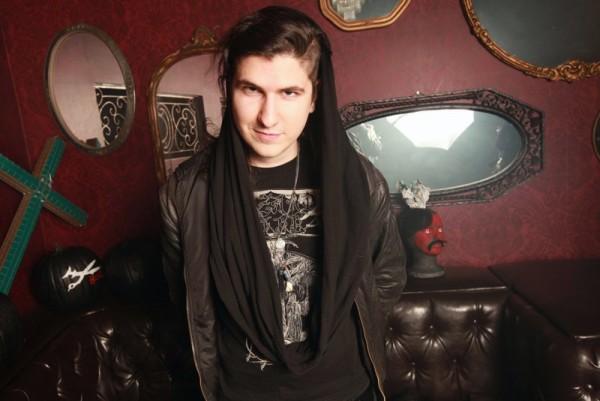
The Verge: Dominique Young Unique

Welcome to The Verge: a column dedicated to music on the edge of a breakthrough. Last week, I wrote about Brooklyn-based blog favorites Sleigh Bells. How about something a little dirtier?

Meet Dominique Young Unique, a 19-year old party rapper out of Tampa – or T-Town as she lovingly refers to it. Dominique is the protege of Yo Majesty producer David Alexander, who has signed her to his label and given her the type of bouncy bass tracks that he made for Jwl B and Shunda K. Check out the video for her standout track “Show My Ass,” which goes from club-influenced claps to some 808 electro grime.


She might not have Nicki Minaj’s skills on the mic, but she doesn’t have her idol’s stylized flow, either, instead spitting frenetic, high-energy rhymes guaranteed to get a party started. With Rye Rye missing in action, there is a void in the business for a barely legal spark plug. Dominique Young Unique just may be the “Hot Girl” we need.


Look for Dominique Young Unique’s Blaster EP this month on Art Jam, and catch her at the Feedback Dance Party at DC9 on June 12th
.

Dear M.I.A: Knock it off.

Ed. note: This was written before the whole NY Times controversy!


Less than a decade on the scene, and two months before her eagerly awaited third album, M.I.A. is in a class alone. Maya Arulpragasam is a singular artistic force, pushing against musical boundaries and political sensitivities with equal aplomb. She is followed by a public that yearns to extract meaning from her every note, word, or Tweet.

So why the fuck is she attacking Lady Gaga and Justin Bieber?

Now, don’t get me wrong, this isn’t a plea to leave Gaga and Bieber alone. As much as I enjoy the music that the two put out, it’s just pop. Neither is re-inventing the wheel; they’re following in the footsteps of pop stars before them. And that’s okay! Pop music can be iconic, especially with charismatic, interesting stars like these two. But it isn’t high art. Lyrically, Bieber uses the word “baby” 9 times in the chorus of his number one hit. Gaga sings about disco sticks and fame monsters. Musically, they put out well-crafted, hook-filled R&B and dance music, respectively. Nothing groundbreaking.

M.I.A. is different. Her music is a true melting pot of influences and genres, her lyrics bombastic poetry. She is definitely not a pop star, but has had no trouble getting press, be it critical fawning or political commentary. Her personal connection to and pointed views on the Sri Lankan Civil War, discussed with greater depth elsewhere, are a defining part of her public image. Her dedication to Third World issues and subjugated peoples worldwide is admirable; she definitely isn’t some Bono-come-lately. Her politics are personal; she has as much at stake as the political musicians of the 60s and 70s. So what happened?

A turning point here is the infamous video for “Born Free,” a bit of cinematic ultraviolence that depicts genocide in very graphic terms. With classic shock rock tactics, M.I.A. made a video “so violent” and “so controversial” that it was banned from YouTube… promptly buying her another few news cycles, all about a clip that is not particularly novel or creative. The video for “Born Free” manages to combine the worst parts of collegiate political discussion and overwrought film school productions. It’d be less smug if Michael Moore directed it.

M.I.A.’s release of the “Born Free” video is part is of the same cynical media strategy that includes running to NME every month to shit on pop stars. It’s not as if her album would have gone unnoticed, lost in Trending Topics to Justin Bieber’s haircut. It’s below her, and we should expect more from someone like M.I.A. She’s too important to music, culture, and art in 2010 to punch down like this.

Dubstep Dossier: Deathface


Bloghaus duo Guns ‘n’ Bombs broke up last summer, jumping off the electro bandwagon right before it careened into the next wave of EDM. Their last release, the funky dubstepper “Samba Death Squad,” hinted at the dark things to come for one of its members, both sonically and thematically.

Johnny “Love” dal Santo now goes by the name Deathface. The recent Trouble & Bass signee grinds out heavy, death metal-influenced bass, tracks that are perfect for a dubstep mosh pit. Imagine Salem but sped up for the dancefloor; demonic industrial that would make Al Jourgensen proud. Check out his grimly-titled “The Blood Has Gone Black” mixtape. It’s a balanced mix of originals with killer remixes, like his throbbing take on “Cumbia” by the Mexican Institute of Sound.

Deathface’s debut EP, The Horror, was released on Tuesday, and it proves that Goth kids don’t just have to look menacing outside Hot Topic – they can get in on some hands-in-the-air raving, too. Demonic shrieks and semi-automatic drum fills complement the familiar breakbeats and wobble of dubstep. When Satan wants to party, he listens to Deathface.

Deathface is on his American Gothic Tour and stops by the Temple of Boom tonight as part of the Trouble & Bass DC takeover. As if a bill with the T&B crew, AC Slater, and Mad Decent’s Mumdance wasn’t enough.

The Verge: Sleigh Bells

Welcome to The Verge: a column dedicated to music on the edge of a breakthrough. Lookbook isn’t the only pop duo on the verge. Here’s an upcoming band proselytizing music fans everywhere with the power of noise.


A teenybopper popstar and a screamo guitarist walk into a bar… Haven’t heard that one? It’s not a joke – it’s the impetus of the noise pop duo Sleigh Bells. Released yesterday, their debut album Treats is one of the most promising indie rock debuts since the Yeah Yeah Yeah’s Fever to Tell. Since bursting onto the scene at CMJ 2009, Sleigh Bells has continued to ride a wave of hype, from SXSW to a spot opening for Major Lazer and Rusko.

Sleigh Bells is loud, pushing drums, guitars, and synthesizers way past the point of decency into deep red territory. Unlike the Loudness Wars, where mastering engineers simply amped up levels in an endless pissing contest, Sleigh Bells play at 11 for effect. The clipping and distortion on the record juxtaposes with the clean vocal melodies of Alexis Krauss. For the most part, the drums are simple boom bap rhythms, so the extra flavor and color of nice warm distortion is a feature, not a bug.

Derek Miller, the man behind the music, understands noise – he once was the guitarist for seminal post-hardcore band Poison the Well. Sonically abrasive music is his forte. Still, there are pop songs buried inside the aggressive audio assault. The brutal, industrial drums of album opener “Tell ‘Em” may obscure the arena-sized riff or saccharine vocals, but the hooks eventually prevail.


Krauss’ vocals occasionally resemble those of label boss M.I.A; Treats is being released in a partnership between Maya’s N.E.E.T Recordings and Mom & Pop Records. The rhythmic chanting of “Kids” and “A/B Machines” are right off “Bingo” and “XR2,” respectively. Her vocals are even sampled on “Rachel,” Krauss’ breathy gasps adding another layer to the percussion. Still, it’s a long way from – and an improvement over – the pop stylings of Krauss’ early 2000s girl group RubyBlue.

A song that diverges from the cacophony is the Funkadelic-sampling “Rill Rill,” which relies on the classic riff from Maggot Brain‘s “Can You Get to That.” The song works as a summery respite from the first fifteen minutes of the record, which reflects the album’s brevity. The 11 songs total just over a half hour, which is about as long as you should subject your cillia without risking (even further) tinnitus. And if you catch Sleigh Bells live, I’d suggest ear plugs. No joke.

DJ A-Mac Keeps 'Em Dancing


If you’ve been paying attention to the moombahton movement, you’re already familiar with DJ A-Mac. Remixes by Calgary’s fastest rising selector have shaken asses from coast to coast and across continents. Next to Dave Nada, A-Mac is the producer with the firmest hand on the nascent genre.

When I interviewed A-Mac in March, he tipped us off to Smalltown Romeo, the DJ supergroup that dominates the Calgary electronic music scene. The triumvirate is comprised of Smalltown DJs Pete Emes and Mike Grimes and disco producer Wax Romeo, and is a force to be reckoned with. The Smalltown DJs’ Hai Karate party has rocked crowds for over a decade, and the duo also owns a clothing and record boutique, Giant 45. So it’s no surprise that when the guys decided to release a series of mixes for Giant 45, A-Mac was one of the first musicians tapped.

A-Mac’s mix is an hour of non-stop house and electro goodness, demonstrating his range as a DJ and cratedigger. It forgoes tracks-of-the-moment for modern takes on classics, like Luciano’s remix of Nina Simone’s “Sinnerman” or the Plastic Operator’s Tom Petty-referencing “Wont back down vs. Night Fall.” Other highlights include bits of electro-rockers Body Language (“Sandwiches”) and queen of bounce Sissy Nobby (“Lay Me Down”) remixed by Alaska in Winter and L-vis 1990, respectively.

The mix is a cohesive, grooving party-in-a-box. No track feels out of place or forced. By the time the mix concludes with 1967 #1 “The Letter” by blue-eyed-soul group the Box Tops, you’ll be a sweaty mess, yearning for more. Somebody, anybody buy A-Mac a ticket to U Hall and book him for a Red Friday. Soon.

As a bonus, A-Mac has released his moombahton remixes for download on his SoundCloud. And there’s more where that came from: stayed tuned for a TGRI exclusive moombahtoon mixtape this summer!

The Verge: How to Destroy Angels

Welcome to The Verge: a column dedicated to music on the edge of a breakthrough. After profiling synth-pop outfit Lookbook, it’s time to highlight a new project from an artist who has been a force in electronic rock for over twenty years.


Last year, Trent Reznor pulled the plug on Nine Inch Nails as a touring band. While he left the door open to future NIN releases, he expressed a desire for something more than the relentless, exhausting touring that the band had come to represent. He married Mariqueen Maandig, the former lead singer for psychedelic pop band West Indian Girl, and sounded excited about other projects and opportunities.

A few weeks ago, his first non-NIN project, How to Destroy Angels, appeared on the web and across social networks. Offering just a few tantalizing video clips, not much was known about the band, other than it joins Reznor with Maandig and frequent collaborate Atticus Ross. As the band’s promo photos show, Reznor is in the background and behind the scenes, finally free from the burden of a 20-year old inscription in the Pretty Hate Machine liner notes: “Nine Inch Nails is Trent Reznor.”

Still, Reznor’s invisible hand continues to pull the strings. How to Destroy Angels’ first song, “A Drowning,” would fit perfectly in the Nine Inch Nails discography if not for Maandig’s breathy, sensual vocals. The song sounds like something off The Fragile or Ghosts, with the same brooding feel of B-side “And all that could have been.” “A Drowning” pulses and builds over seven minutes, with sorrowful keys and dissonant electronic elements. Taking their name from a record by Coil, How to Destroy Angels opt for an ambient sound that owes much to the industrial innovators.


A six song EP is set to follow “A Drowning” this summer. Will it still bear the trademarks of Reznor’s earlier works, or will he take this opportunity to create music that would not have fit the Nine Inch Nails rubric? Only time will tell, but for an artist who has never shied away from controversy or innovation, I’m betting on the latter.

Album Review: Rusko – O.M.G!


Every musical movement has a standard-bearer: a proud flag waver and ambassador to the masses. For dubstep, that role is clearly and ably filled by Rusko, the L.A.-based, Leeds-born DJ and producer. From his 2006 production debut “SNES Dub,” to breakthrough track “Cockney Thug,” to his earthshaking remix of Kid Sister’s “Pro Nails,” Rusko’s output has found its way into sets by everyone from Diplo and Switch to Pete Tong and Annie Mac. With his full-length debut O.M.G.! (Mad Decent), Rusko presents what may be dubstep’s first crossover album.

O.M.G! is a tour through the various permutations of dubstep, with each of the 14 tracks honed by Rusko’s ear for melody and hooks. The album kicks off with “Woo Boost,” a squealing, grinding assault complete with air raid siren (check out the alternate, drug trip of a video below). The throbbing wobble that has come to define dubstep is present here, and is a constant force throughout the album. The hardest dubstepper appears at the backend of the album: “Oy,” featuring the Crookers, is a reminder that Rusko hasn’t gone totally pop.

A pleasant surprise is the influence of rave and house on the album, elements Rusko only hinted at previously, on tracks like “Love is Real” off his Babylon, Vol. 1 EP. “Hold On” and “Feels So Real,” featuring Amber Coffman of Dirty Projectors and Ben Westbeech, respectively, are straight-up dance tracks, with pop hooks as essential as the basslines. “Kumon Kumon” sounds like a Skream track, with its jungle loop, Casio synth, and heavy dose of laser effects. Any of these three are guaranteed dance floor killers.

On a few tracks, like “You’re On My Mind Baby” and “Raver’s Special,” the vocals are vocoded and autotuned in a way that is fresh and exciting. The Black Eyed Peas and T-Pain may have done it to death, but Rusko is undeterred in using the technique, and makes it work. Rusko even pays tribute to the dub in dubstep, playing up the dancehall influences in the Rod Azlan toaster “Rubadub Shakedown” and album finale “District Line.” The reggae tunage would feel right at home in a Major Lazer set, with enough bass to get a crowd grooving.

If 2010 is the year that dubstep crosses over, it may just be on the back of hip hop collaborations and remixes. Gucci Mane, on “Got Da Groove,” is the perfect fit for a trap-step track. Rusko bends but doesn’t break Gucci’s vocals, utilizing them as just another instrument to sample. It’s not a standout track, but it points budding dubstep producers in the right direction.

O.M.G! is a complete album, perfect both for true bassheads and dubstep novices. Followers of Rusko’s young but promising career will recognize tracks from his Mishka Keep Watch! mix, now as fully formed songs. However, the LP is not a rehashing of previously released material, but a formalizing of where Rusko, and by extension, dubstep is in the middle of 2010. If you still haven’t gotten into dubstep, this is exactly the album that will make you a believer. Just put it on your system, crank the bass until the neighbors call the cops, and take part in the visceral experience that only dubstep provides.

FIVE OUT OF FIVE STARS.

The Simpsons make it pop with Ke$ha

The Simpsons has been a worldwide pop culture juggernaut for over twenty years. It holds most “long-running” TV records, it launched Fox into territory formerly occupied only by the Big Three, and its catchphrases end up in the OED. Emerging from a few less than memorable years, the show has become even more satirical and surreal as of late, albeit by sacrificing the sentimentality of its golden years.

Ke$ha’s “TiK ToK” is a pop sensation in its own right, a #1 song that holds the record for most digital downloads by a female artist ever – the true mark of music business dominance in 2010. So, when last night’s episode of The Simpsons bypassed its usual couch gag for a parody music video for the song, the move was totally unexpected but a natural fit.


Taking the ridiculous, self-indulgent lyrics at face value, the crew went for literal sight gags that involved big swaths of the Springfield universe. The minute long clip also shows off the ever-improving animation skills that remind us that The Simpsons is still the standard bearer of animated television.

Pop culture has always been at the heart of The Simpsons, so so-called purists who wince at what seems like an ephemeral tribute are not being intellectually honest. Ke$ha is not Poochie – it’s a one-off gag that re-inserted The Simpsons into Monday morning water cooler discussion. That’s something we still need. And it’s not even the most obnoxious Simpsons musical crossover.

Crate Dig: Nine Inch Nails – The Perfect Drug

Song: “The Perfect Drug” by Nine Inch Nails
Year Release: 1997 – Year “Discovered” By Me: 1997
Reason Discovered: Music video on MTV

Why a fan?
In 1997, I was your average, slightly nerdy, suburban teen. I had a passing interest in music, but my CD collection at the time didn’t go much further than The Presidents of the USA, No Doubt, Weird Al, and the Batman Forever soundtrack. Growing up, there was always music around or in the car, but it wasn’t a defining characteristic in my life.

That all changed after I saw the video for Nine Inch Nails’ “The Perfect Drug” (insert snarky video-on-MTV comment here). Mark Romanek, director of the infamous video for “Closer,” spent $1 million on the gothic, blue-tinted homage to Edward Gorey. In it, Trent Reznor confronts the death of a child and falls into an absinthe-fueled abyss.

The video, like the song, is menacing, bold, and aggressive. All things that spoke to my barely-teenaged self. In the pre-mp3 age, I spent hours analyzing the song in a Midi file, breaking down the various tracks: the simple, repetitive guitar riff, the battling synth lines, and the staticky, drum-and-bass backbeat. Reznor’s lyrics are classic Nine Inch Nails: questioning self-worth, twisted desire, and loss of control.

I was hooked, and soon picked up the Lost Highway soundtrack and Pretty Hate Machine. Other alternative rock staples would follow. Returning to school in the fall of ’97, I was newly outfitted in band tees, JNCO jeans, and Airwalks (I tended more towards standard 90s skater gear than goth. No makeup or fishnets for me!). “The Perfect Drug” is the song that opened my eyes, not just to particular genres of music, but to a worldview and music-infused lifestyle that are still very much part of me, over a decade later.

Ironically, “The Perfect Drug” is Reznor’s least favorite creation, due to the hurried production and overwrought video. Nine Inch Nails never played the track live. Still, the song is centrally important to who I am today, because it started my musical addiction.

Part of the True Genius Requires Insanity Crate Dig series.

Dubstep Dossier: Pariah

Pariahs are despised, rejected outcasts. Hopefully, fledgling UK beatmaker Pariah will not suffer the same fate.


Arthur Cayzer is a 21-year old London university student who has only been producing for a year, but his talent belie his age and experience (despite his limited output). Signed to veteran Belgium dance music label R & S Records, Pariah is already making a name for himself with music that borrows from dubstep, UK funky, house, and future hop.

His first release, “Detroit Falls,” transforms a classic soul sample into a churning glitch fest. The track’s construction is reminiscent of an artist from its titular city: the late, great J Dilla. Bits and pieces of the original sample are interspersed with low end and synth chirps, creating a cohesive sound that satisfies both dubstep devotees and hip hop heads.

“Orpheus,” the b-side to “Detroit Falls,” keeps the tempo consistent but moves towards funky and house as Pariah re-works Thelma Houston’s disco classic “Don’t leave me this way.” It’s an “a-ha” moment; while other dance remixes of the track have focused on the upbeat chorus, Pariah opts for the yearning vocals of the verse. It’s a perfect fit for the syncopated, tribal beat.

Pariah also tried his hand at remixing, starting with his fellow countrymen, Ellie Goulding and the XX. His remixes of “Under the Sheets” and “Basic Space” present UK funky takes on songs that have already been remixed ad nauseum. For an extended look at his DJ skills and range, check out the bass-heavy mix he did for Sonic Router. The mix includes tracks by vets like Martyn and L-vis 1990, along with a hint at what’s to come from Pariah.
With such an abundance of promising young UK producers, it is difficult to separate the wheat from the chaff. But if Pariah continues to release tracks like “Detroit Falls” and “Orpheus,” it will be that much easier. And remember, don’t fear the wobble.