The rhythm and bass movement continues. Every day, a new future bass producer emerges, or an old favorite returns with a clutch of R & B edits (as Hudson Mohawke just did on his Pleasure bootlegs). But with the rush new material, the question of who can repeat early success lingers (for more evidence, look to moombahton).
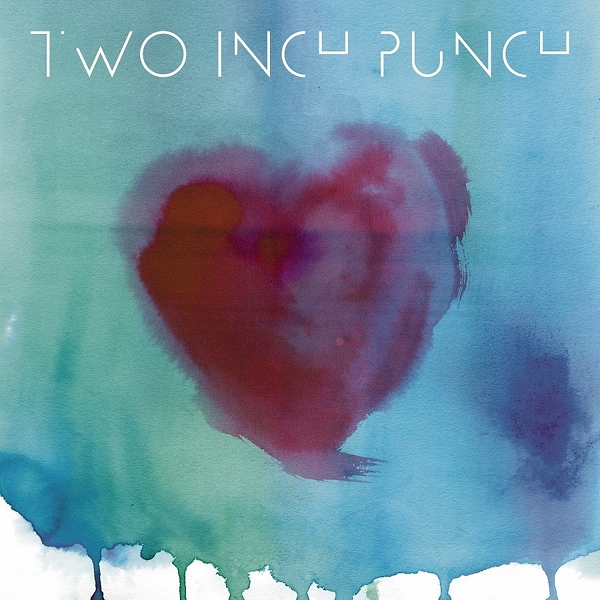
West London’s Two Inch Punch seems up to the challenge. After breaking through with his brilliant – and in vogue – Brandy edit, “Love You Up,” Two Inch Punch is set to release an EP of the same name on PMR Records, home to UK bass favorites Julio Bashmore, Javeon McCarthy and Jessie Ware. Here’s that track, which appeared on this year’s Luvstep 2 mixtape.
A self-described “frustrated Soul / RnB singer,” Two Inch Punch wears his influences – and his heart – on his sleeve. “My mum and dad brought me up on soul & vocal harmony groups – so I was inspired by short love songs by the Beatles, the music of Keith Sweat and Otis Redding… Sam Cooke’s heartfelt melodies and Donny Hathaway’s incredible vocal tones,” he shares. His inspHERation mix jams over thirty songs into just 20 minutes, shining a light on Two Inch Punch’s more recent influences and contemporary favorites.
While “Love You Up” strutted and bounced, Two Inch Punch’s latest offering “Up In Your Mix” pulses with call-and-response samples (one of which may be of Dru Hill). That track’s space-funk keys and swirling synths make a triumphant return, as well. If the rest of the Love You Up EP (out on October 31) sounds like what we’ve heard so far, Two Inch Punch will soon be keeping company with heavyweights.
With any film adaptation, the question of the film’s reverence to the source material is inevitably raised. When the source material is as controversial as Michael Lewis’ Moneyball, this is doubly true. But this is a film review, not a comment on “Moneyball” or sabermetric analysis* so I’ll leave the criticisms of the original book, from both sides (the merits of sabermetrics, whether Billy Beane’s contributions are overstated, etc), alone.
The two films that come to mind when viewing Moneyball are The Blind Side (also adapted from a Lewis book) and The Social Network (also adapted from a Aaron Sorkin script).
In the same way that Michael Oher’s story breathes life into a book about the development of the left tackle, the colorful characters that made up the 2002 Oakland Athletics illuminate the most important development in a generation of baseball: the reliance on advanced statistics over business-as-usual scouting and intuition. While the film of The Blind Side focuses on the emotional melodrama of Michael Oher’s life, the film version of Moneyball is the opposite: those characters are largely absent from the film, with the notable exception of Scott Hatteberg (Chris Pratt). Instead, the film’s protagonist is GM Billy Beane (Brad Pitt), with a major supporting role for the fictional Peter Brand (Jonah Hill). And despite a few key scenes with Beane’s daughter, the film doesn’t rely on the smarmy, inspirational tone favored by The Blind Side.
Moneyball is both a baseball movie and an underdog story, yet it never is reduced to the cliches of those genres. For the most part, this is the story of what happens in the front office – not the field. Like The Social Network, the film is a dynamic take on what should be a bland topic, at least on paper. Even with Sorkin’s rewrite, unfortunately, the dialogue isn’t as snappy as that of The Social Network – and maybe that’s alright. These aren’t Harvard entrepreneurs. The lone Ivy grad character is Brand (the Yale economist who resembles the real life Paul DePodesta) and Hill’s dweebish portrayal is heavy on awkward, not assertive. Pitt’s Beane is as cocky and direct as his real life counterpart, with the fiery temper that doomed his professional career.
Still, the film feels incomplete, with many character arcs reduced to just a few points. Take Hatteberg, for example: the film shows his meeting with Beane, some awkward first base training, a little confidence building, and a winning home run. Manager Art Howe (an underutilized Philip Seymour Hoffman) opposes Beane’s new approach to baseball, has a few confrontations with him, and finally relents. Even Beane’s journey leaves the audience wanting: a few angry drives in his truck aren’t enough to fill in the blanks of his character. It’s as the script tries to do too much, leaving it disjointed.
But like the 2002 A’s, Moneyball is fun to watch. The relationship between Beane and Brand is never sentimentalized; Pitt and Hill have surprisingly good chemistry, which is reassuring since the pair have the most scenes in the film. Director Bennett Miller gives the film an almost documentary-like precision, relying on the romance of the sport film only where appropriate. I would have liked to see what Steven Soderbergh and Steve Zaillian (American Gangster, Gangs of New York, among others) would have done with the project, but the Miller-Sorkin pairing is more than capable of telling the story of Moneyball, scoring by stringing together a couple of singles but never hitting a home run.
Moneyball hits theaters on September 23.
*I’m a true believer when it comes to the importance of sabermetrics, even if Beane wasn’t the first one in baseball (or even in his own organization) to utilize such advanced statistics. A clip of Joe Morgan’s boneheaded dismissal of Beane and sabermetrics plays over a key scene in the film like nails on a chalkboard.
Saturday: It’s time for Virgin Fest, so plan carefully (ahem) and haul yourself to Columbia. It’s also Nouveau Riche night.
Sunday: The Adams Morgan Day Festival is a perfect opportunity to check out the neighborhood when it’s not overwhelmed by Beckys and Chads.
The Soundtrack
I’m a little late on this one, but here’s DJ Lil’ Elle’s latest mix “Miles From Nowhere.” Plenty of hip-hop and bass jams, with great offerings by Brenmar, Canblaster, and SBTRKT; also includes Diplo’s remix of my favorite track of the moment, Kelly Rowland’s “Motivation.”
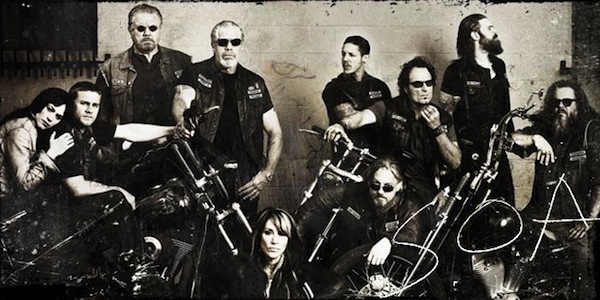
Sons of Anarchy has ridden the combination of bikes, babes and bad-assery to become a favorite of both critics and fans. Entering its fourth season, it looks to get back to basics after a season-long arc that took the California outlaws all the way to Belfast.
It’s an approach that should do the show some good. The fourth season, despite a few impressive sequences, got bogged down in True IRA politics and a convoluted investigation headed by a corrupt sociopath. Left behind was the rich internal drama about the true path of SAMCRO.
When Sons of Anarchy began, it was best described as Hamlet on motorcycles. Jax’s personal struggle with the club’s methods, and therefore with his stepfather Clay, has always served as the show’s dramatic undercurrent. There was no higher point of tension than at the end of the first season, as Jax held both the truth of Donna’s murder and the message of his father’s manuscript in his hands. By the second season, Jax was ready to go nomad, until the truth of Gemma’s assault was revealed, uniting the club against a common enemy. Last season, his single-minded pursuit of Abel was another factor in the club’s coalescence. Now, as the gang finishes their 14-month stretch in the clink, Jax once again returns his focus to his family’s future, especially with a new baby in tow.
In the season premiere, Jax lays out his too-good-to-be-true plan during a predictable yet awkward proposal to Tara (“we should get married” isn’t quite “will you marry me?”). He’ll bide his time, save his money, and wait for Clay’s hands to finally give out, taking Tara, Abel and Thomas far away from the crime and destruction of the Sons. His prison time gave him new clarity on his father, as well. While he knows JT father was right about the club, and about how far it has strayed from its original purpose, he also sees his father as a coward: a man who ran off to Belfast rather than saving his children from the life he chose. Jax is determined not to make the same mistake, setting up an inevitable confrontation with Clay and Gemma.
As for the club, they quickly get back into gun-running in a major way, solidifying some alliances and destroying others. Charming law enforcement has a new face in Sheriff Eli Roosevelt (Rockmond Dunbar, last seen on Terriers), and there is a strange AUSA in town, Linc Potter (Ray McKinnon), who has his sights set on a major RICO case against the Sons. In a perfect bit of casting, Danny Trejo will appear as a former Mexican military commando, hopefully with shades of Machete. For fans of The Shield, David Rees Snell (formerly Strike Team member Ronnie) and Benito Martinez (formerly David Aceveda) will make appearances as well.
Sons of Anarchy is an over-the-top cocktail of testosterone and adrenaline, and that shouldn’t change this season. But the show can be true to its character without the overwrought story lines that culminated in season three. Season four looks to right the ship and get back to the “sins of fathers” theme that has served it so well in the past. Whatever is in store for SAMCRO, it promises to be one helluva ride.
Another day, another UK singer-songwriter. But unlike contemporaries Adele, Leona Lewis and Jessie J, this one didn’t attend the BRIT School, Croydon’s prestigious star-maker academy.
English by birth but a gypsy by nature, Neon Hitch (yes, her real name) grew up traveling across Europe – by bus – as a street performer and trapeze artist. She ran away to India at the age of 16 before returning to London, where she took up singing and songwriting. Before she even released a song, she was touring with The Streets and 50 Cent.
Hitch caught the ear of pop hitmaker Benny Blanco (Britney, Katy, Bieber, Ke$ha, etc.), who helped her sign a production deal with EMI and a record deal with Warner Bros. She’s already written songs for Ke$ha (“Blah Blah Blah”) and Sky Ferreira (“Traces”), and her own material has that same type of sexy, electro-pop sheen.
She’s currently working on her debut Beg Borrow and Steal with Blanco, and two advance singles give a taste of what listeners can expect. Hitch covers her pop bases: “Get Over U” is the female empowerment anthem and “Bad Dog” is the slut-pop jam (“You know I’m yours so rip my clothes off… Just come inside my cage you bad dog”). Like Fugative before her, her singles have been remixed by notable underground producers including DJ Chuckie, Borgore, and Dave Nada, the latter of whom gave a “moombahbased” twist to “Get Over U.”
While her singles have generated a bit of buzz, it’s her genre-hopping cover songs that are really making waves. After taking on songs by Wiz Khalifa (“On My Level“) and Mac Miller (“Donald Trump“), Hitch tackled the hit-of-the-moment, Kreayshawn’s “Gucci Gucci.” Her version is more soulful, with pounding drums and a mellow melody. It’s the kind of cover that stands on it’s own legs, and should have this gypsy living on the grid soon enough.
This Saturday, Virgin Mobile brings it’s FreeFest to Columbia’s Merriweather Post Pavilion. Three stages of music, art and attractions, food and drink, and plenty of free swag, FreeFest is as sure a bet as any for a memorable festival experience – if you’re prepared. First, check out the Edukatorz guide to music festival survival, and then read how to maximize your musical intake during a schedule packed with conflicts and trade-offs.
Clubs, Crosses, and Rivers
Alberta Cross, Bombay Bicycle Club, Two Door Cinema Club, and Okkervil River are the opening acts, alternating between the Pavilion (main) and Festival (side) stages. See Alberta Cross and then Okkervil River if you like your rock blues- and folk-based; see the two Clubs for indie rock that is a bit poppier.
Blister in the sun
While the Dance Forest can more accurately be described as the Dust Bowl, it still presents a great value for revelers who want to catch dance-orientated acts in a relatively intimate setting. But who’s ready to dance while the sun is still beating down? All but electronic music fanatics can probably skip audio-visual remixers Eclectic Method and electro house wunderkind Porter Robinson and head to the Forest when Calvin Harris takes over at 3:15 (opting against Big Sean; hip-hop at festivals being hit-or-miss at best).
Dance, punk, dance
Two bands that play in the same sandbox face off at around 5:00. Both !!! and Cut Copy (at the Dance Forest and the Festival Stage, respectively) make aught-astic dance-punk, one with house grooves (!!!) and the other with Balaeric hooks (Cut Copy). Either way, make sure you’re at the Pavilion for the Poet Laureate of Punk, Patti Smith.
Stage hopping
After Patti Smith, you can stick to some combination of the Pavilion and Festival stages. Those who already miss LCD Soundsystem will flock to see James Murphy at the Dance Forest, but don’t be fooled – this is probably a DJ set, and not some new solo adventure. Cee Lo Green is a consummate performer, but how much is seeing “Fuck You” live worth to you? Stick with TV on the Radio and then head back to Festival stage to catch synthpop act Empire of the Sun for a rare US appearence.
Dancing the night away
The Black Keys do a lot of things right, but they are not festival headliners; Deadmau5 is. Forget what that says about the state of music and end the night with a little trance raving. You’re probably too old for it, but you’re probably getting too old for a music festival. Take solace in the fact that you’re not paying for it.
The Weeknd’s Abel Tesfaye is a star now, and he acts the part on his latest mixtape, Thursday. The second part of a trilogy of tapes (Echoes of Silence will follow this fall), The Weeknd continues his examination of the dreary side of debauchery and the failings of fame. In Act II of his musical journey, the Weeknd is further down his drug-induced rabbit hole. For Thursday, that means less hooks, more orchestration, less love, more regrets.
For the most part, the sound is still the same. This is music for the haze of the morning-after: downtempo beats and downbeat instrumentation. That smokey ambiance of House of Balloons still permeates. The thread throughout is Tesfaye’s voice, which ranges from a faltering falsetto (“Lonely Star”) to sharp and focused (“Rolling Stone”). With the focus shifted from his lyrics to his vocals, there’s some vamping and over-singing that distracts from the songs themselves.
The centerpiece of Thursday is “The Birds” couplet. “Part I” is quintessential Weeknd fare. While the caged bird metaphor is a little weak, the chorus (“Don’t make me make you fall in love with a nigga like me”) is the mixtape’s closest lyrical flourish to House of Balloon’s “Drinking Alizé with our cereal for breakfast.” Counterpoint harmonies and the epic drums of 808s and Heartbreak fall away to reveal a finger-picked guitar and Tesfaye, alone: his natural disposition. The screwed down “Part 2” is as much a sequel to “Wicked Games,” with plenty of guitar vibrato and orchestra hits that pack a punch. Sampling Martina Topley Bird’s “Sandpaper Kisses” is a not-so-subtle nod to the trip hop vibe that this album feeds off.
Thursday’s lone guest star is the one we’ve been waiting for: co-signer-in-chief Drake. On “The Zone,” Drake’s typical nonchalance is practically punchy compared to that of Tesfaye. He delivers his punchlines with a staccato flow, filling in the details of The Weeknd’s lyrically bare composition (“Lips so French, ass so Spanish”). And while Drake sang of “Houstatlantavegas,” The Weeknd aims higher. Above the sinister guitar riffs of “Heaven of Vegas,” either the cocaine is talking or Tesfaye has self-actualized. He sings, “They say, they want heaven / They say, they want God / I say, I have heaven / I say, I am God.” With the lifestyle he bemoans and besmirches, maybe it’s a combination of both.
When Balam Acab released See Birds last year, simple math grouped him with the burgeoning witch house scene. There was the vaguely satanic name (actually, Balam Acab is a Mayan demigod), a dearth of information about the artist, and – most importantly – reverberating, dragged out beats. A deeper listening of See Birds raised questions about this assumption; Wander/Wonder blows it out of the water.
Water, it turns out, dominates any conversation of Wander/Wonder. As on See Birds, it is always gurgling, bubbling, or washing up against the shore. But here, some of it has evaporated: now, there’s an even greater focus on atmospherics. Throughout the record, Balam Acab (20-year old student Alec Koone) crafts songs with layers upon layers of ambience, building a sonic/kinetic energy, only to stop on a dime and cherish the empty space.
That approach to songwriting is evident from the start, on the appropriately titled “Welcome.” Layers of mechanical and organic samples, faint echoes, and Gregorian chant are percussive despite only hints of a drum beat. Out of nowhere, the song opens into a sweeping, orchestral turn, as if a curtain has been pulled back. While it’s the same layers as before, the tone is reversed – and only for a tantalizing moment, before moving on to the next composition.
Wander/Wonder is also a meditation on mainstream music, notably hip-hop and R&B. While others reach for a Cassie lyric or an Brandy chorus, Balam Acab is milling the smallest bits of melody for what they represent sonically, not nostalgically. Whether it’s hip-hop beats transmitted over a fuzzy AM radio or an R&B lyric pitch-shifted into unrecognizable oblivion, Balam Acab is clearly influenced by his forebearers, yet with no reverence paid to “how things are done.” As the album progresses, the ghostly vocals come into focus. Whereas the phonemes and gestures of “Apart” and “Motion” shade – rather than color – the songs, the echoing lyrics of “Expect” are almost decipherable behind the speaker-rupturing bass and a crescendo of violins.
Balam Acab does lovelorn romanticism better than his bedroom producer contemporaries, and unnerving and creepy better than his witch house ones. The most moving song on the record, “Oh Why,” is one of its most gentle. But while it’s melody is simple, it’s construction is not: he samples a skipping record, what sounds like a rain stick, the flutter of a bird’s wings, and some uneasy dissonance for a soundscape that is marked by juxtaposition. The record closes, ironically, with the song with the most in common with witch house. On “Fragile Hope,” water drips like plucked guitar strings, and ominous steps in the sand and uneasy breathing infuse the song with a sense of paranoia. A muffled, rolling drumbeat builds and builds until it’s suddenly gone; there’s a vocal in the distance, but it’s too late. Balam Acab has wandered elsewhere.
The future bass scene, like dubstep and garage before it, emanated from the UK. Then it filtered down (predictably) to NYC, LA, Chicago, and the like, a process sped up by the digital landscape. But for a sound that owes so much to the trunk-rattling bass and syrupy rhythms of the Dirty South, future bass has been notably absent there. Until now.
Charlotte’s Clicks & Whistles is comprised of Jorge Xavier Fernandez (Hey Whore Hey) and Petey Evans (Turbo Petey). The duo appeared on the scene last year with their You Do EP, which bounced its way through tropical bass (“Thizzle”) and exotic house (“Mystic Jungle”). They also contributed to the Future Sounds of North America compilation with their swirling rhythm & bass cut “When I Feel.”
This year, Clicks & Whistles hooked up with Distal’s Atlanta-based Embassy Recordings for “Cranberry Goose.” An ode to Grey goose and cranberry juice, it’s energy is all stand up / lean back, with bass-heavy synths that turn deadly as the track progresses. The B-side, “Radiator,” borrows the same synth for a jittery club track. Distal’s remix of “Cranberry Goose” is a hyper juke fest, offered below for you to compare and contrast (courtesy XLR8R).
The duo are remixing for the likes of AC Slater, Dev79, and Myrryrs, but their finest moment comes when they fully embrace the South. Their remix of Crime Mob’s “Knuck If You Buck” soars on electric blue synths, the perfect complement to the original’s beat. Want more? The Three 6 Mafia-sampling “Neva Get Caught” will be out on T&A Records next month. Future bass has finally come home.
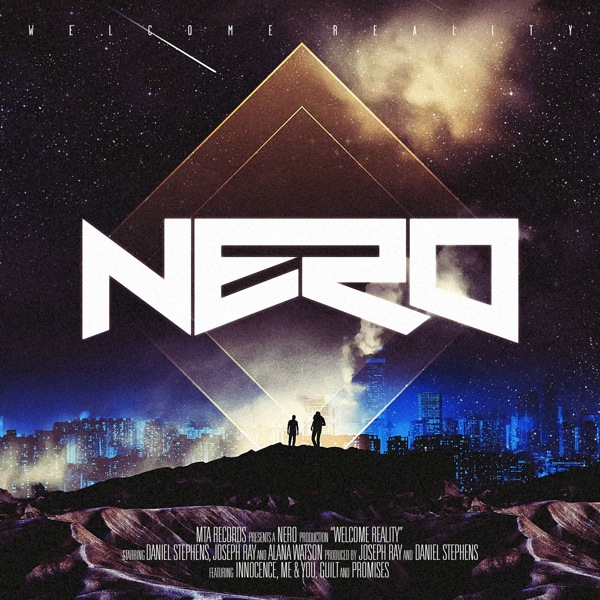
With Daft Punk and Basement Jaxx recording soundtracks for sci-fi epics, it was only a matter of time before an act took it upon themselves to do the same, without the benefit of a film to score. On their debut album Welcome Reality, UK duo Nero aim for such orchestral grandiosity, adding a dubstep flair to the electro leanings of their predecessors. The result is a bloated companion piece for a Michael Bay flick that doesn’t exist.
Welcome Reality is over-the-top and formulaic, as if Nero took every stadium-friendly electronic music trend and simply added dubstep’s wobbly low-end to it. “Doomsday” is Bloody Beetroots’ mosh-pit electro; “Guilt” has the diva vocals and synth stabs of big room trance. Throughout the album, soaring guitar and synth lines battle four on the floor beats in a “cock rock vs. dance music” race to the bottom; the title of the plodding “Scorpions” has to be a hat-tip to the German glam rockers of the same name, right?
Du jour dance styles aren’t the only territory that Nero mines for Welcome Reality. Towards the end of the disc, there’s a suite of songs that rip mid-eighties pop without a sense of irony. Samples of the Jets’ “Crush,” Carmen’s “Time to Move,” and the coup de grace, Hall & Oates’ “Out of Touch,” prove that even your parents can enjoy dubstep!
Released more than a year after lead single “Innocence,” Welcome Reality has little in common with the sparse, luvstep romanticism promised on that track. “In the Way” is the only other time we get something that isn’t obnoxiously cranked to 11, its reverb-laced snares a brief respite from the album’s relentless synthesized explosions. The pair of tracks showcase how an act can combine dubstep’s aggression with poppy, mainstream sensibilities; it’s a shame Nero didn’t do more of the same elsewhere.







 Postcultural