Where Was I? Plotting the essential moments of How I Met Your Mother

HOW I MET YOUR MOTHER

How I Met Your Mother is a show I came to late, catching up right before the fourth season. I’m not sure why I started watching it, but I know why I avoided it: it was a multi-camera, laugh-tracked sitcom, on CBS, where humor goes to die. Thankfully, I was wrong, because HIMYM is the best multi-camera, laugh-tracked sitcom since Newsradio, and it balances silly gags and tear-jerking moments as well as personal-favorite Scrubs. It also has accidentally become the definitive show about the important moments of your late twenties and early thirties, the romanticism of New York City, and (especially considering the show’s flashback conceit) the elasticity of memory.

The show will reach its long overdue conclusion tonight. While the show has struggled at times to stretch the story to fit the demands of a successful show (if the numbers justified it, CBS could care less if Ted struggles for 20 years to find his soulmate), it has kept a surprisingly level of quality over its 200+ episode run. Obviously, it has one of the strongest, tightest ensembles in years, and some of the most clever writing on network TV, but it also has Pamela Fryman as its rock. The unsung hero of HIMYM’s success, Fryman has directed more than 150 (!) episodes, making the most out of two apartments, one bar, and an obviously sound-staged street.

Without further ado, here are the most important moments of How I Met Your Mother, with an emphasis on the dramatic highs and lows that the characters have taken on this long journey. Because over eight years, audiences have had these moments, too.

himym-s1

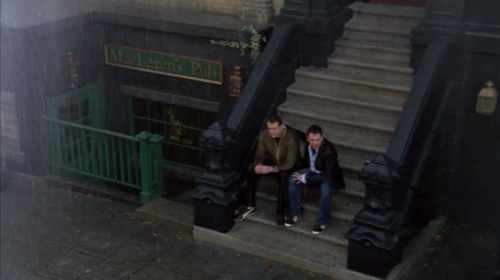
Season 1: Ted and Robin

In the ‘Pilot’, Marshall and Lily’s engagement sends Ted on his journey for love. He meets Robin, and the foolhardy idiot says “I love you” on the first date and undertakes his first of many grand romantic gestures. Learning that Robin is The Aunt rather than The Mother is the first in a series of reveals and reversals that have fueled the show’s plot development. Even if he doesn’t end up with her, Ted’s relationship with Robin is the engine of the show.

  • ‘The Limo’: A bit of truth-telling: “the thing about New Year’s Eve is that it sucks.” This episode marks the first return of driver Ranjit, and has some great gags (Not Moby, Barney’s Get Psyched mix), but Marshall emerging from the smoke to the sounds of ‘You Give Love A Bad Name’ makes this a classic (plus, Ted and Robin kiss).
  • ‘The Wedding’ / ‘Drumroll, Please’: In a show defined by a series of weddings, this is the first. We meet Victoria, Ted’s most important love after Robin (and The Mother, presumably). Ted running into the bakery as Victoria lets out a sigh of relief — what a moment.
  • ‘Zip Zip Zip’: a rare episode where even the C-story proves important. Ted and Victoria’s “firsts” contrasted with the (supposed) end of Lily and Marshall’s “firsts” is a nice bit of juxtaposition, but this episode also plants the first seeds of Robin and Barney’s relationship, complete with cigars, scotch, and laser tag.
  • ‘Nothing Good Happens After 2 A.M.’: The title says it all: a lesson we’ve all had to learn, hopefully before our 30th birthday. In the first of many stupid moves, Ted breaks up with Veronica and blows it with Robin in the same night.
  • ‘Come On’: Ted’s grand gestures, #2: a rain dance to keep Robin close. Of course it works — that’s what kind of show this is — but Marshall holding the ring to the soundtrack of Bloc Party’s ‘This Modern Love’ is still devastating.

himym-s2

Season 2: Marshall and Lily

Marshall and Lily remained broken up for about six episodes, which was plenty. The show’s romantic ideal for a couple got accidentally married for 12 seconds in ‘Atlantic City’ — the last time they would take a shortcut instead of doing things the right way.

  • ‘Slap Bet’ : The episode that introduces Robin Sparkles and the titular Slap Bet. ‘Nuff said.
  • ‘Bachelor Party’: The reveal that Barney tried to save Marshall and Lily’s relationship gives him a heart, for the first time.
  • ‘Showdown’: Barney goes on Price is Right to meet his “father,” a plotline that would loom large in season 6.
  • ‘Something Borrowed’ / ‘Something Blue’: Marshall and Lily’s wedding gives hope to everyone who must plan a wedding: even as everything goes wrong, the couple still manage to have their perfect ceremony. Ted and Robin’s fake out (they’re broken up, not pregnant) deserves the season-ending “Legen – wait for it…”
himym-s3

Season 3: Meet Stella

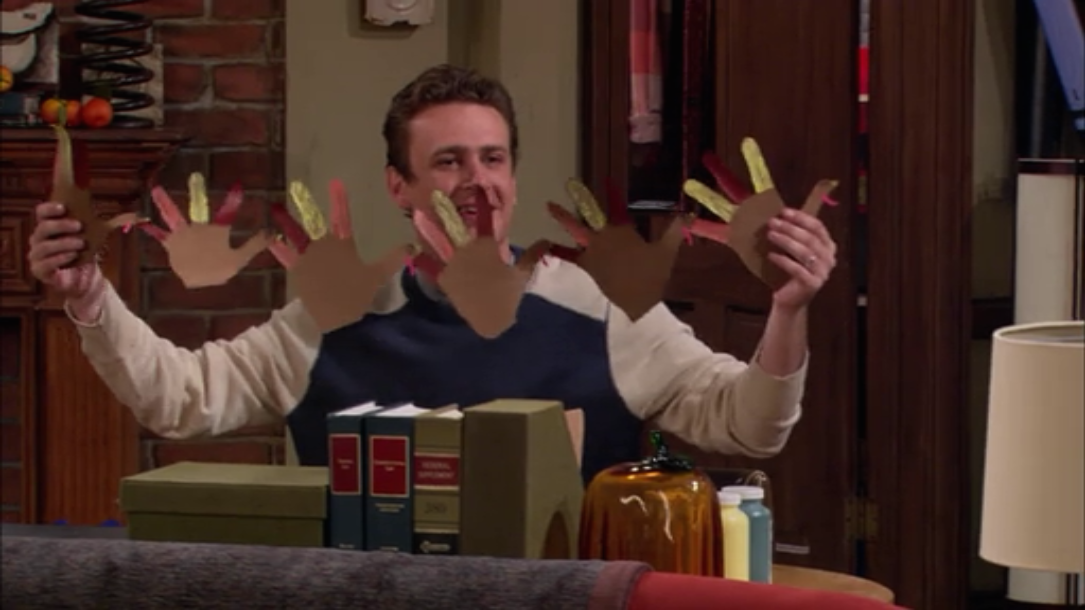
In retrospect, this season is mostly forgettable. ‘How I Met Everyone Else’ is an interesting look at the mutability of memory, between Ted’s “eating a sandwich” euphemism and confusion over a hook-up that might have happened with Lily. ‘Slapsgiving’ has the wonderful sight gag, but it’s more important for Ted and Robin allowing themselves to be friends again. ‘Ten Sessions’ is essentially the only romance we see in the Ted-Stella relationship before he proposes in ‘Miracles’, an episode more significant for Barney acknowledging his feelings about Robin.
himym-s4

Season 4: Beat Ted

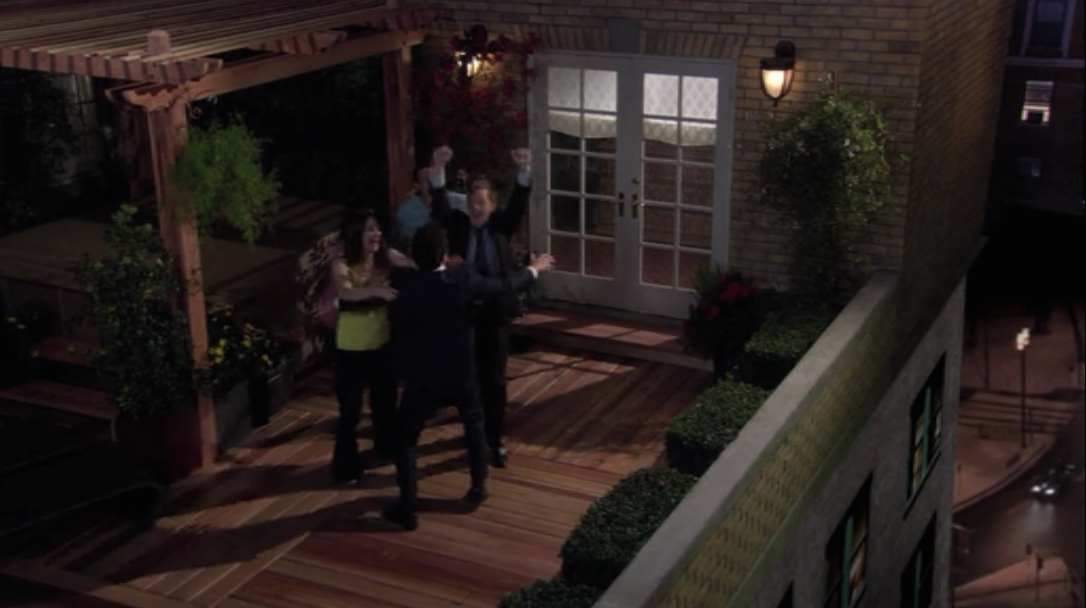
This season is tough for Ted — he’s left at the altar, beat up by bartenders and goats, and fired from his job — but it’s not all bad news. ‘The Best Burger in New York’ is both a testament to the power of nostalgia and a statement about the ever-changing nature of New York. Ted’s relationship with Robin (which will doom future relationships) is a red herring in his engagement to Stella, but his attempt at being friends-with-benefits mostly hurts Barney. The season closes with some very literal “leaps” — Robin and Barney finally hook-up, and Ted takes a new job.
himym-s5

Season 5: Some closure

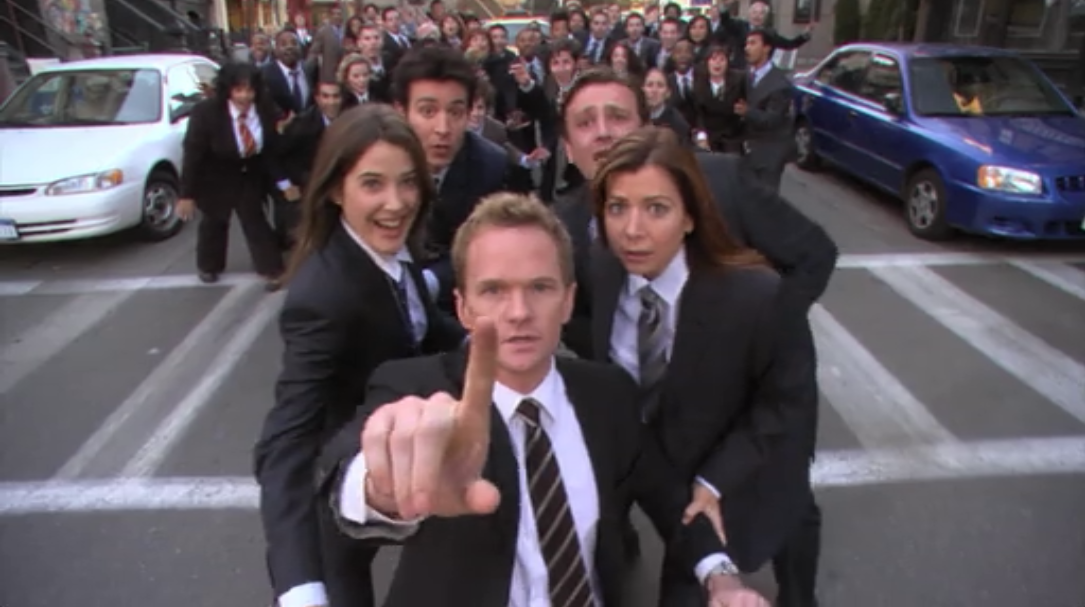
By season 5, the show must finally address some lingering issues. In ‘Rough Patch’, Barney and Robin can’t survive their rough patch, but choose not think of it as a break-up, but as two friends getting back together. ‘Girls Versus Suits’ finally establishes some facts about The Mother, while musical number ‘Nothing Suits Me Like A Suit’ is one of the show’s finest moments.

‘Say Cheese’ confronts Ted’s parade of girlfriends; after about 100 episodes of wondering why Ted can’t make a relationship work, Ted is sympathetic when with the audience realizes that everyone has to hope that the relationship you’re in is The One. ‘The Wedding Bride’ gives closure to the Stella storyline, with a great visual metaphor for emotional baggage. In the season finale, Marshall and Lily finally decide to have a baby, Robin finally chooses love over career, and Ted (whose blonde hair hilariously prevents him from hooking up with Robin) distills one of the show’s (and reality’s) core truths: “Over time, we all become our own doppelgängers: these completely different people who just happen to look like us.”
himym-s6

Season 6: Fathers

‘Big Days’ introduces a wedding “a little ways down the road” that has now been stretched way beyond good taste. Since Ted meets The Mother at wedding (which will finally happen in Season 9), the last three seasons have often felt like the characters are running in place. Despite that, Season 6 is one of if not the strongest season yet.

  • ‘Natural History’ : A perfect episode that balances the touching, the silly, and the romance. While Marshall and Lily confront the “extinction” of past selves, Ted and Zoey have their first tete-a-tete, and (as in ‘Zip Zip Zip’), Robin and Barney’s prank war is a date night in disguise.
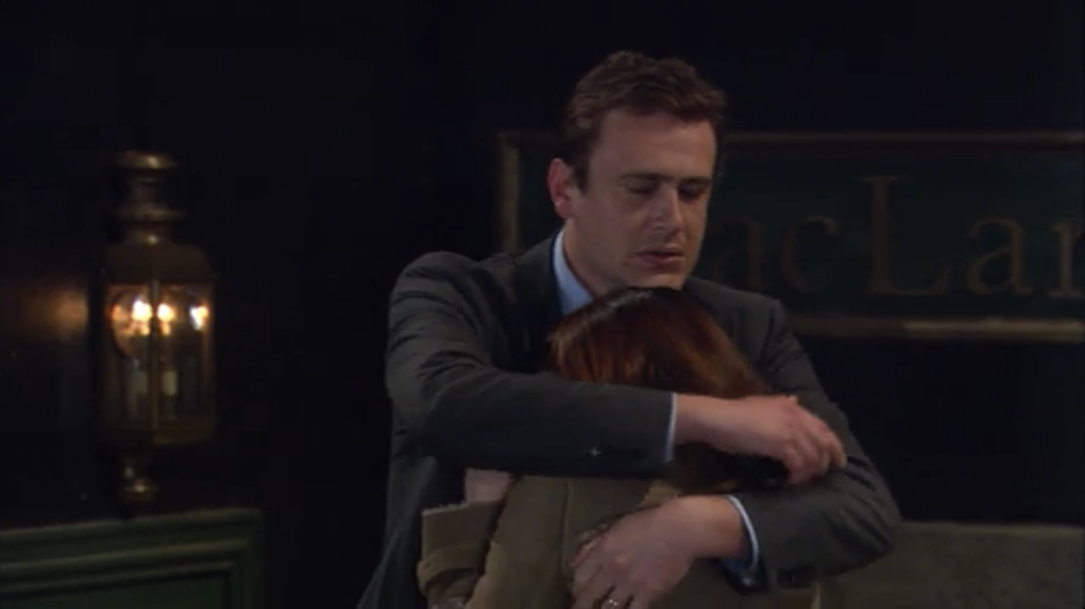
  • ‘Bad News’ / ‘Last Words’: While worried about fertility, Marshall is blindsided by his father’s death. Personally, ‘Last Words’ perfectly expresses the frustration and anger of losing a loved one (and it gets me every time, obviously).
  • ‘A Change of Heart’: Barney realizes he has feelings for Nora, but the fake-out (that he couldn’t bring himself to see her) is just heartbreaking.
  • ‘Legendaddy’ : After raising the issue several times, Barney finally meets Jerome, but his resentment is too great. He finally learns a lesson from his father, giving Ted the “stolen” basketball hoop: “a kid needs a hoop.”
  • ‘Challenge Accepted’: Lily is finally pregnant, but the big story is another love triangle, as Barney pursues Nora and Robin pursues Barney. Bookending the wedding of ‘Big Days’, Barney is revealed to be the groom.

himym-s7

Season 7: Things get messy

If the eighth season had been the last (as planned), this season would seem much less frantic. Instead, relationships are built up and dashed (and Barney “almost” marries Quinn!): characters can’t move on when the end game boxes them in. Barney/Nora and Robin/Kevin are doomed relationships, but they have their moments, even if “you’re almost as messed up as I am” is not a good enough reason for Barney and Robin to start dating. Barney’s hilarious long con makes ‘Ducky Tie’ the season’s funniest episode, while Robin’s fantasy of children is a devastating reveal in ‘Symphony of Illumination’.

himym-s8

Season 8: Wheels Spinning

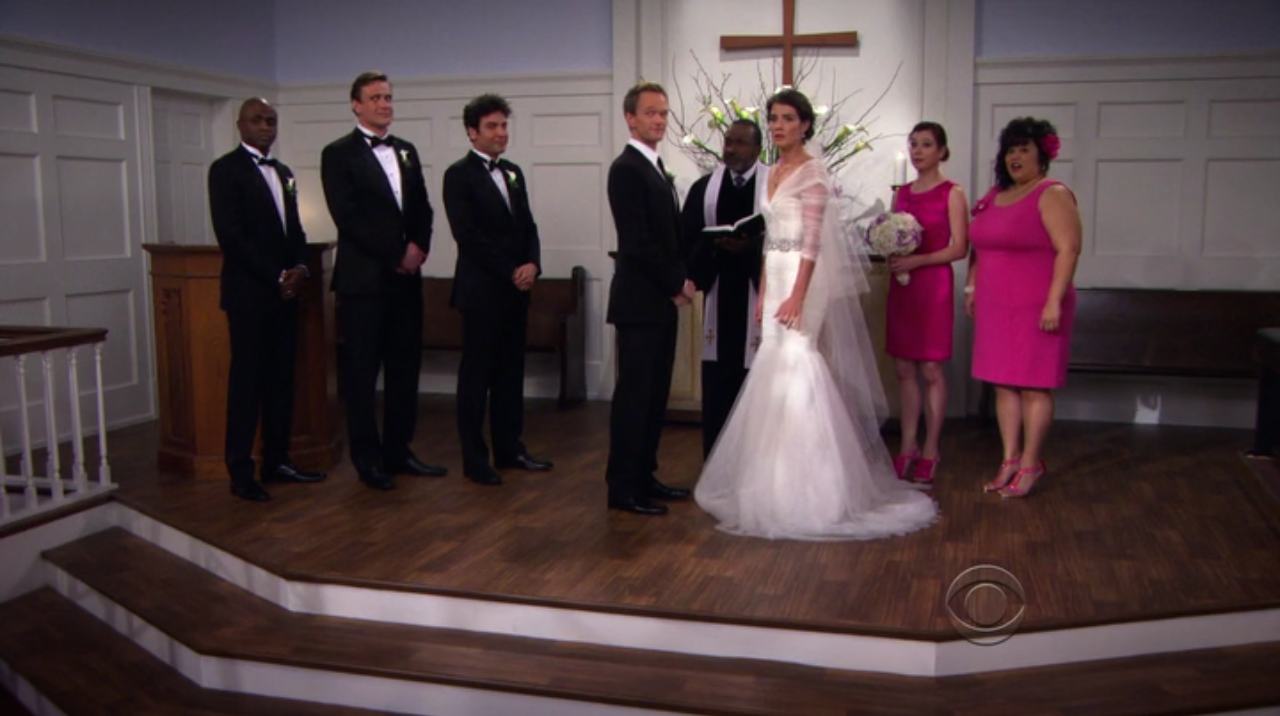
What a forgettable season! Barney and Robin get back together in the most convoluted way possible and Ted’s friendship with Robin continues to dominate his life. Only Marshall and Lily’s storyline is realistic: the show’s grown-ups continue to face the challenges of adulthood. Only ‘The Time Travelers’ has been important, and only in retrospect, as the foreshadowing to The Mother’s death makes Ted’s speech one of his Grandest Gestures.
himym-s9

Season 9: Wheels Down

An ambitious plan goes awry. Having the final season take place over the weekend of Barney and Robin’s wedding required a few more tricks than Bays and Thomas had up their sleeves, unfortunately. Marshall spent most of the season in subplot purgatory, while most episodes followed a predictable rehashing of the Ted-Robin-Barney love triangle. The Mother was a refreshing new character, but was criminally underused, except in season (and series) highlight ‘How Your Mother Met Me’.


With How I Met Your Mother set to end tonight, I can’t think of a finale (and certainly not one for a sitcom) that had stakes this high. How Ted and The Mother finally meet (my money is on a callback to Ted’s meeting with Robin via Barney’s “have you met Ted?”), how much more we see of their relationship, and — thanks to ‘Vesuvius’ and Ted’s speech in ‘The Time Travelers’ — how much time the two have together before something tragic happens. This post will be updated when I process the finale.

But whatever happens tonight, How I Met Your Mother will go down as one of the best sitcoms of all time. Those first few seasons, plus the highlights — both comical and emotional — between then and now are unimpeachable. Not bad for a multi-camera sitcom with a laugh track.


Well, it’s over. As predicted by many, The Mother (Tracy McConnell) dies before Ted’s long-winded chat with his kids, leaving him free to reunite with — who else? — Robin. The reviews I’ve read think this is a huge betrayal of the show, the characters, and the audience, like getting out of jail on a technicality, but I don’t see it that way.

This show has always been about five friends, growing up, falling in and out of love, and navigating young adulthood together. The Mother’s identity has always been a red herring: the plot device that gave the story gravitas and a sense of purpose. But even as the audience came to love The Mother, with each successive week of the flawed final season, it became clear that there would be no way for us to know her the way we know Ted, Robin, Marshall, Lily and Barney. And as the clues that The Mother would die young piled up, it was clear that we never would.

I have joked that the show should be called How I Fell In Love With Your Aunt Robin, because that has been its through-line since the pilot, misdirection and all. The finale recognizes that, while keeping The Mother pristine, unlike Ted’s previous loves (Victoria, Stella) that the show worked to make undesirable.

Is it tragic that Ted and The Mother spent only a decade together? That their kids’ are left motherless? Of course it is. But the show has always been about how lives change and, yes, even end before they should. Is Robin and Barney’s three-year marriage feel short and unfulfilling? Of course it does. But the show has always been about how relationships change, and, yes, even end before they should. This ending doesn’t change any of that retroactively.

When shows end, they’re often disparaged for not being completely true to what came before, to not being plotted out in such a way that every question is answered, every loose end tied. How I Met Your Mother stayed true to its original plan (even when its success brought additional seasons), and it’s not perfect (this season’s reach exceeded its grasp, clearly). But if a 50-year-old Ted bringing Robin a blue French horn doesn’t warm your heart, I’m not sure that we’ve been watching the same show.
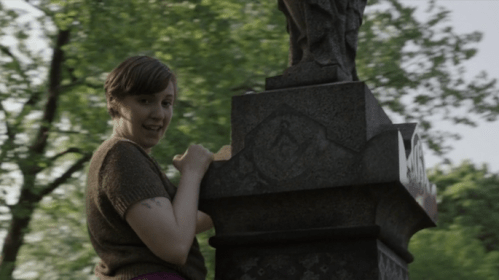
A fat-free muffin of sociopathic detachment: ‘Dead Inside’ as the perfect episode of Girls

A fat-free muffin of sociopathic detachment: ‘Dead Inside’ as the perfect episode of Girls

Since premiering almost two years and twenty-something episodes ago, Girls has demanded attention and opinions. Engineered to be polarizing, it divides people along familiar lines of bias: it’s either too white, or it’s a function of privilege, or it’s too obsessed with Lena Dunham’s body. These are the arguments of countless think pieces, and I’ll leave it to the professionals. This is not a think piece.

I’ve watched Girls since it premiered, and I’ve generally enjoyed it for what it is: a hilarious, satirical appraisal of a very specific culture in a very specific time and place. It has consistently out-performed its Sex in the City-for-millennials log line, thanks to unmatched comedy writing and some pitch-perfect performances from previously-unknown actors. The fact that it comes from the mind of a 27-year-old, as jealousy-inducing as that may be, is just astonishing.

Girls has rebounded from an uneven second season with some of its best episodes yet. Everything has been fascinating: Hannah’s attempts at domesticity and responsibility, Marnie’s descent into viral video celebrity, Jessa’s rehab bomb-throwing, and Shoshanna’s… well, I’m not sure what she’s doing, either. Yet it wasn’t until the fourth episode, ‘Dead Inside’ (written by Dunham and Judd Apatow, directed by Jesse Peretz) that I was reminded how brilliant this show can be at its best.

From the first shot of the episode — Hannah pratfalling in the lobby of her publisher — everything is kinetically-charged with failure and anxiety. Comically harried employees, gasps and tears, an under-siege receptionist, and the audience can probably guess what is coming next. It’s the first of many moments where we await the drop of the other shoe. David, Hannah’s editor, is dead (David being cranked on who-knows-what in the last episode was a solid clue, too).

The episode becomes not only a litmus test for the characters’ feelings on death, but the clearest portrayal of who these characters are at their core. Hannah’s self-aggrandizement and narcissism are even starker than usual: as she recounts the story of David’s death, her outrage that no one has updated her on the status of her e-book is — as expected — either at or just below the surface at all times. Like a sociopath trying to mimic normal human behavior, she keeps looking for the best way to describe David, her often-distant editor who is then upgraded to close friend and collaborator in later retellings. As she tells Caroline, when her OCD flared up, she couldn’t see outside herself, and now medicated, she doesn’t want to. Ray, whose only encounter with David was getting knocked on his ass, stands in for the audience: “Why don’t you place just one crumb of basic human compassion on this fat-free muffin of sociopathic detachment and see how it tastes?”

As ever, Jessa is blasé (death is like “jury duty, floods”) and pseudo-intellectual (her time-space bullshit). David’s death has shaken up memories of Season, “her favorite friend” who she’s a bit shaky on the details (is she buried in a tomb, a sarcophagus, or a grave?), and for the second time in the episode, the dramatic irony is too rich: Jessa is such a bad person (taking an addict to an Ayahuasca) that people would fake their own death to remove her from their lives. It didn’t even take too much work: they knew that Jessa wouldn’t even attend the fake funeral. Her reaction to a very-alive Season is predictable: indignant and bitter, she lashes out with more of her rehab-trained venom before finding peace in her self-satisfaction.

Shoshana, busy finding her identity in a bandana collection, has a death story, too. After grieving through poetry, she took over her friend’s position in the friend group; they really only needed on “practical yet goofy confidante,” after all. Shoshana continues to see her life through possessions, imagined hierarchies, and fictional tropes; unlike Hannah and Jessa, her delusions only hurt herself.

Elsewhere, Marnie doesn’t have to ponder death: she’s getting into fighting-shape, gasping the “faster, better” lyrics of her cringeworthy ‘Stronger’ performance. She doesn’t really get zen, though: her Oprah-approved self-help book-on-tape is drowned out by the blending of a coconut water smoothie. Despite her efforts, she can’t focus on her job because of how her Edie Brickell cover video (her “music-fail”) has had a life of its own. Marnie is even more delusional than the others: “Do you know what kind of work I’m qualified to do in the world?Tthe kind of people who want me?” She’s about to be reminded that no one does (whither the “fancy people?”), as she quits her job.

When Caroline — Adam’s unplucked, unshaven manic pixie dream girl parody of a sister — tells Hannah a Sad Story from Adam’s past, Hannah’s reaction (or lack thereof) is frightening. Even the obviously damaged Caroline has to ask, “what is wrong with you!?” Later, in a brilliant play on the first two instances of dramatic irony in the episode, I was convinced that Hannah’s retelling of the story to Adam would blow up in her face: surely, Caroline had lied about lying, for whatever reason, and Hannah was about to look like the monster she is. Instead, like a blind man grasping in the dark, she finds a way to look human for her painfully earnest boyfriend.

If ‘Dead Inside’ simply used death to peer behind the curtain of the show’s characters, it would go down as one of the funniest and most illuminating episodes of Girls. But that’s not all: there’s also a scathing takedown of the show’s (and Dunham’s) frequent critics on and around sites like Gawker and Jezebel. Describing herself as “a media-ist,” Hannah paints Gawker as a “web portal” that “celebrates the written word” and Jezebel “as a place feminists can go to celebrate each other, where we need in this modern world of slut-shaming,” rose-colored appraisals when compared to Adam’s take: “judgmental creeps, celibate against their will, snarkily [reporting] on every fucking detail of your body decomposing,” “a bunch of jealous people who make a living appealing to our basest desire to see each other kicked while we’re down.” Which sounds closer to Dunham and Apatow’s true feelings?

Best television, 2013

justified-1231

On the eve of 2014, I thought I’d collect some long-gestating thoughts about the year in television. As the list of shows I watch continues to dwindle, I’ve come around to what Grantland’s Andy Greenwald hypothesized last year, that the so-called Golden Age of television is over, due to a variety of causes: genre-driven shows coming into favor over showrunner-driven ones (The Walking Dead), the proliferation of what Greenwald calls “prestige simulacra” (House of Cards, Low Winter Sun), the rise of gussied-up, reality-agnostic soap operas (Scandal, Homeland), and the demise of shows suffering from overlong runs (Dexter, Sons of Anarchy, How I Met Your Mother).

With all that said, it was still a great year for television. Even though I haven’t caught a handful of shows that could have made this list, both old (Game of Thrones) and new (Orange is the New Black, Masters of Sex, Broadchurch, etc), I still found myself consuming more television than most other media. Hopefully, I’ll have more time/energy to write about a topic that I spend an inordinate amount of time enjoying, digesting, analyzing, and discussing in 2014. Until then, here are some of my favorites (I’m saving my favorite discovery of the year, The Good Wife, for its own post).

Justified

I will try to write this without punning on the title, but four seasons in, Justified continues to entertain and surprise more than I ever thought it would, remaining at the top of my recommendations list. While the third season stumbled when it replaced Margo Martindale’s Mags Bennett with Neal McDonough’s Robert Quarles, shifting focus from a Hatfield and McCoy grudge match to a convoluted set of wheeling and dealings, the fourth season recovered its balance with a compelling season-long arc that weaved in Raylan’s father issues and Boyd’s quest for respectability. Throw in a storyline about the post-war support (or lack thereof) for soldiers, excellent character work all around, and dialogue as poetic as anything since Deadwood, and you’ve got a show as captivating as any of its more prestigious company.

Boardwalk Empire

The show with the hardest shoes to fill. True, Boardwalk Empire will never be that other New Jersey crime show or that other sprawling analysis of corrupt and broken institutions, but it has certainly become its own beast. Like The Wire’s second season, this season changed the poles of the show, shifting the protagonist from Nucky to Chalky and letting the Chicago plotline stand on its own. Michael K. Williams was certainly up to the challenge, with an equally adept sparring partner in Jeffrey Wright; once again, the show bucked expectations by leaving both men broken but alive by season’s end. After Richard’s Taxi Driveresque superheroics last season, his arc closed beautifully: another soldier who died a long time ago. As the show heads into its fifth season, watching the rise of Capone, the Syndicate, and even J. Edgar Hoover is sure to be a treat.

Mad Men

Mad Men’s penultimate season gave us Draper’s Infero: 13 episodes of an increasingly-unraveling Don Draper in a nosedive towards redemption. His grasps at controlling his fate were increasingly haphazard and cringeworthy, from a harried merger that was the antithesis of the SCDP founding to his desperate, soul-baring Hersey’s pitch. A one-night stand with Betty only looks favorable in light of his debased affair with Linda Cardellini’s Sylvia Rosen, which ends when Sally literally catches her father with his pants down (the lowest point in a brutal coming-of-age). While the 60s aren’t over, the combination of MLK, RFK, and the DNC is certainly the turning point as the show heads into its final season. However, after witless fans spent the whole season pondering the meaning of Bob Benson (he’s a serial killer!) and Megan (she’s already dead!), I am not looking forward to a year of speculation that Don will tumble out his window in the finale.

Bob’s Burgers / Archer

Bob’s Burgers quietly became the best family sitcom on television, finding its singularly strange voice and fleshing out its quirky characters. In its first full season, it tackled genre staples like mother-daughter relationships and first crushes, but also found the family shanghaied on a cruise ship, visiting a swinging seniors home, and dealing with espresso addiction. With spot-on parodies of Jaws and ET (the latter of which featured Jon Hamm as a talking toilet), Zach Galifianakis as a Christmas mannequin come to life, and Kevin Kline’s increasingly-bizarre Mr. Fischoeder, the show is also hitting its stride with its secondary characters and guest stars (reminiscent of The Simpsons, pre-stunt casting).

Transitioning to the other animated show which stars H. Jon Benjamin, Archer opened its season with a Bob’s Burgers reference inside A History of Violence reference (or is it the other way around?) — a meta moment during which I almost exploded with glee. With references so layered and esoteric that they need a Vulture column to decode (seriously), Archer is still the best joke-per-minute show on television. And even as the season’s throughline was wanting, the individual episodes (Archer’s homoerotic love with Timothy Olyphant’s Lucas, Ron Cadillac’s gangster past, border battles with Justified’s Nick Searcy) were as hilarious and twisted as ever. Lana’s pregnancy was foreshadowed nicely, and even if Adam Reed has promised that Season 5 is “a radical departure” for the show, I’m curious where they take it.

Best New Drama – The Americans – Another feather in FX’s cap, The Americans is a show about a failing marriage, disguised — with spirit glue, a fake moustache, and a wig — as taut, Cold War-era spy thriller. It fell into the escalation trap a few times too many, but “Gregory” felt like something between The French Connection and Ronin.

Best New Comedy – Brooklyn Nine-NineParks & Recreation at a police station. Featuring the strongest (and most diverse) ensemble cast on television, this one gets a lot of laughs from the duo of Andy Samberg and Andre Braugher, the latter of whom is a surprisingly hilarious straight man.

Personal favorites 2012: Music

I’m dusting off the ol’ personal site for Yet Another Best Of 2012 list. I understand the criticism of such lists — that they’re masturbatory and/or arbitrary, they reinforce conventional wisdom, etc — so rather than crafting a few Top Tens (as I originally intended), here are some of my favorite songs, albums, artists, and musical trends of the year.

R&B of all flavors

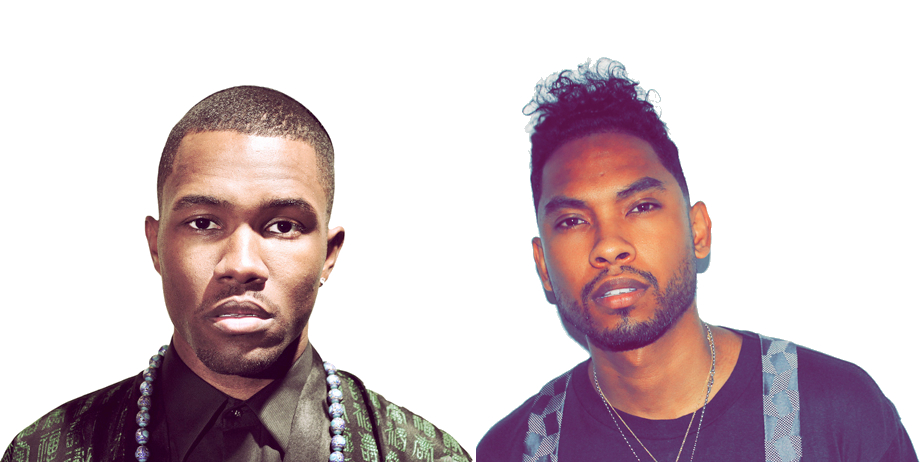
Last year, the debuts of artists like Frank Ocean and The Weeknd resulted in heaps of chin-scratching think pieces about “hipster R&B” (or worse “PBR&B”). Ocean’s triumphant Channel Orange, and to a lesser extent, Miguel’s impressive Kaleidoscope Dream, continued to feed the “state of modern R&B” discussion, which is as boring to me as the related and equally asinine “real hip-hop” discussion. Genres are only useful as ways to ease description, preventing every music conversation from devolving into talk of “excessive vamping” and other music genome qualifiers. Genres aren’t boxes, and great music doesn’t usually start from a conceptual standpoint (“I’ll make X but use Y instead of Z”).

There is room in R&B for albums like Channel Orange and Kaleidoscope Dream, as there’s room for Jeremih’s sultry, R. Kelly-indebted Late Nights with Jeremih or How To Dress Well’s gauzy, deconstructionist Total Loss. And there’s always room for Rihanna’s empty-vessel hit parade: Unapologetic is her latest collection of “Good Girl Gone Bad” anthems, delivered on schedule and with corresponding media frenzy.

R&B is thriving in both the mainstream and the underground. Two of the best pop songs of the year, Usher’s Diplo-produced ‘Climax’ and Justin Bieber’s Timberlakish ‘Boyfriend’ are steeped in very different traditions (even if the respective albums didn’t live up to the promise of the lead singles). Meanwhile, vocal talents like Nina Sky and Solange Knowles, producers like Two Inch Punch and Nguzunguzu, and electronic duos like AlunaGeorge and Evy Jane continue to push and pull the form in exciting new directions.

Lana Del Rey

It’s hard to believe that the blogosphere furor over Lana Del Rey’s music industry machinations happened over a year ago. I will admit that my initial review of Born To Die was far from charitable; acknowledging a backlash doesn’t always prevent one from getting caught up in it.

After nearly a year of debating and discussing the woman formerly known as Lizzy Grant, I’ve come around on Born To Die. As a mea culpa, here’s how I feel now (via my blurb for FACT’s best albums list):

The debut album from the most divisive pop star in some time did nothing but further polarize the conversation. Unfortunately, the conversation usually revolved too much around the idea of Lana Del Rey and not the music of Lana Del Rey. Whatever your opinions on retro-fetishism and her “gangsta Nancy Sinatra” PR spin, Born To Die is a phenomenal accomplishment: 15 songs (including bonus cuts, but not counting the expanded Paradise edition) with few if any missteps, a malleable but distinct voice, a well-oiled pop soundtrack that seamlessly fuses its many influences, and a pair of zeitgeist-defining songs (‘Blue Jeans’ and ‘Video Games’). When was the last time a record — and a major label debut, at that — could say all that?

Rappers who happen to be gay (not “queer rap”)*

Let’s get this out of the way: Mykki Blanco, Le1f, Zebra Katz, Azealia Banks, and Angel Haze are young, black, and queer — but appending “Gay/bi/queer rapper” to every mention of their names is ghettoizing and reductive (not unlike predecessors “female rapper” and “white rapper”). As artists, their sexuality is an intrinsic part of their work, but it does not define it. Grasping at straws, one could point to their reliance on electronic dance music-friendly beats, but in a year that saw Hudson Mohawke producing for Kanye and Little Dragon working with Big Boi (to name just two examples), that’s not unique to this group.

In the mind-numbingly hetero-normative world of hip-hop, openly gay rappers have had a certain novelty to them.** But the time of novelty is over. Each of these artists has proven that their sexuality is not some sort of gimmick (a ridiculous double standard), and that they’re individual artists, forging their own paths. Mykki Blanco’s ‘Wavvy’, Le1f’s ‘Wut’, and Zebra Katz’s ‘Ima Read’ share certain signifiers, but they all come from very different places. For Azealia Banks and Angel Haze, the fight for equal footing seems doubly hard, but neither seems content to be “the next Nikki” or “the next Kim.”

Mainstream hip-hop is as top-heavy as ever: there’s Jay-Z, Kanye, Drake, Rick Ross — and then everybody else. For her part, Nicki Minaj seems less and less concerned with actually rapping, while Lil Wayne has kick-flipped his way into irrelevance. The rosters of MMG, YMCMB, and GOOD are loaded with middling talent, and despite Kendrick Lamar’s star-making debut, the rest of Black Hippy are far from sure things. A$AP Rocky faceplanted on Long.Live.A$AP, and don’t get me started on Trinidad Jame$. Hip-hop is in dire need of rappers with personalities and identities, and these new talents have both in spades. They also just “happen to be” gay.

* I realize that grouping these artists together is part of the problem, but here we are.
** The largely-positive response to Frank Ocean’s “coming out” was a step in the right direction.

Ubiquitous producers: Mike WiLL Made It and Ryan Hemsworth

After emerging in 2011 with the monstrous ‘Tupac Back’, Mike WiLL Made It had the type of 2012 that Lex Luger had in 2010/2011, scoring more than his share of mainstream hits with a melodic, synth-heavy Southern style that is equal parts trap menace and drugged-out ambience. The highlights include ‘No Lie’ (2 Chainz and Drake), ‘Turn On The Lights’ (Future), ‘773 Love’ (Jeremih), and a pair of moody strip club anthems in ‘Bandz A Make Her Dance’ (Juicy J) and ‘Pour It Out’ (Rihanna). He also received a credit on ‘Mercy’ (who didn’t?), and produced tracks for Gucci Mane, Young Jeezy, French Montana, and Brandy.

Mining similar sonic space (but in less commercial avenues) is Canadian wunderkind Ryan Hemsworth. The prolific producer dropped a pair of intriguing EPs (the self-released Kitsch Genius and Last Words for Weditit), but his calling card remains sublime edits of hip-hop and R&B tunes. Subtle, charming, and creative (Chrono Trigger samples, anyone?), his remixes of Frank Ocean’s ‘Thinkin Bout You’, Tinashe’s ‘Boss’, and Jeremih’s ‘773 Love’ (as mentioned, produced by Mike Will) kept popping up in mixes and podcasts, of which he assembled a dozen himself.

For both producers, the test for 2013 will be whether or not they can continue growing as artists, avoiding the pitfalls of establishing and relying on a “signature sound.” True masters are always surprising; when was the last time Kanye pitched-up a classic soul sample?

Can't-miss events at DC's Forward Festival

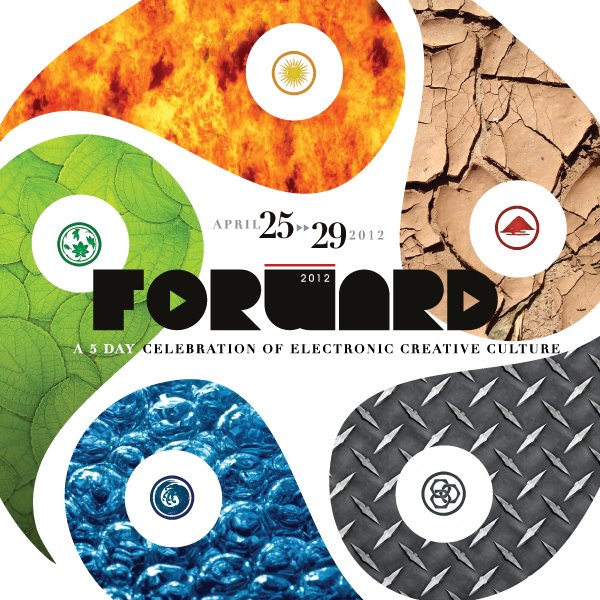
Today marks the start of the Forward Festival, DC’s own five-day celebration of electronic music, art, and culture. Now in its fifth year, Forward’s lineup is arguably its best yet, with wide-ranging events staged in venues across the city. Not just a music festival, Forward also features educational panels, workshops, and film screenings. If you bought a festival pass and plan to devote the rest of the week to Forward, you’re in for a treat. But what about those dabbling in the festival? Here are my picks for Forward’s standout events.

Wednesday

Even though the existence of monthly Moombahton Massives has lessened their sense of urgency, the party is still an essential part of DC’s homegrown genre. The 14th (!) edition of MM brings, as usual, Nadastrom and Sabo alongside Toronto’s Slowed crew, Torro Torro and Lucie Tic.

Thursday

While U Hall keeps the party going with techno pioneer Jeff Mills, my money is on something different, as Distal and DFRNT perform at Patty Boom Boom. Nothing says “forward” more than future bass DJs taking over a venue whose soundsystem usually pumps out reggae and dancehall.

Friday

Predictably, my pick for Forward’s best showcase isn’t house or techno, but bass. Head over to the Warehouse Loft for the type of lineup rarely seen in DC, including Freq Nasty, Silkie, B. Bravo, and the (underbilled) Jacques Greene. The $30 ticket is more than justified by the five rooms of music, live art, and dancers – both aerial and with fire, and the fun goes until 5am.

Saturday

Finally, it’s block party season! Join the Forward family at a private lot for a free party that features a host of DC’s up-and-coming DJs.

Sunday

If you’re still standing on Sunday night, keep an eye on Meltdown. It’s next to the Rock and Roll Hotel, the lineup is a closely guarded secret, and it’s free. As the Facebook event says, “Only the strong survive.”

The underground kings of Fade to Mind

If Night Slugs was the finest label of 2010, a case could be made that sister label Fade to Mind wore the crown last year. While not matching the output of the prolific London imprint in quantity, Fade to Mind has made a mark by documenting the most exciting developments in American club music.

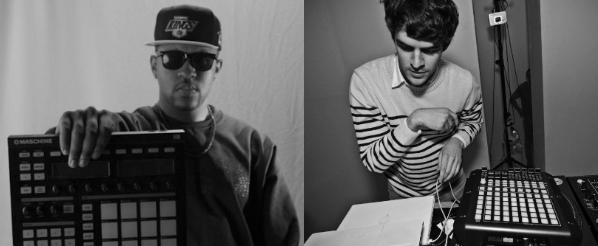
The brainchild of LA’s Kingdom and Texas producer Prince William, Fade to Mind is more than a label: it’s a collective of like-minded artists who produce club music that maintains the rough edges of its underground origins. Fade to Mind doesn’t seem interested in “mainsteaming” these cultures as much as uniting underground scenes from LA to New York and all points in between.

After releasing a limited-edition, bootleg mix CD, Fade to Mind’s first official release was the superb Timesup EP by standard bearers Nguzunguzu. The EP is an exploration of mutated bass music that oscillates between sensual and creepy. The video for standout “Water Bass Power” features the off-kilter, aquatic weirdness that defines seapunk.

New Jersey’s MikeQ has become synonymous with the the recent re-emergence and popularity of ballroom music. Fittingly, his first major release, Let It All Out, was Fade to Mind’s second. The EP is an introduction to vogue staples like the Ha beat and speakers like Kevin JZ Prodigy; it even includes a remix by genre originator Vjuan Allure. Continuing to delve into ballroom, the label just dropped a free EP from Massachusetts producer Rizzla, who, along with spinning the Ha (“Badmind Ha”), takes on tropical rave (“Psychoton”). In true ballroom style, “Dick” is a sexed up club track based on a Lil’ Kim sample that you can figure out from the title.

[wpaudio url=”/wp-content/uploads/2012/04/03 DICK.mp3″ text=”Rizzla – Dick” dl=1]

Fade to Mind hasn’t stopped there, also releasing an EP by the label’s lone European (for now): Gremino. The Finnish producer’s Let’s Jack is a percussive, aggressive take on techno and grime. The breakbeats on “Lush” shake foundations and the midrange pulses on the title track are haunting. Rounding out the collective’s lineup are artists Total Freedom, Cedaa, Clicks & Whistles, and Fatima Al Qadiri, collaborators who will hopefully be releasing music through the label soon.

Want to hear what Fade to Mind is all about without going to their LA-based monthlies? These twin mixes from the label heads do the trick. Just rest assured you’ll be hearing more from Fade to Mind sooner than later.

[wpaudio url=”http://fadetomind.net/audio/ftm_mix_001.mp3″ text=”Prince William – Fade to Mind Mix 001″ dl=1]

How two midseason replacements portray female friendship


Ah, midseason. That not-quite-magical time in a TV network’s year when shows passed over in the fall get jammed and squeezed into the schedule like so many square pegs. As is often the case, The Simpsons — itself a midseason replacement due to production issues — said it best:

Announcer: The start of television’s second most exciting season – midseason – is just two hundred exciting seconds away!
Lisa: Isn’t midseason just a dumping ground for second-rate shows that weren’t good enough for the fall schedule?
Homer: You’re thinking of all the other years.

This month, NBC and ABC will debut two sitcoms that continue TV’s Year of the Woman: Best Friends Forever and the regrettably redacted Don’t Trust the B—- in Apartment 23. While the two shows have different comedic voices, they also have drastically different views on the concept of female friendship.

Best Friends Forever is the brainchild of real-life BFF’s Lennon Parham
and Jessica St. Clair, who along with writing the show, play fictional versions of themselves. The show’s inciting incident occurs as Jessica unexpectedly receives divorce papers. Distraught and unable to deal, she decides to move back to New York to live with her old roommate, Lennon. Complicating matters is Lennon’s live-in boyfriend, Joe (Luka Jones), who while generally supportive, isn’t looking forward to having a squatter in their apartment.

Jessica, meanwhile, is immature and miserable to be around in a way usually reserved for guys in sitcoms (does that count as breaking a gender barrier?). For most of the episode, Jessica is a self-centered pain in the ass, a grenade thrown into Lennon and Joe’s relationship – which seemed to be working pretty well. Plans are broken, tears are shed, but fear not – everyone ends up in a group hug. The needy co-dependence on display is like a more unhealthy version of the threesome on Up All Night.

While the characters in Best Friends Forever start that way, the title of Don’t Trust the B—- in Apartment 23 portends differently. Wide-eyed and right off the bus, June (Dreama Walker) can’t wait to start her new job and live in her company-owned apartment with a view. Unfortunately, her firm implodes on her first day, leaving her both jobless and homeless. Her roommate search yields Chloe (Krysten Ritter), who is literally too good to be true. The titular bitch, Chloe cons new New Yorkers into first, last and deposit before her antics (rudeness, public nudity, fourways in the living room, theft, etc.) drive them from the apartment.

June’s Indiana farm girl personality belies the fact that she’s an equally smooth operator. When she figures out Chloe’s MO, she turns the table on her, earning her respect and a détente. But it’s only after Chloe exposes June’s fiance as a cheater does a friendship actually take root.

An earlier conversation between Chloe and best friend James Van Der Beek (hysterically playing himself) revealed some humanity beneath the horror, even if the show plays the moment ironically:

James: Do you think maybe this is why you don’t have any female friends?
Chloe: Whatever, I don’t want any, girls are too mean.

By the end of the pilot, June is a barista (with a slightly-sociopathic roommate and without a fiance), Chloe has a female friend, and they both seem fine. Created by American Dad writer Nahnatchka Khan, Don’t Trust the B—- in Apartment 23 is not only funnier and sharper than Best Friends Forever, but it also presents a healthier, more relatable portrait of friendship. Trust me.

Is "Awake" the drama NBC has been searching for?

It’s been a while since I was legitimately excited about an NBC drama – five years, to be exact (2007, the year of Journeyman and The Black Donnelleys). As can be expected from the fourth place network, the post-ER years have found NBC scrambling with half-baked concepts and lame rip-offs; even when they had a possible hit, they ended up fumbling the ball (Friday Night Lights, Southland). So imagine my surprise when NBC revealed an intriguing drama during upfronts last May. Even more surprising is that it’s a network crime drama, a genre I usually eschew.

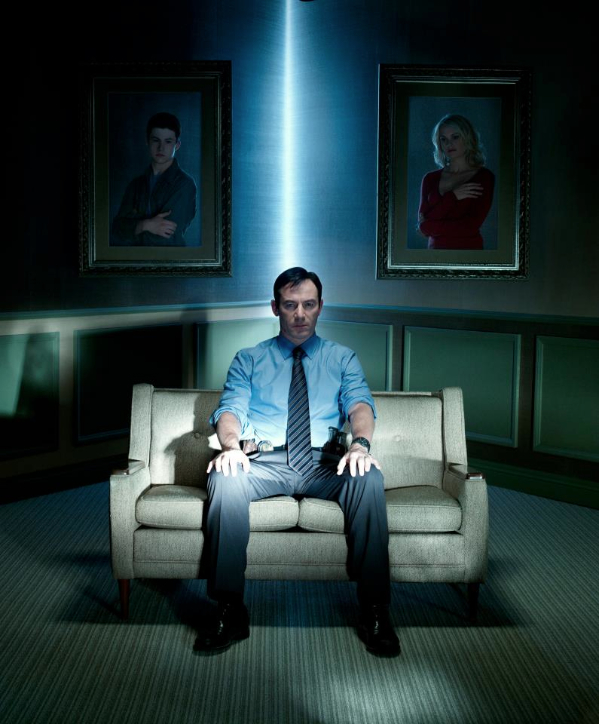
Yes, Awake is a(nother) crime procedural, but with a captivating high-concept that doesn’t rely on gimmicky quirks. Instead, it borrows from dream-reality mindfuck Inception. Before the show starts, Detective Michael Britten (Jason Isaacs) is in a terrible car accident with his wife and son, and his life becomes a series of waking dreams: in one, his wife survives, and in the other, his son does. Despite talking with two department-mandated psychologists, he can’t tell which outcome is reality. To help, Michael uses a different color wristband to signify which of his family members is alive. To help the audience, Awake imbues each with a separate color tone, a la Traffic. As in Brotherhood, Isaacs is great as a distant yet precise operator who struggles with personal connections.

The duality ripples through Michael’s professional life, as well. In one reality, he’s still paired with his longtime partner (Steve Harris of The Practice); in the other, he’s assigned a partner/babysitter in Wilmer Valderrama‘s Efrem Vega. But the realities are not separate entities – they’re starting to bleed over. Efrem is just a beat cop in the first reality, and clues and signifiers from one case appear in the other.

In the pilot, it takes a few scenes for the viewer to keep things straight: who’s alive, which case is this, where did this clue come from, and so on. But the confusion actually helps the viewer identify with Michael’s plight, as he’s having difficultly doing the same. Here’s hoping that audiences are willing to labor through the complexity. As NBC is learning, the easy path is rarely the best.

Awake premieres on Thursday, March 1 at 10PM, but NBC is streaming the entire pilot on Youtube.

DC's Lenorable releases spooky new EP "The Prince"

Lenorable is part of DC’s burgeoning post punk scene, balancing out the shoegaze sensibilities of contemporaries of Screen Vinyl Image and Washerwoman with chilling cold wave. Their latest effort is a Kickstarter-funded EP entitled The Prince, inspired – appropriately – by a visit to Edgar Allen Poe’s Baltimore grave site. Nevermore Furthermore, each of the EP’s three songs is thematically derived from one of Poe’s works.

The title track, a rumination on The Masque of the Red Death, is powered by an angular guitar riff and Lisa Reed’s haunting vocals (including the staccato “pity isn’t welcome here / fortune brings certain fear”), and is accompanied by a simple but effective video.

The nearly seven-minute long “Ligeia” follows suit, amping up the drama while surprisingly danceable (or sway-able, as the case may be). Rounding out the EP is “Inquisition,” a fun-house opium trip based on The Pit and the Pendulum that is heavy on warped vocals but gently melodic. For this goth-tinged duo, Edgar Allen Poe proves to be a fitting muse. Lenorable celebrates the release of The Prince tonight at the Black Cat, where they’ll be joined by Last Tide and Dangerosa.

An introduction to ballroom beats with genre innovator Vjuan Allure

The ballroom community is an underground culture that harks back to days when gay dance parties were strictly private affairs. But don’t let the name fool you: these functions aren’t formal waltzes in black tie, they’re LGBT catwalk performances and battle dances set to a hyper-kinetic blend of electronic beats. “The music is very dramatic, very to the point,” says DC-based DJ/producer Vjuan Allure. “You don’t have time to warm up: you get out there and bring it, and the music comes out that way. As soon as it starts, it’s already hot.”

For most people, their experience with ballroom began and ended with Madonna’s 1990 hit “Vogue.” But like all underground scenes appropriated by mainstream provocateurs, the culture lived on and continued to evolve. Ballroom is currently undergoing a renaissance, as producers and DJs like Vjuan craft tracks for the function and beyond. And it all started about a decade after Madonna’s crossover hit.

Back in 2000, Vjuan Allure was playing a ball in Detroit. He had hauled cases of vinyl from the DC suburbs for the event, but was dismayed when the host only wanted to hear six songs. This was a tipping point. Vjuan had been frustrated with the scene’s musical stagnation, i.e. balls that played the same music, function after function. Upon returning home to Beltsville, Maryland, Vjuan remixed seminal hit “The Ha Dance” by Masters at Work (the original is below). With that, the ballroom beats genre was born: music written and remixed specifically for the ballroom, and for the exciting vogue femme style in particular. “I started making hot beats, period,” says Vjuan, “and the ballroom went along for the ride.”

Vjuan Allure is the epitome of the DJ-as-world traveler. Born in Puerto Rico, he grew up between New York and Atlantic City. A dancer first, he started clubbing in New York around when he was 11 years old; with his mother traveling for business, he stayed with an aunt who was more liberal towards his nighttime activities. Despite his young age, he befriended dancers and bouncers, immersing himself in the scene. In college, he moved to Naples, Italy as part of a cultural exchange program, and his wealth of stockpiled music began his DJ career. “They wanted me to play hip hop, which is fine, but I wanted to play house,” he says. He started to build a following, but had to come back to the states as things were taking off. Almost on cue, he returned to Italy in 2002, just as his career was taking off stateside.

On the second day back in Italy, Vjuan had a revelation in the club. “That beat sounds real familiar,” he thought. “And then my voice came on.” Spinning his head in time with the record, he saw his name and realized the extent of his growing popularity. What followed has been a career as a leading figure in the re-energized ballroom scene.

Although he lives just outside of DC, Vjuan has recently found greater affinity to the music of Baltimore. Vjuan has worked with Scottie B, remixed for Unruly Records, and became a resident at Ultra Nate’s Deep Sugar party. “When I heard Bmore club, I was immediately in love with it.” Although club music isn’t played at balls, there is similarity in the hard-hitting, non-stop beats; Vjuan’s remix of “Lose Your Fvkin Mind” by Schwarz is a perfect example of this symbiosis.


After creating the ballroom beats genre over a decade ago, the underground is again breaking through. But instead of Madonna, the heralds of this crossover have been DJs like Kingdom and MikeQ and labels like Night Slugs and Fade to Mind. Vjuan provided a remix for MikeQ’s debut EP on Fade to Mind, and his remix of Bok Bok’s grimey “Silo Pass” will be released this year. His frenetic tour schedule will bring him to Japan, Sydney, London, Italy, and Miami, but rest assured, no one will be asking to hear hip hop or the same old ballroom standards: “They’re bringing me for me.”

[wpaudio url=”https://postcultural.com/wp-content/uploads/2012/02/Vjuan Allure – Exclusive Mix for Postcultural.com.MP3″ text=”Vjuan Allure – Exclusive Mix for Postcultural” dl=1]

1. Throw Ya Hands – Vjuan Allure
2. En Na Er Gi Bounce – Vjuan Allure
3. Gurlz – Vjuan Allure
4. Getting In – Vjuan Allure
5. 10,000 Screams – Vjuan Allure
6. What Are You Lookin At – Vjuan Allure
7. Colon Loads – Vjuan Allure
8. Lose Ur Fvkin Mindz – Schwarz (The Vjuan Allure Lobotomy Mix)
9. Wanna Carry – Vjuan Allure
10. Big Nasty – Vjuan Allure