Category Archives: Music

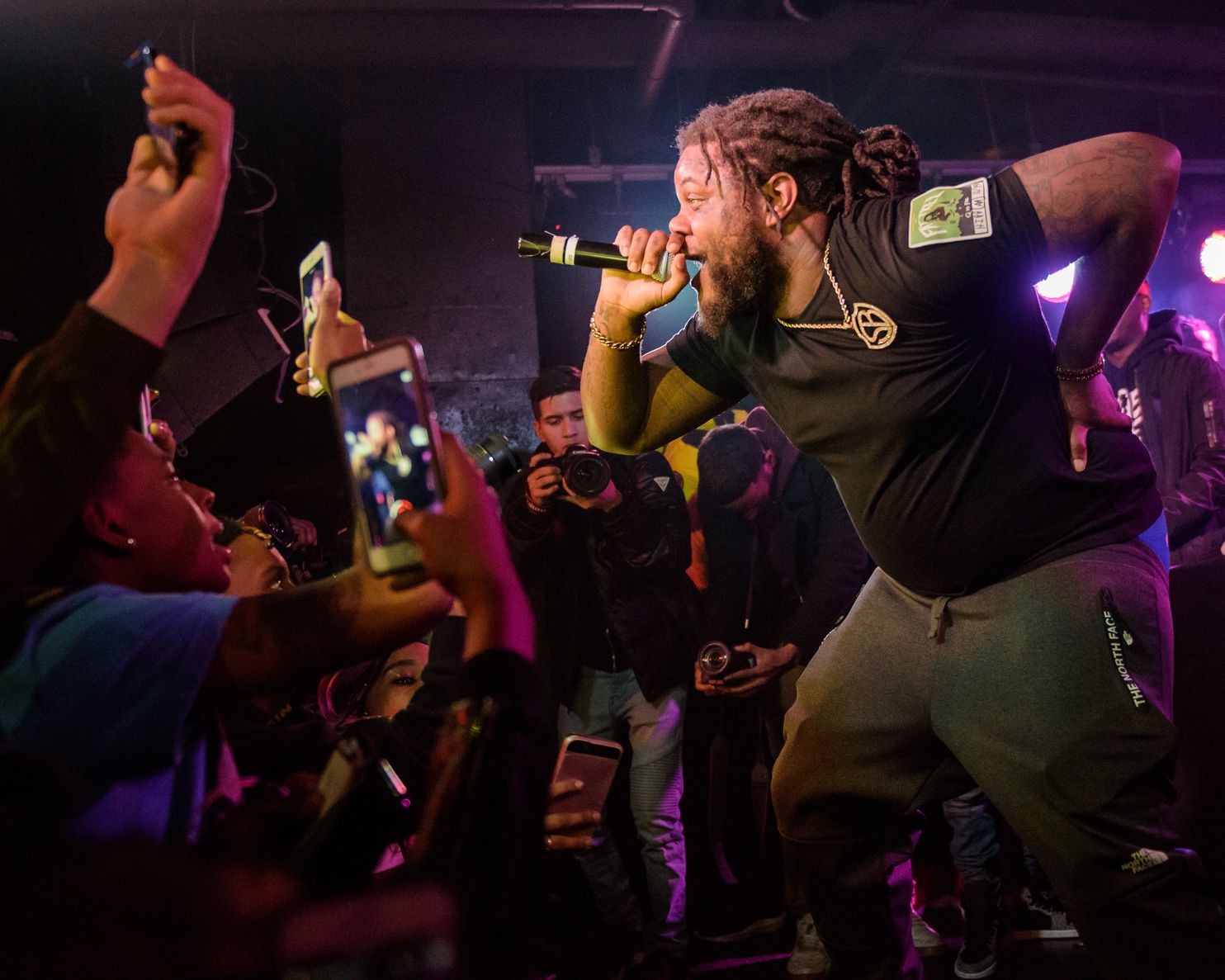
Rapper Fat Trel makes his triumphant return to Washington at U Street Music Hall

“Fat Trel has never been afraid to share, making true-to-life tales of gun violence, drug use and sexual escapades his stock in trade. Early Friday morning, his confessions showed a glimmer of maturity. “I’m on parole, so I can’t pop molly,” the D.C. rapper told the crowd at U Street Music Hall. “That’s why I’m drinking all this liquor.”

Read more in The Washington Post.

Album of the Day: M.E.S.H., “Hesaitix”

“A sound can be both formless and over-rendered,” producer M.E.S.H. claims in a press release, “like a boneless but fleshy hand from a life drawing class.” If that’s a metaphor for the state of underground electronic music, it’s an apt one: the scene has been awash with deliberately obtuse experiments for years, often under the banner of “deconstructed club music.”

Though that term has been applied to M.E.S.H.’s music, it’s not completely accurate. Since his 2014 breakthrough, Scythians, the music James Whipple makes as M.E.S.H. has explored both the functional needs of the club and the expressive power of abstraction, challenging assumptions about dual premises that are often viewed as an either-or proposition. On Hesaitix, he proves how limiting those premises are.”

Read more at Bandcamp.

The 20 Best Guest Verses of 2017

“In terms of singles, it’s been another vintage year for rap and hip-hop. Viral sensations, blockbuster loosies and album-standard mixtapes continue to dominate the conversation. As always, some artists have shone brightest on songs which aren’t entirely theirs. Here, we pick out 20 of the best guest verses of the year.”

Read more in Crack Magazine.

St. Vincent goes it alone and it’s more than enough

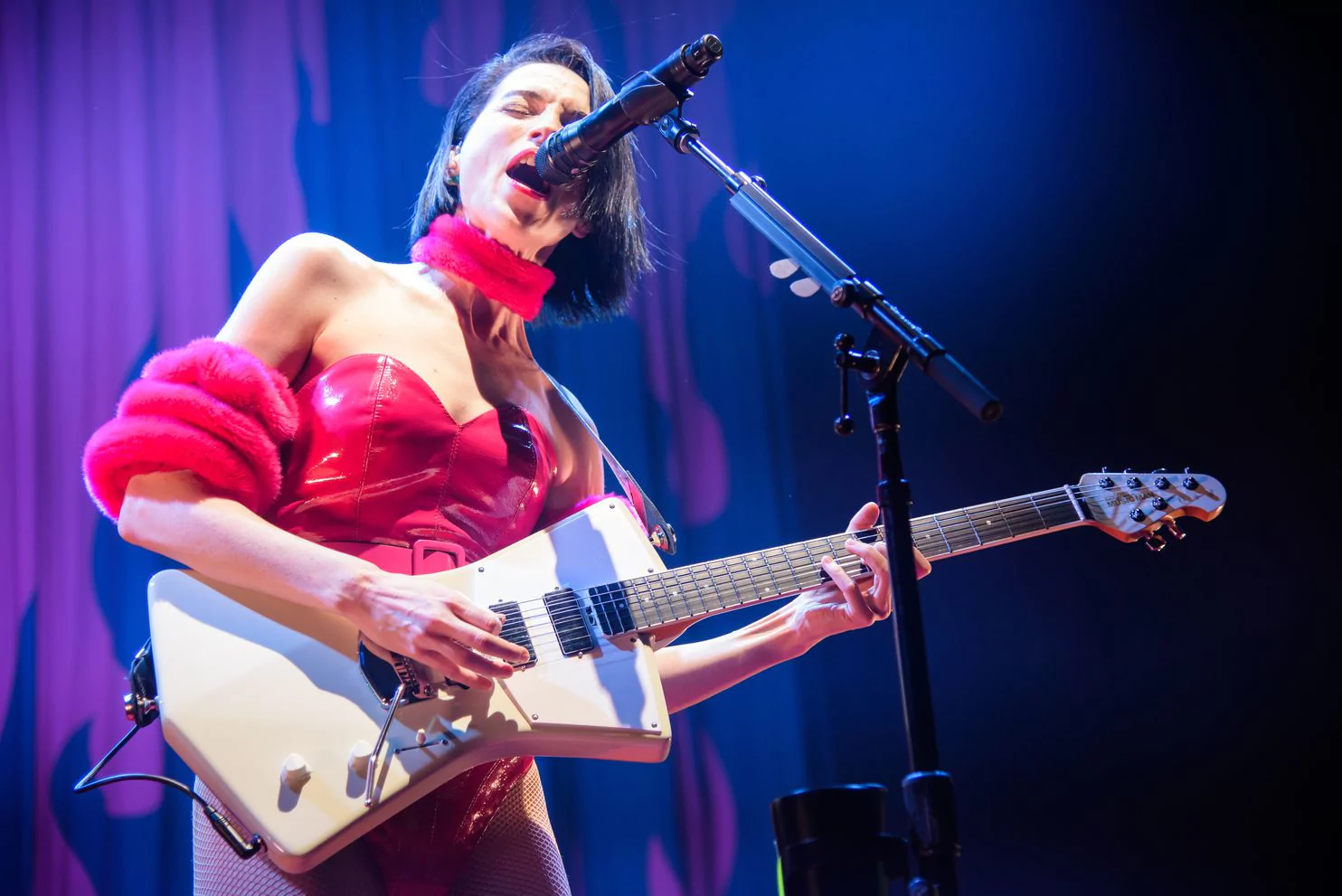
“All human beings create their own mythologies,” Annie Clark, who performs as St. Vincent, explained to Pitchfork earlier this year, “and I’m in the somewhat bizarre circumstance of creating a big mythology that gets shared with a lot of people.” On Monday night at the Anthem, Clark played Edith Hamilton with her self-created mythology, embarking on an audiovisual tour through her body of work in three acts.

Read more in The Washington Post.

For D.C. Native Kelela, Musical Empowerment Comes From Vulnerability

The L.A.-based R&B star’s debut album, “Take Me Apart,” is a stark and powerful personal statement.

There’s a moment during Kelela’s new single “Waitin” where she sings, “It’s all I dreamed of, it can’t get started.” It’s a lyric heavy with yearning and anticipation, but if it sounds familiar, that’s because it is: she also sang it on “Bank Head,” her first single, which was released back in 2013. Plenty has happened to the 34-year-old singer-songwriter in the intervening years, and with the recent release of her debut album, Take Me Apart, all that she’s dreamed of is finally getting started in earnest.

Since debuting in 2013, Kelela has quickly become a key figure in R&B, pairing the genre’s sensuality with the future-is-now sounds of club music from around the globe. With her versatile voice and confessional lyrics, she’s found power in vulnerable places and examined the prismatic angles of relationships, from the promise of giddy infatuation to the aftermath of painful breakups. Take Me Apart is her most expressive and expansive work yet, and is the culmination of years of musical growth that began in the DMV.

Kelela was born in D.C., the daughter of Ethiopian immigrants, and grew up in Gaithersburg, listening to and learning from singers like Mariah Carey, Cheryl “Coko” Clemons of SWV, and Amel Larrieux of Groove Theory. She graduated from Magruder High School and studied at Montgomery College and American University, singing jazz standards at venues around D.C.

Singing in jazz cafes soon gave way to singing in a progressive metal band, but Kelela wouldn’t find the perfect fit until moving to Los Angeles in 2010. There, through mutual friends, she connected with Fade To Mind, a collective of DJ-producers at the center of the underground club music world. Her 2013 mixtape Cut 4 Me was a stunning debut from a seemingly fully-formed artist who seductively sang about love, sex, and heartbreak over pneumatic, elastic beats constructed by some of the most innovative producers in the scene, like Los Angeles talents Kingdom and Nguzunguzu.

The juxtaposition of Kelela’s warm, organic vocals and the cold, mechanical productions was by design. “I’m trying to show you how tender I can be in what comes off as such an unkind surrounding,” she says. “The bed I’m sleeping in for all my music is what people wouldn’t expect you to be so soft and tender on.”

That contrast also drove 2015’s Hallucinogen, a six-song EP that explored the life cycle of a relationship. On it, she stepped up her songwriting game and added new contrasts to the mix, teaming with Björk-collaborator Arca for a pair of off-kilter experiments but also delivering radio-ready R&B jams reminiscent of ’90s hit-making label So So Def Recordings. “She wants to have shock elements in her music,” adds Bok Bok, a London-based producer who has worked with her since her first release. “I don’t know why it works so well with her, but I think she finds it to be challenging in the context of R&B and pop songwriting.”

On Take Me Apart, Kelela is unafraid of challenges, in her songwriting or otherwise. The album tells the story of an “It’s Complicated” relationship, full of almost-reconciliations and late night realizations, of pain and healing, of growth and learning. It’s also her richest, fullest offering yet, bounding from club-ready jams like “Waitin” and “Truth or Dare” to melancholic ballads like “Better” and “Turn to Dust.”

In making the album, she collaborated with old friends like Bok Bok, Arca, and Jam City, as well as Romy Madley Croft of The xx, London upstart Kwes, and industry heavyweight Ariel Rechtshaid, forging an album that is part Janet Jackson, part Björk, and all Kelela.

“The sentiment behind Take Me Apart is putting your shit out there,” Kelela says. “It’s an empowering thing to tell somebody to take me apart. If you’re inviting somebody inside in that way, then you are clearly in an empowered position, you are comfortable enough to do that.” To embody that theme in the album art, she quickly realized that she’d have to be naked (“probably the hardest thing to do”) and take photos of the “full-spectrum” of her self-perceived strengths and flaws. “It had to be scary for me or it’s not going to be real.”

Vulnerability, empowerment, and general realness are certainly present in her lyrics, which delve into relationship issues and bedroom politics with equal frankness. Like posing nude, Kelela goes all the way with her pen, often in a way that implicates the people in her life. “It’s something that everybody that wants to be in a relationship with me is signing up for, but when it comes down to it, it can be difficult, like ‘damn, you feel like that’ or ‘I didn’t know it’s like that,’” she laughs. “I’ve gotten direct feedback that it is daunting, and I have a lot of compassion for that, but I gotta keep it real.”

Kelela certainly keeps it real, in her music and outside of it. Last month, she wrote an eye-opening op-ed for Resident Advisor entitled “Being a visible black woman in the music industry” that explored a wide range of issues surrounding how her music is created, funded, released, and consumed. “There’s a way that I’m always challenged when I collaborate,” she wrote. “It happens less and less the more I’ve expressed this dynamic, but it’s a lot.”

“Every single peer of mine that is a woman has had to go through that,” she says of being challenged by male collaborators. Despite speaking out, Kelela believes this type of behavior “will never stop happening” because “boys are socialized to be that way.” She points to the studio experience, where female artists are likely to be paired with men who have technical know-how, and the power dynamic that creates. “My experience is always going to be intersectional,” she explains. As both a black person and a woman, she always “experience[s] some sort of shit—it will never not be something.”

In that way, she’s not alone. Albums like Solange’s A Seat at the Table and TV shows like Issa Rae’s Insecure—both of which feature Kelela—addressed similar issues concerning black women in America. Kelela notes that A Seat at the Table and Kendrick Lamar’s DAMN. have helped set a context for Take Me Apart, for which she’s grateful. “It’s a little bit easier to be creative, to be very sincere about what I want to say, and to say things that are vulnerable, because some door has already been kicked down.”

What Kelela is too modest to say is how she has helped kicked down that door, as well. “Cut 4 Me” quickly became a touchstone for artists working outside of the R&B mainstream—alongside music by FKA Twigs, SZA, and others—and Take Me Apart elevates her art to an even higher level, bringing the underground and the mainstream even closer together. “She’s trying to create a bridge between those two worlds,” says Bok Bok. “In the same way Janet [Jackson] occupied that space between pop and R&B, I think Kelela could be one of the greats in the canon.” As she sings on the rainswept “Jupiter,” “I think I know me now,” and it’s only a matter of time before many more people know her, too.

Originally published in the Washington City Paper.

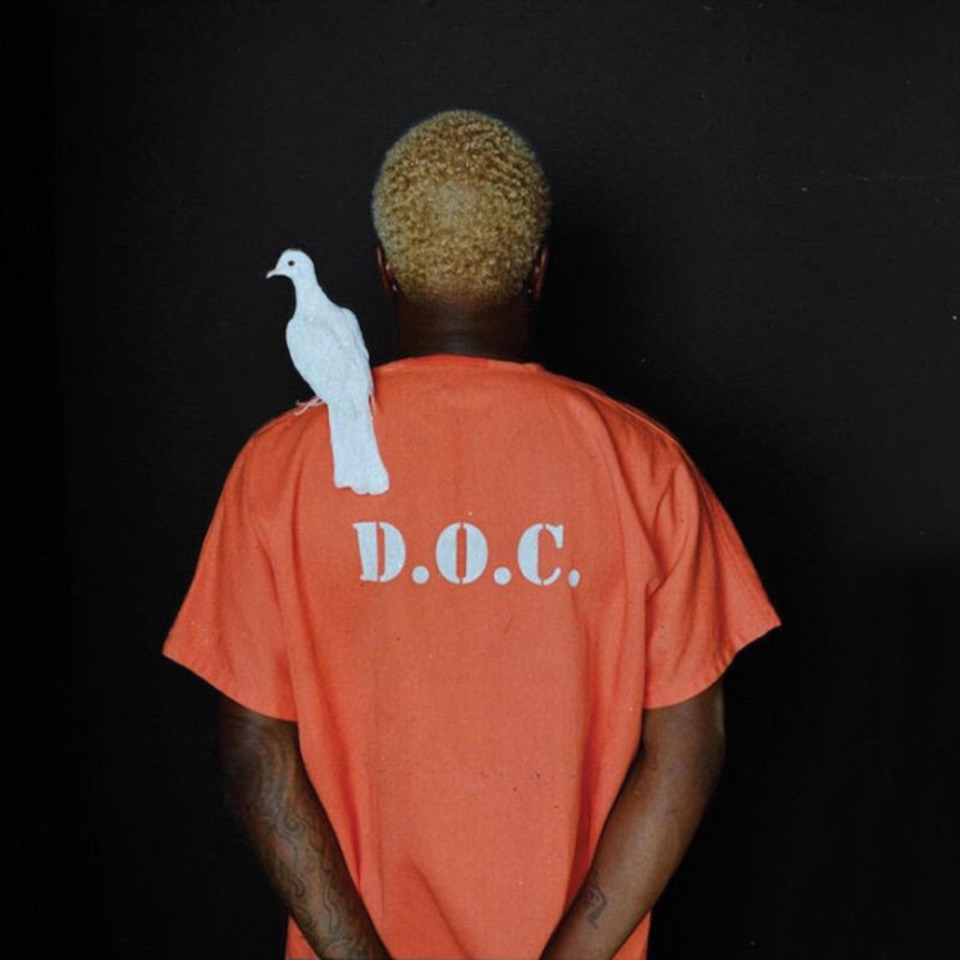
IDK Gets Personal on His Debut LP IWASVERYBAD

The first proper album from the DMV rapper slyly references his influences, but shines when he gets personal.

Everything that IDK does is high concept, from his name (short for “Ignorantly Delivering Knowledge”) to his mixtapes (2015’s SubTrap, short for “suburban trap” and/or “trap music with substance”). That continues on IWASVERYBAD, a full-length soundtrack LP that serves as his debut album (in the hip-hop world, the distinctions between albums, mixtapes, and even “playlists” have been meaningless for several years).

This time around, the concept is a familiar one, detailing how a middle class kid from P.G. County (born Jason Mills, fka Jay IDK) ended up in jail, turned his life around by rapping, and dealt with a strained relationship with his mother. It shares the day-in-a-life DNA of Kendrick Lamar’s Good Kid, M.A.A.D City and YG’s My Krazy Life, but with the middle class perspective of his contemporaries (Chance the Rapper, J. Cole, and Childish Gambino) and his main influence, Kanye West.

The influence of those artists shines through on IWASVERYBAD at almost every turn. Across the album, IDK shares the tumbling consonant flow of Lamar and the too-clever wordplay of Gambino, while also reworking a handful of classic Kanye lyrics and an iconic line from Ludacris’ “What’s Your Fantasy?” (sung here by Shawna, who featured on the original). Which isn’t to say that he’s a biter: Hip-hop is a genre always in conversation with itself, and IDK’s meta references are too self-aware to be swagger jacking.

Beyond the on-the-sleeve influences, IDK is at his best when he’s getting personal. “I’m just a middle class n***a whose class was a mixture of them spellin’ bee winners and them P.G. killers,” he explains, a mix that left him in somewhere in the middle, a “good-home-I-don’t-give-a-fuck trap n***a.” The album opens with a Greek chorus of teachers, cops, and authority figures leaving messages for his mother about his latest misbehaviors, of which there were plenty; he’s not kidding about that title.

The psychodrama that plays out on IWASVERYBAD is how his relationship with his mother strained under the weight of his behavior, a chicken-or-egg game that he explores on the poignant “No Shoes On the Rug, Leave Them At the Door.” Was misspending his youth why his mother came home after work and never hugged him, or the other way around? “I used to think all the time, if I could be a good boy, she’d probably love me a lot.” (Damn.)

He delves even deeper on “Black Sheep, White Dove,” a eulogy for his mother, who passed in 2016; he posits that knowing she was ill prevented him from getting close to her and doing the right thing. That revelation is the final puzzle piece, and even the hardest listener will shed a tear when he wonders, “Mom, where you get them wings from, pretty?”

The narrative of the album may be familiar, but IDK’s bag of tricks keeps it compelling, whether he’s toying with a non-linear narrative, hiding messages in reverse, detouring with a dance floor track, or mixing tracks seamlessly. As for his featured guests, it’s more of a mixed bag: Chief Keef is the perfect pick for the ignorant-as-hell “17 Wit A 38” and Yung Gleesh adds a different DMV flavor on two tracks, while DOOM and Del The Funky Homosapien feel tacked on to “Pizza Shop Extended.”

But overall, IDK and his producers have crafted a sonically expansive record that sits nicely on the rap landscape while offering something personal.
Like other middle class rap stars, from Kanye to Cole to Drake, IDK’s need to be taken seriously—on both his tracks and in the streets—keeps his creative fires burning. On IWASVERYBAD, that motivated him to take a familiar concept and make it his own, on his terms. When he says that “they say lyrics ain’t cool no more, I’m like sheesh, I guess after this shit drop I’m might peace,” let’s hope it’s an empty threat.

Originally published in the Washington City Paper.
15 Essential Horrorcore Records That Still Have the Power to Shock

“As hip-hop developed in the 80s and 90s, the genre became synonymous with violence, drugs, and sex. But even as rappers sought to prove their realness, it has always been understood – by the artists that make it and the fans that love it, at least – that hip-hop is a reflection and a comment on society’s ills, not the cause of them.

For many proponents of hardcore hip-hop and gangsta rap, these street-life narratives were a mix of reporting, fiction-writing, and therapy that charged American institutions like the government, police and schools with the responsibility for urban decay.

Hip-hop has always been hyperbole. But what happens when the hyperbole is pushed to extremes? What happens when lyrics about gangland murder becomes slasher flick serial killing, when chasing women becomes acts of violence, when getting high and drunk at a party becomes addiction, paranoia and psychosis?

You get horrorcore, an often maligned sub-genre that has existed for nearly as long as hip-hop itself and that specializes in the macabre, the sinister, the disgusting and the shocking. Here are 15 of the best, most important horrorcore albums, sorted chronologically to show how the genre has developed over more than a quarter century.”

Read more at Crack Magazine.

Rapper Aminé brings his addictive hooks and zig-a-zig-ah to the Howard Theatre

Amid all the rock stars and Black Beatles of hip-hop, Aminé is perhaps rap’s biggest pop fanatic. You can hear the signs all over “Good for You,” a debut album that finds the Portland rapper flexing and finessing old and new flames with clever wordplay, a playful energy and beats so bright you might need shades.

Read more in The Washington Post.

At the Anthem’s opening night, a rock-and-roll clinic from Foo Fighters

If the 9:30 Club feels like a warehouse turned into a rock club, then the Anthem feels like an airplane hangar that mutated into one. And when it was time to officially open the venue — the centerpiece of the redeveloped Wharf on Washington’s Southwest Waterfront, owned and operated by the team behind D.C.’s world-renowned 9:30 — the Anthem called in the only band with the local roots and international fame that could pull it off: Foo Fighters.

Read more in The Washington Post.

Manila Killa brings his own dreamlike EDM world to U Street

On the eve of summer last year, D.C. DJ-producer Manila Killa released “Youth,” a breezy but propulsive bit of electronica that’s a microcosm of his sound — singalong melody, windswept synthesizers, EDM pulse. The song features breathy vocalist Satica, whose “is this really real?” is less a lovesick lyric than a rhetorical question about Manila Killa’s recent ascendance.

Read more in The Washington Post.