What's next for "Community?"

If Seinfeld was the show about nothing, Community is the show about sitcoms. Since its first episode, it has been a meta commentary on the very concept of “meta.” It deconstructs the tropes that decades of television have established, and it does it with a fantastic ensemble cast and some of the funniest writing on TV. Community challenges the audience’s expectations about what a sitcom is and can be.

Unfortunately, audiences don’t want to be challenged, at least not by sitcoms (premium cable dramas are a different story). Community is in rarefied air; the show closest to its intellectual exercise is 30 Rock. Before that, there was Arrested Development, and we all know how that turned out.

With this in mind, the news of Community’s absence from NBC’s midseason schedule should not surprise anyone. Even as the show has gotten better, moving further down the rabbit hole and certifying show creator Dan Harmon as an evil genius, ratings have declined. It averaged 5 million viewers in the first season, down to 4.48 million the next, and finally 3.68 million this season. Those are extremely low numbers, even for NBC, the fourth place network. Ironically, NBC’s across-the-board struggles may be keeping the show alive.

This year, the Thursday night comedy block has consisted of The Office, Parks and Recreation, Community, and the incongruous throwback Whitney. With 30 Rock’s midseason return and Up All Night’s promotion from Wednesday to Thursday, NBC was left with six shows for four slots. The network continues to stand by its heavily promoted Whitney, shifting it to Wednesday with the similarly-schlocky Are You There, Chelsea? leaving Community as the obvious choice for the bench.

NBC could have avoided this, if they had stuck with an old idea instead of scrambling for something new. At midseason last year, NBC tried a three-hour comedy bloc, featuring Community, Perfect Couples, The Office, Parks and Recreation, 30 Rock, and Outsourced. The experiment failed because Perfect Couples and Outsourced were weak offerings, but Up All Night and (the already cancelled) Free Agents would have been perfect fits for a three-hour powerhouse of comedy. Instead, we’re left with this. C’est la TV.

As of now, Community hasn’t been cancelled, and production hasn’t stopped (as it has for fellow benchwarmer Prime Suspect). So is there any hope? Some, thanks to the financial windfall that is syndication. Traditionally, shows needed to cross the 100 episode barrier before being sold to syndicators; these days, 88 episodes will do the trick. Community is about a season and a half away from making Sony Pictures Television a lot of cash, giving the production company an incentive to lower its price for NBC (possibly by cutting production and cast costs).

Could NBC decide to ax Community, only to see it show up on Netflix or Hulu? Community is an established property, but clearly without the audience share that its fervent fan base would suggest. Netflix seems like a better fit, if only because of their willingness to spend and their desire to bring Reno 911 back from the dead. To this point, however, streaming revivals have all been hypothetical, and don’t count on Community to break that trend.

Six seasons and a movie seems unlikely at this point, but fans should find solace in the fact that Community made it this far. Challenging audiences isn’t easy, yet Harmon and company continue to raise the stakes, week after week. And if cancellation is imminent, just imagine how meta things will get. If the final season of Arrested Development is any indication, impending doom is a great motivator for television excellence.

Update: With this weekend’s news that Netflix will bring back Arrested Development, the chances of Community joining the video giant certainly uptick – contingent on how well the experiment does.

Originally posted at The Couch Sessions.

The Verge: Friends

Friends, apart from being the latest in a string of un-Googleable buzz bands, makes singularly tight pop songs. Not future pop or nightmare pop, but weird pop (as they call it).

The band’s music began as demos recorded by Samantha Urbani, who decided – after years of writing and recording music – to finally share her work with audiences. The Bushwick band came together through a mix of history (Urbani has known Lesley Hann since 2nd grade) and happenstance (fleeing bedbugs, Hann and Oliver Duncan stayed with Urbani). Along with Matt Molnar and Nikki Shapiro – and a few jam sessions – the band formerly known as Perpetual Crush played their first show, less than a week after their inception. The jam continues in the band’s live show, which finds the multi-instrumentalists exchanging roles on stage.

Despite designating it weird pop, there’s nothing too weird here. Urbani’s lyrics are sly, her vocals meander but always come back to a solid hook. There is a dance music groove that permeates, thanks to robust percussion and funky basslines. The video for lead single “Friend Crush” is a psychedelic kaleidoscope filled with glitter and costume jewelry.

While “Friend Crush” is a dreamy tribute to friendship, “I’m His Girl” is all swagger. The lyrics offer an empowered take on relationships, and the video feels like a hip-hop clip out of Brooklyn, circa 1988. The b-side is firmly in the next decade, however: a spot-on cover of Ghost Town DJ’s classic “My Boo.” One of the 90s most memorable hooks, it’s a perfect choice for a band whose music is nostalgic yet forward-thinking. And maybe just a little weird.

Friends open for Ganglians at the Red Palace on Tuesday, November 15.

The Verge: Purity Ring

For the last few years, the spectrum of outsider pop – all things indie and/or electronic – has been dominated by a specific type of power duo, comprised of a male behind the boards and a female singer upfront. Whether it’s a bit sexist and regressive, or simply expedient, the formulation doesn’t seem to be going away. The next in the line of such duos owes much to those before them, especially the likes of The Knife, Beach House, and even Sleigh Bells.

Purity Ring is a self-described “future pop” act formed by Corin Roddick (of electro band Born Gold) and vocalist Megan James (a classically trained pianist in her own right). Roddick’s background as a drummer is evident in the percussion-lead music. Over just a few songs, Purity Ring keeps the instrumentation of synth pop and discards the 80s dance instinct. Instead, the songs are dominated by the skittering of grooves of R&B and hip hop.

The Canadian duo’s first offering was this summer’s “Ungirthed,” a swirling mix of wobbling bass, back-masked, cascading percussion, and James’ airy vocals. The B-side, “Lofticries,” is the minor key flip to the major key of “Ungirthed,” with similar ghostly effects and vocals. James’ lyrics tend towards the vague yet sinister; lines like “weepy skin with trembling thighs” are disarmed by the childlike innocence of her tone.


The duo has also remixed a couple of songs, following the same formula of their own compositions. Their take on S.C.U.M.’s “Summon the Sound” strips away the original’s feedback-heavy shoegaze, but don’t be lulled – there’s still an invigorating, rumbling movement halfway through. Similarly, Purity Ring’s remix of Disclosure’s “I Love… That You Know” is more sparse than the UK garage original.


Purity Ring’s latest song is their strongest yet. “Belispeak” has a propellant groove throughout, only hinted at on their first single. Icy arpeggios and metallic programmed beats provide the edge they’ll need to break out of the dream pop box. Purity Ring’s setup might not be novel, but their eery tones and forward-thinking beats certainly do the trick.


Purity Ring plays the Black Cat on Wednesday.

Review: Drake – Take Care

On the cover of Drake’s sophomore album Take Care, the musician sits forlorn amid the trappings of his success: solid gold ornaments, plush cloths and works of art. The heavy-handed metaphor isn’t lost, and it remains the dominant theme for the singer-slash-rapper. Take Care is nothing new for Drake. So while “jealousy is just love and hate at the same time,” as Drake raps on opener “Over My Dead Body,”  boredom is just monotony and tedium at the same time.

For fans of So Far Gone and Thank Me Later, Take Care does not disappoint. It’s another powerhouse hour of millennial hip hop and R&B: meditations on fame and happiness, the two rarely meeting. Production is top-notch; Noah “40” Shebib’s mellow bass and wistful orchestration provide a strong counterbalance to the punchy radio rap of tracks from Lex Luger, Just Blaze, and Boi-1da. Drake picks his spots to shine, dropping witty lines like “shout out to Asian girls / let the lights dim sum” and sounding fierce on “Under Ground Kings,” an epic 9th Wonder-produced tribute to UGK.

Most of the features are thoughtful and well placed. Verses from Rick Ross (“only fat nigga in the sauna with Jews” a totally Ross pronouncement on “Lord Knows”) and Nicki Minaj (her weird-out punchline rap the highlight of grimey Top 40 hit “Make Me Proud”) are scene-stealers, as always. “Crew Love,” his collaboration with protege The Weeknd, may fit better in the latter’s oeuvre with its blasts of dissonance and atmospherics, but it’s a high point for the OVOXO crew.

The highlight of the record, the title track, combines all of these elements. The beat is a reworked version of the Jamie XX and Gil Scott-Heron collaboration “I’ll Take Care of U.” Rihanna takes the place of the Godfather of Hip-Hop and slinks through the chorus, which lets Drake sound more urgent that someone for once. The ghost of Scott-Heron looms large throughout, especially during the breakdown.

Unfortunately, the last third of Take Care is mostly comprised of slow jams and wasted guest appearances. Don’t get too excited about Stevie Wonder’s credit on the mournful “Doing It Wrong:” the soul legend only shows up as a harmonica player. Similarly, “The Real Her” is another syrupy slow jam of which Andre 3000’s verse is highlight by default, if only because fans are forced to grasp at the table scraps he deigns to share these days.

Take Care‘s Cash Money connection comes from an unexpected source, since Lil’ Wayne’s verses, both on “The Real Her” and “HYFR (Hell Ya Fuckin’ Right),” are mostly forgettable and feel tacked-on. Instead, Drake saves it for last, in his brilliant flip of what is arguably Cash Money’s most important song, Juvenile’s 1999 breakthrough Back That Azz Up. On “Practice,” Mr. Graham takes that unmistakable synth melody and chorus for a smooth ass ride through the 504.

On the spaced-out street single “Marvin’s Room,” Drake raps (or rather drunk dials) that “I’ve had sex 4 times this week / I’ll explain / Having a hard time adjusting to fame.” It’s a smart line, but it’s also something we’ve heard before, seemingly ever since he burst on the scene two years ago with So Far Gone. Drake doesn’t need to find happiness in his fame – he just needs something new to talk about.

Fatima Al Qadiri vs. the World

Fatima Al Qadiri is a child of the world. Born in Senegal and raised in Kuwait, the musician and artist globe-trotted for years before ending up in, where else, Brooklyn. Her global background is inseparable from her work, which spans several media. Her music confronts the conservatism she faced during her youth through reconstruction and reinterpretation. As a writer and photographer, she calls attention to issues of gender, sexuality and identity in the Arab world and beyond.

This fall, Al Qadiri has released two highly anticipated EPs. Under the pseudonym Ayshay (Arabic for “whatever”), she released WARN-U on label-of-the-year Tri Angle Records. WARN-U is an homage to the religious chants of Islam, comprised entirely of shifted and stretched samples of Al Qadiri’s voice. It is otherworldly and meditative, a tone poem both sacred and profane. And rather than handing over remix duties to a glut of producers, LA bass music duo Nguzunguzu animate the trio of songs with a breakbeat laden megamix. Similarly, Al Qadiri’s Muslim Trance Mini-Mix for Dis magazine (where she pens a column on obscure global pop) samples Sunni and Shia acappellas into an ecstatic mix.

Her latest effort, Genre-Specific Experience, is exactly that: instead of taking on religious chanting, each song is a recreation of a dance music sub-genres, with the same haunting quality of WARN-U and a distinct future bass sensibility. The first and foremost instrument on the EP is the steel drum, from the looping melody of the syrupy boom-bap of “Hip Hop Spa” to the shimmering tones of “D-Medley.” “How Can I Resis You” and “Corpcore” tackle a genre on the decline (dubstep) and one on the rise (juke), respectively. The biggest surprise is “Vatican Vibes,” which starts in a church and ends in a Pure Moods rave of ‘90s Gregorian trance.

Not just an album, Genre-Specific Experience is also a collection of collaborative music videos. The corresponding videos challenge the notions of genres and tropes in the same way her music does. The clip for “Vatican Vibes” is Catholicism as 3D video game experience; the one for “Hip Hop Spa” is a meditation on the solitary confinement of spa treatment versus that of incarceration, all under a layer of hip hop glamor.

Fatima Al Qadiri is a modern day Renaissance woman. From music and photography to fashion and the written word, her artistic vision is like Visa: it’s everywhere you want to be.

Review: Zola Jesus – Conatus

“Conatus” is an archaic philosophical term that refers to an innate inclination towards continued existence and enhancement. Fittingly, it’s also the title of Zola Jesus’ latest album, which sees the gothic singer-songer’s continued transition from the bedroom to the nightclub.

Her third album in three years, Conatus flows from the template established on The Spoils and Stridulum: synthetic ambiance, industrial percussion, and the operatic vocals of Nika Roza Danilova. Once again, the record is marked by crystal-clear production, as on Stridulum, that leaves only the hint of the dissonance and feedback on Zola Jesus’ earliest recordings. The shift between this album and the last is not as dramatic this time, but there is a greater focus on atmospherics and Danilova’s vocals as the dominant instrument. Due to this textural approach, songwriting has taken a backseat: the hooks of Stridulum, both captivating and melancholy, are not as readily available.

Musically, Conatus picks up where Stridulum left off. Synthesizer melodies are brooding and ominous, and electronics buzz and chirp throughout. Lead single “Vessel,” with its pneumatic effects and cacophonous, metallic outro are reminiscent of Nine Inch Nails (an influence throughout the album). Strings, haunting and mournful, add another orchestral layer to the compositions.

The most significant change comes in the percussion. On previous Zola Jesus releases, drums thundered and stalked, but were little more than a metronomic heart beat. On Conatus, the programmed beats are danceable, owing more to synth pop than Skinny Puppy. The shifty beat on “Shivers” is decidedly modern. But don’t be mistaken: this is still a dark record. “Seekir” goes from queasy sub-bass and morphing synths to danceable dark wave and back again.

While there may be some changes to the formula, the main attraction of Zola Jesus remains constant. Danilova’s voice is overwhelming but not overwrought. On “Lick the Palm of the Burning Handshake,” her vocals are powerful but with a hint of vulnerability (something you might not get from the strident title). Too often, unfortunately, layers of reverb and delay obscure her voice like a veil. It works in moderation (like the echoing overdubs on “Vessel”), but I much prefer the clarity present on the yearning but upbeat “In Your Nature.”

Zola Jesus has amassed an impressive amount of material in a short amount of time, seemingly recreating herself on each successive release. Conatus is the next step in that process. It may not reach the songwriting heights of Stridulum, but it plays in new sonic territory as comfortably as ever. No matter what’s next from Zola Jesus, it’s refreshing to watch a musician turn into an artist.

DC Duos: Cam Jus and Billy the Gent

As Dave Nada’s accidental creation continues to grow, spurned on by a vibrant, global underground fan base, DJs and producers of all stripes are finding their voice with moombahton. Thanks to a simple formula and a rich palette of sounds, the genre is whatever you make of it. That seems to be the philosophy behind two of the biggest names in the scene, DC’s own Cam Jus and Billy the Gent.

Cam Jus has been DJing in DC for a few years now, and his trademarks continue to be his chilled-out personality and musical versatility. Depending on the crowd and venue, Cam is at ease spinning Top 40, electro, dancehall and all points in between. Appropriately, he’s also fluent in that fusing of hip-hop and house music from our neighbors up I-95, Baltimore club. His first remixes were Bmore versions of songs by DMV stalwarts Wale and Blaqstarr, and he’s continued to flip tracks into the frenetic style, like this breakbeat driven remix of R&B crooner Miguel’s “Sure Thing.”

[wpaudio url=”/wp-content/uploads/2011/09/Miguel – Sure Thing (Cam Jus remix).mp3″ text=”Miguel – Sure Thing (Cam Jus remix)” dl=1]

For a DJ with such an expansive repertoire and diverse audience base, moombahton was a natural fit for Cam. Similarly, his remixes touch on everything from Jay-Z and Frank Ocean to MIA and Sleigh Bells. His knowledge of R&B, new and old, is paying off as the moombahton derivative moombahsoul takes off; he massaged Lisa Fischer’s classic ballad “How Can I Ease The Pain” into something for a new generation of party-goers.

[wpaudio url=”/wp-content/uploads/2011/09/Cam Jus – Ease the Pain.mp3″ text=”Cam Jus – Ease the Pain” dl=1]

Cam is also coming into his own as a producer and songwriter, due in no small part to going back to school for audio engineering last fall. Combine his musical knowledge, ear for a hook, and technical skill and you get a moombahton anthem song that screams DC, “Metro Center (Step Back),” off his Nightvision EP.

[wpaudio url=”/wp-content/uploads/2011/09/Cam Jus – Metro Center (Step Back).mp3″ text=”Cam Jus – Metro Center (Step Back)” dl=1]

As Cam Jus was making a name for himself in the DC DJ scene, Billy the Gent was doing the same in different sonic territory. A tattoo artist at Adams Morgan’s Tattoo Paradise, the heavily-inked Billy Bennett cuts an imposing figure that is immediately undermined by his laid back nature. Originally performing as DJ Billfold, Billy was throwing parties from Richmond to DC and dropping dubstep that owed more to its UK roots than its arena-filling ambitions.

But like all DC DJs, it was only a matter of time before Billfold started dabbling in moombahton. The transition was sudden and a bit surprising, but after seeing him man the decks at a few Yuh Sundays with Dave Nada at U Hall, it was clear he had the chops to handle bass from the tropics as well as that from the UK. His production work only reinforced this. His Fr33ky Moombahton EP dropped at a time when everything in the nascent scene was “fr33ky” (a leet-speak version of “freaky”). The highlight of the EP is his syrupy remix of Torro Torro’s electrohouse banger “Knockin’ Boots,” which seems better suited for knocking boots than the original ever did.

[wpaudio url=”/wp-content/uploads/2011/09/Torro Torro – Knockin’ Boots (Bill’s fr33ky Moombahton Edit).mp3″ text=”Torro Torro – Knockin’ Boots (Bill’s fr33ky Moombahton Edit)” dl=1]

Somewhere along the way, Billfold became Billy the Gent, and began focusing almost exclusively on tropical bass. Moombahton’s no pretension, collaboration-heavy ethic is evident in his biggest contribution to the scene. Along with Virginia’s Long Jawns, Billy morphed a sexually charged Petey Pablo sample into a moombahton mating call, “Vibrate.” Then the two sent the track to Miami’s DJ JWLS – an inspiration for the original – who contributed his own remix.

[wpaudio url=”/wp-content/uploads/2011/09/Vibrate 2.0.mp3″ text=”Billy the Gent / Long Jawns – Vibrate” dl=1]

When it comes to moombahton in DC, all roads lead to the Velvet Lounge. Dave Nada’s Moombahton Monday parties are already legendary, with their early adopter swagger and too-cheap tequilla shots. When Dave moved to LA, the party’s absence left a noticeable mark. A few months later, Cam approached Billy about doing a Sunday monthly at Velvet. With promoters Rookies and Nrdgsm in tow, Tropixxx was born (with three Xs, you know it’s fr33ky).

Since January, Tropixxx has quickly grown into a must-attend event. The video for “Pendejas” by Tittsworth and Alvin Risk – filmed at Tropixxx – is indicative of what to expect. Falling on the first Sunday of the month, it’s not for the average weekend warrior, and the pro-am nature of a Sunday night party keeps it packed with only true moombahtonistas.

They might have taken very different paths to get there, but Cam Jus and Billy the Gent are carrying the flame for the moombahton movement, finding their voices just as the city finds its own.

The next Tropixxx is October 2. Before then, the guys will be opening for London house producer Jesse Rose at U Hall on Thursday, September 29. They’re also on the bill for The Rave at the Warehouse Loft (411 NY Ave) on October 8, with special guests Nina Sky.

TV's new "girls" undermine the Year of the Woman

After a few years of think pieces about the women of comedy (Tina Fey, Amy Poehler, Sarah Silverman, et al) and that eternal question, “can women be funny?,” we got Bridesmaids. To the industry, $283 million at the box office proved what we already knew: of course, women are funny, and audiences want to see them.

Capitalizing on this development, this season was supposed to be The Year of the Woman, where shows created by and starring women would returned to the forefront of TV comedy. Unfortunately, this fall’s first offerings rely too heavily on tired stereotypes and tropes, missing their chance to build interesting, relatable female characters.

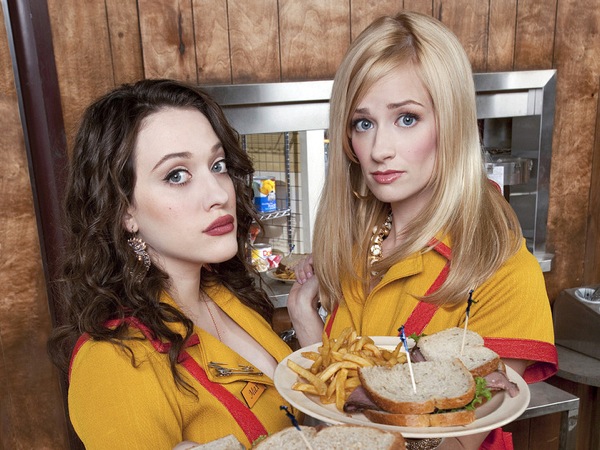
2 Broke Girls, from Sex and the City mastermind Michael Patrick King and it-girl Whitney Cummings (more on her later), stars Kat Dennings and Beth Behrs as the titular broke girls, Max and Caroline, a pair of mismatched waitresses at a dingy Brooklyn diner. The premise is both “odd couple” and “fish out of water:” Max is street smart and razor tongued while Caroline is a naive “Manhattan socialite diva,” and you can tell by her pearl necklace and hooker heels.

The rest of the diner is rife with lazy stereotypes that range from stupid to offensive. There’s Earl, the jive-talking cashier with puns and one-liners for every occasion (“Don’t talk to him unless you want to feel whiter than you already are,” Max warns Caroline). The diner is owned and operated by Han Lee, who swaps his L’s and R’s and changes his name to Bryce Lee — see what they did there? The gang is rounded out by Oleg the horny Russian line cook.

While a few jokes aim for twisted (“Are you sure we can’t get the meth addict back? She was really good at cleaning.”) most go for the easy gross-out (a clam chowder / semen joke, twice) or Amelia Bedelia-type idiocy (Caroline doesn’t know what “marry the ketchups” means). When Caroline accidentally tazes Max on the train, the ensuing rape joke feels misguided.

Apart from obvious, stereotypical characters and lazy humor, the worst part of the show is how Max is characterized. She works two jobs with low pay and no perks and is clearly on her own. Yet when she gets home, she’s putty in the hands of her scummy, slacker boyfriend, characterized only by his 8-pack abs. Not only does The Boyfriend make a move on Caroline, but he’s also screwing around. After dumping him, Max confesses that his muscles “make smart girls stupid.” No, bad TV writers do.

In the same vein, Fox adds New Girl, keeping things simple and sticking with the working title. From “Fempire” member Liz Meriweather, New Girl is a starring vehicle for indie fave Zooey Deschenal in the role she’s most comfortable in, that of the Manic Pixie Dream Girl.

For the uninitiated, the Manic Pixie Dream Girl is “that bubbly, shallow cinematic creature that exists solely in the fevered imaginations of sensitive writer-directors to teach broodingly soulful young men to embrace life and its infinite mysteries and adventures.” Deschanel’s Jess is Quirky in a entirely predictable way – she sings her own theme music, wears a bathing suit in the shower, and generally carries herself with the gravitas of a cartoon character. But in classic fashion, take off her glasses and put her in a black dress, and it turns out this girl is a knock out!

The show’s inciting incident is a striptease gone wrong, as Jess catches her boyfriend in flagrante. Tired of living with her friend Cece because she’s a model (which makes no sense, by the way), she moves in with three men, mistakenly thinking their ad was written by an apartment full of women.

Nick (Jake Johnson) is the most redeemable of the three, a recently-dumped bartender with a dour look on life. Schmidt (Max Greenfield) is a self-obsessed, misogynistic frat boy, whose bro-tastic antics are penalized by his roommates with a Douchebag Jar. Coach (Damon Wayans Jr., who will be replaced by Lamorne Morris due to his spot on Happy Endings) is a personal trainer who has no idea how to talk to women, or worse, without yelling.

In the pilot, the three guys do their best Pygmalion, trying to get Jess out of her post-breakup stupor and back in the dating game. The results are predictable; even when she gets a date, she overtexts her way to loneliness. When Nick finds this out, he chooses Jess over a chance to reignite a relationship with his ex; his bros come along too. The producers seem intent on getting their money’s worth for the licensing on “Time of My Life,” as the cast all sing the Dirty Dancing theme in a crowded restaurant. One episode in, and Jess is already teaching these guys to “embrace life and its infinite mysteries.” Let the adventures begin.

Predictably, both shows are already hits. 2 Broke Girls notched 19.2 million total viewers; 10.1 million watched New Girl. Numbers like that will certainly lead to more of the same. Already, there’s Whitney Cummings’ abominable Whitney, which rode an Office lead-in to 6.71 million viewers, more than both Parks and Rec and Community. At mid-season, NBC will add Are You There, Vodka? It’s Me, Chelsea to the list. Unfortunately, while created by and starring women, these shows don’t share much with 30 Rock and Parks and Recreation. It may be the Year of the Woman, but the networks are determined to give audiences the same old girls.

The truth about Lana Del Rey

Brooklyn singer-songwriter Lana Del Rey seemingly appeared out of nowhere with lead single “Video Games.” The mournful love song, and the self-compiled clip for it, concisely capture a singular experience. With her 60s-style blowout and impossibly thick lips, she pouts and vamps like a YouTube cam girl (the clips of a drunken Paz de la Huerta are appropriate). Intercut is footage of the dichotomous aesthetic she’s so carefully aiming for: Los Angeles, past and present. 8mm clips of Golden Age Hollywood nostalgia, mashed with skateboarders and live-and-die-in-LA escapades, under the song’s swaying piano, twinkling harp, and funeral march drum rolls. All of that, and the most compelling aspect is Del Rey’s raspy Stevie Nicks meets Cat Power voice.

The B-side to “Video Games,” “Blue Jeans,” is the next logical step in her look and sound. Sonically, “Blue Jeans” is built on the tremolo guitar of Chris Isaak circa “Wicked Game,” while Del Rey’s lyrics dabble in urban vernacular: “you so fresh to death and sick as cancer / You were sorta punk rock, I grew up on hip hop… I told you that no matter what you did / I’d be by your side / Cause imma ride or die…” Yet in this video, Del Rey is impeccably styled, whether wearing bling and an off the shoulder sweater or throwback shades and a floral skirt.

On the strength of these two songs, Lana Del Rey seemed poised to reach Next Big Thing status in a hurry. Describing herself as a “gangsta Nancy Sinatra” and her music as “Hollywood pop” and “sad core,” she was doing half the work for bloggers and journalists everywhere. Is Lana Del Rey, indie Youtube sensation, too good to be true?

According to the indie blogosphere, yes. It turns out that Lana Del Rey (or Lizzy Grant, her real name) has major record label backing and has undergone major changes since her self-released (and no longer available) debut album dropped last year. Hipster Runoff satirically documented the evidence and predictable blogosphere backlash. In short, Lana Del Rey was branded and marketed with a receptive audience in mind, and the audience didn’t appreciate the charade. The record industry, not transparent? An artist undergoing physical enhancement to be more marketable? Color me shocked!

[wpaudio url=”/wp-content/uploads/2011/09/09-Pawn-Shop-Blues.mp3″ text=”Lana Del Rey – Pawn Shop Blues” dl=0]

[wpaudio url=”/wp-content/uploads/2011/09/02-Queen-of-the-Gas-Station.mp3″ text=”Lana Del Rey – Queen of the Gas Station” dl=0]

And while Lana and her label might want her early album to disappear, it’s not for the nefarious reasons the blogosphere assumes. This is a simple case of supply-and-demand; building buzz by trickling out singles and videos is Music Business 101. The album actually shares many of the touchstones of Del Rey’s new material. “Pawn Shop Blues” and “Yayo” are crafted in the same moody pop style, if not with the same finesse, and apart from a few synth-pop missteps, even the more generic songs don’t stray too much from her sound: “Queen of the Gas Station” and “Gramma” would work for most Hotel Cafe singers. For what it’s worth, the video for “Kill Kill” is the same type of Youtube collage she still employs. It appears that all her “secret industry support” has done is tighten her image and sound for a mainstream audience – exactly what the music industry has done for each and every pop act for the last sixty years.

Lizzy Grant – Kill Kill by wiredset

While Lana Del Rey might not have been “born bad” as the swagged-out surf pop of “Kinda Outta Luck” posits, some of the less-murderous lyrics ring true: “You never cared what I did at all / Motel singer at a silver ball / I did what I had to do.” Lana Del Rey is a singer-songwriter in 2011, and we should forgive a little system-gaming if it results in songs like “Video Games” and “Blue Jeans.” Blogosphere haters, upset with being complicit in record label machinations, should take heed of the chorus of the song: “Is it wrong that I think it’s kinda fun / When I hit you in the back of the head with a gun?

Thoughts on "Up All Night" and "Free Agents," NBC's new comedy bloc

When NBC rolled out its upfront plan, the network revealed a slew of new comedies. Among regrettable multi-camera schlock (Whitney, Are You There Vodka? It’s Me, Chelsea) and boring mid-season fodder (Bent, BFFs) were two sitcoms that would fit right in with NBC’s revitalized Thursday night bloc.

Up All Night stars Christina Applegate and Will Arnett as new parents Reagan and Chris Brinkley, beleaguered by parenthood and the tenuous work-life balance. Created by Emily Spivey (SNL, Parks and Recreation), the show has the documentary feel popularized by The Office and Parks and Rec, although Up All Night forgoes the talking head testimonials of those shows. Tight shots and quick cuts give the show a manic quality: the kind of over-tired energy one gets from being up all night. As Chris struggles with his new life as a stay-at-home dad, Reagan returns to work for Ava (Maya Rudolph). Ava stars in an eponymous talk show that is equal parts Oprah and Tara; Reagan is the Liz Lemon to her Jenna Maroney. While 30 Rock has beaten that dynamic into the ground, it fares better here: Ava is over-the-top and self-obsessed, but with some vulnerability and sweetness.

This is Christina Applegate’s third sitcom foray since Married… with Children, after the short-lived Jesse and Samantha Who. With her comedic timing (and age-defying good looks), it’s just been a matter before she finds a well-suited vehicle; this might be it. The same can be said about Will Arnett, minus the age-defying good looks. One of the funniest men on television, Will Arnett gets a role that is more grounded than his on Arrested Development, Running Wilde, and 30 Rock. As always, his deadpan delivery slays: “Your beats are so tight after three Jager Bombs.” As a couple, their chemistry is real, and the pilot ranges from twisted (Matt Lauer breaking the fourth wall) to sweet and vulgar (neither can get over how “fucking beautiful” baby Amy is).


Free Agents is an adaptation of a British workplace comedy (sound familiar?). Helmed by original series creator Chris Neil and John Enbom (Veronica Mars, Party Down), the dialogue is as sharp and quick-witted as anything NBC has done – while also decidedly darker. Alex (Hank Azaria) is recently divorced and the tiniest thought about his children sets off the waterworks. Helen (Kathryn Hahn) is dealing with the death of her fiancee, and despite constant reminders (a staggering 22 portrait-style photos in her apartment) and an over reliance on wine and frozen meals, she’s handling things a bit better than Alex. In true sitcom style, the two have a drunken one-night stand, yet are determined to keep things professional at the PR firm they both work at.

The “will they, won’t they” formula has been done before, but hopefully it is a plot device and not the entire premise. There is a wealth of situational and character humor to mine here, with a fantastic ensemble of comedic talent. Free Agents actually reminds me of Newsradio in that way, with the sexual tension between the leads, an off-beat secretary (Natasha Leggero), off-putting co-workers (Al Madrigal, Joe Lo Truglio), and a zany boss (Anthony Stewart Head, reprising his role from the UK series). Newsradio as a single-camera black comedy? Sign me up. The reference to Party Down (“I have no plans to DJ at an Armenian man’s acquittal party”) is icing on the cake.


NBC’s strongest new offerings, Up All Night and Free Agents officially premiere next week (the network is calling the airing of these pilots a “preview”). While these might be the network’s best efforts at eventually replacing the aging flagships The Office and 30 Rock, they’ll have to build an audience on Wednesdays first, against Survivor and ABC’s surprisingly strong comedy bloc (including powerhouse Modern Family). Hopefully, NBC gives them the support they’ll need to do that.