Category Archives: Music

Have yourself a bass-filled Valentine's Day

Whether or not you celebrate the aggrandized Hallmark holiday that is Valentine’s Day, enjoy these romantic mixes from some of the finest producers in the bass music world.

First up is the latest installment of Luvstep, by Dirty South Joe and Flufftronix. The previous Luvstep mixes have perfectly encapsulated the leading edge of romantic, melodramatic dubstep, a standard this mix meets. Tracks by Clams Casino, Sinjin Hawke, and Clicks & Whistles mingle with exclusives and obscurities. A highlight is the pitch-perfect Sibian and Faun track “I’m Sorry.”


For the fifth time, leading bass purveyor Hudson Mohawke drops a mix of classic slow jams in honor of the day. This is the music your parents would get down to, and it must have worked, because you exist. HudMo clearly knows his stuff. And in a tasteful – and fitting – tribute to Whitney Houston, he closes with her classic ballad “Didn’t We Almost Have It All.”


Deadboy is no stranger to the soulful side of dance music, and his offering is somewhere between the previous two. His mix for London’s Wifey club night moves effortlessly from Hall and Oates to Dizzy Rascal to (HudMo’s remix) of Blackstreet. There’s something for everyone here; think of this mix as a heart-shaped box of chocolates for music lovers.

Download: Luvstep 3
Download: Hudson Mohawke’s Slow Jams Chapter 5
Download: Deadboy Valentine’s Day Mix for Wifey

Weekend plan: EASY listening, and the underground at Velvet Lounge

At this point, Steve Starks and Nacey need no introduction, and if you spend any time at DC’s weirder, deeper dance nights, you already know Lxsx Frxnk (aka Morgan Tepper). This Friday, the three will come together at Zeba Bar, a sleek neighborhood spot in Columbia Heights, for EASY. The promo mix provides an idea of what to expect: sunny dance tracks, groovy indie rock, and R&B-inflected bass music (and edits of Nacey’s upcoming project with Misun). Like the best things in life, the party is free.

Tracklist
Malha Funk – Vira de Ladinho
Spoon – Don’t You Evah (Mike 2600 Remix)
Wordlife – Reese Cup
Misun – July (Nacey Remix)
Douglas Greed – Back Room Deal
Cascandy – Escapade Escapade (Super Flu Remix)
Luscious Jackson – Naked Eye
Misun – The Sea (Steve Starks Remix)
Maxxi Soundsystem – There’s No Love
MJ Cole – Sincere
Brenmar – Let’s Pretend
Jacques Green – Another Girl
Outkast – Spottieottiedopalicious (Steve Starks Oh My Blend)


On the other end of the musical spectrum – both sonically and in tone – is a Sunday night concert at the Velvet Lounge that brings together three of DC’s darkest bands (and some like-minded Chicagoans). Headliner Washerwoman is a stripped down incarnation of Phonic Riot that delivers the same brand of post-punk. Live, vocalist/guitarist Angela Morrish and drummer Nathan Jurgenson focus their fury into something brutal. Similarly, Lenorable plays goth rock that is more expansive than their two-person configuration should allow.

Also featured on the bill are lo-fi thrash punks Lions & Tigers & Whales (LTW), fronted by local provocateur Denman. When not spinning grime and future bass, Denman is known for wielding his microphone, blowing out eardrums and bashing in skulls (usually his own). LTW’s performance promises to be a different kind of wall of sound than that of their show mates.


Review: Lana Del Rey, "Born to Die"

Lana Del Rey didn’t have a chance, but at least she’s aware of this fact. Titling her album Born to Die, the former Lizzy Grant is certainly in on the joke – even if her multitudes of humorless haters aren’t. Forget the authenticity questions and the bitter backlash, the greatest downside of Internet age musicians isn’t half-baked live performance – it’s the rush to capitalize on the first crest of celebrity.

In that sense, Born to Die is a typical album. It starts strong, including the two singles that fans first fell in love with, “Video Games” and “Blue Jeans.” But about halfway through, Del Rey is out of material. Nearly all the songs include orchestral swells, hip-pop beats, and a stable of of distorted vocal samples. Snares rattle and linger, strings weep. Considering the year that the spacey producers behind The Weeknd, Balam Acab, and Clams Casino had, it’s no surprise, but the sound can’t be sustained over a pop album.

Yes, the lyrics are immature, telling tales of teen girl fantasy. The imagery is heavy on the “gangsta Nancy Sinatra” qualifiers – bikinis, red nail polish, every liquor consumed in rap videos and strip clubs. But it’s all very intentional, and well suited for the intended audience. One of the more maligned lyrics, the breathlessly dropped “Pabst Blue Ribbon on ice” on “This is What Makes Us Girls,” is not to be taken at face value: it’s exactly the kind of drink that teen girls, dabbling in debauchery, would find palatable and popular. Just listen to the rest of the lyrics: “Sweet sixteen and we had arrived / Baby’s table dancin’ at the local dive… Drinkin’ cherry schnapps in the velvet night… A freshmen generation of degenerate beauty queens.” Pop music is chiefly for teenagers; nothing has changed since Please Please Me. Lana Del Rey’s lyrics will resonate with her audience, even if they don’t do anything for music critics.

The title track kicks off with an orchestral swell out of a Disney soundtrack, and then it’s “Off to the Races” (pun intended), on which Del Rey squeals and squeaks like the Lolita the song depicts. As expected, “Blue Jeans” and “Video Games” are the tightest, most nuanced pop songs on the record, but “Diet Mountain Dew’s” piano melody and upbeat drumming make it a contender, as well. Del Rey’s pouty spoken word lyrics on “National Anthem” are just that, describing the celebs-and-cash world in which her persona exists. An undercurrent of bass and strings reminiscent of “Bitter Sweet Symphony” distract from the fact that “tell me I’m your national anthem” is a bit silly for a rallying cry.

Here’s where the album loses itself. The music becomes repetitive and Del Rey’s lyrics and melodies aren’t enough to rescue it. “Dark Paradise” is a recast “Born to Die;” “Summertime Sadness” nearly shares a melody with “National Anthem.” With a verse like a Nicole Atkins b-side, “Radio” is promising, but its (literally) saccharine chorus loses the script. On “Carmen,” Del Rey muses about a girl “only seventeen, but she walks the streets so mean;” this is territory well-worn by contemporaries Marina and the Diamonds and Sky Ferreira. The outlier here is the simple “Million Dollar Man,” a jazz lounge number evocative of Fiona Apple which is surprisingly warm despite the unnecessary inclusion of digital noise.

These days, Andy Warhol’s 15 minutes have been reduced to 15 seconds, and albums are released before an album’s worth of material is ready. Worse yet, albums present an incomplete portrait of an artist. Where is the playful femme fatale of “Kinda Outta Luck?” Why omit the pitch-perfect bonus track “Lolita,” when it’s Sleigh Bells-meets-cheerleader cheer would be a welcome change of pace? On Born to Die, streamlining Lana Del Rey compresses her into an overproduced version of herself. Not coincidentally, Lana Del Rey’s lyrical fascination with the dark side of Hollywood (the starlet / harlot dichotomy, youth consumed and flames extinguished) is as applicable to today’s pop music world as ever.

90s baby Spaceghostpurrp swags out Miami

The defining story of hip hop in 2011 was the rise of Odd Future. Tyler and company spent the year inciting riots and confounding critics, before establishing a record label and getting a TV deal. Whatever your take on the divisive and controversial crew, suffice it to say that the biggest lesson for fans of the genre is that 90s babies do hip hop differently: weirder, darker, and more drugged out. Knocking down the door that OFWGKTA opened up, Harlem’s A$AP Rocky has dominated the scene since LiveLoveA$AP dropped on Halloween. A$AP is nobody’s idea of a gifted lyricist, but the production on his debut is striking; it’s more sinister and more ethereal than anything in the game. The best known and most talented producer on the album is Clams Casino, but the album also features two cuts by the next star of based / swag hip hop: Spaceghostpurrp.

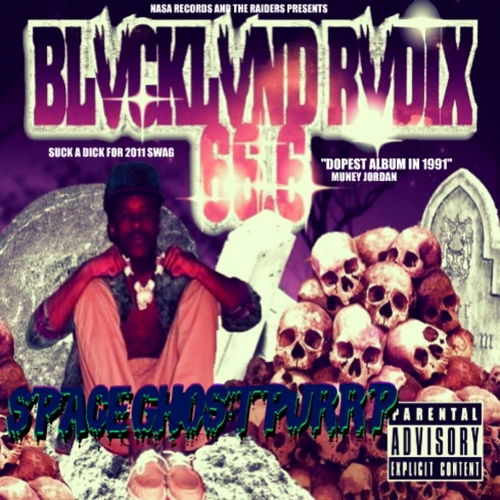
Miami’s Muney Jordan has christened himself with a name only a late night stoner can appreciate. Spaceghostpurrp’s influences are the epitome of millenial hip hop: early Three 6 Mafia and DJ Screw, Mortal Kombat and the occult, purple weed and purple drank. The beats are detuned, dripping with syrupy bass. Purists will no doubt blanch at his simplistic flow, but as for creating a vibe and a mood, Spaceghostpurrp is unmatched. From the skull emblazoned cover of last summer’s Blackland Radio 66.6 mixtape (stylized as Blvcklvnd Rvdix, in the style of the day) to fuzzy cassette type mastering, everything feels as underground as a coffin.

The 22 track Blackland Radio is predictably sprawling and uneven, but the highlights are diamonds in the rough. Beyond the unprintable chorus, there is actually a safe sex anthem somewhere in the raunchy boom bap of “Suck a Dick for 2011” (and fear not, there is already a 2012 follow-up: “Blvck Lipstick S.A.N.D. 2012“). “Pheel Tha Phonk” is classic g-funk lean, as if ripped off a tape released sometime around Spaceghostpurrp’s 1991 birthdate.

Last weekend I attended Spaceghostpurrp’s first hometown show, held in downtown Miami’s Eve (the former White Room, where I saw Rusko in December 2009), a pretty shady venue that stretches the definition of a nightclub. The crowd was, like Spaceghostpurrp’s Raider Klan, mostly underage, decked out in snapbacks and streetwear. Members of the Raider Klan crowded the stage, with various rappers and DJs taking turns warming up the crowd, with mixed results. The headliner’s set was brief but intense, and the crowd – ecstatic to see one of their own on stage – ate it up.

The fact that the show was one of his first is indicative of the music world in 2012 (just ask Lana Del Rey). This is an artist raised by both the streets and Adult Swim who has honed his craft in the unnerving glow of the computer screen rather than the stage. The contrasts are the foundation that allows Spaceghostpurrp to craft this otherworldly music. Other than sounding vaguely Southern, there isn’t a sense of place in his music (“the Internet” doesn’t count). Still, when he grounds his production in something more local, Spaceghostpurrp turns in one of his tightest songs yet: the Miami bass jam “Don’t Give a Damn.”

[wpaudio url=”/wp-content/uploads/2012/01/SpaceGhostPurrp-Dont-Give-a-Damn-Miami-Bass.mp3″ text=”SpaceGhostPurrp – Don’t Give a Damn (Miami Bass)” dl=1]

In 2011, the world discovered Odd Future.  In 2012, Spaceghostpurrp proves that 2011 was just the beginning.

Download: Spaceghostpurrp – Blackland Radio 66.6

Sinjin Hawke puts the "future" in future bass

Musicians and writers alike (myself included) have struggled to coin a term for the post-dubstep, R&B-influenced world of bass-heavy dance music, but “future bass” seems to be winning the genre name war. For Sinjin Hawke, the operative word in “future bass” is definitely “future.” Certainly, the Barcelona by-way-of Montreal producer doesn’t forgo the supple bass that the ascendant genre favors – he’s just operating on more levels.

A rack of bootlegs released late last year (available for free from the good people at Truants) first demonstrated his promise. As he related on the Truants blog, “The idea behind this compilation is to recontextualize some great songs for club use by exploring different styles of club music (chicago house, footwork, dancehall, rap) within the vein of the originals.” Bootlegging songs by Brandy or The-Dream, Sinjin preserves the original’s essence while updating rhythms and spacing out production. Even his instrumental remixes of Beyonce’s “Countdown” and DJ Khaled’s “I’m On One” breathe new life into ubiquity, whether with drumline acrobatics or footwork intensity, respectively.


Similarly, his freely available collaborations with DJ Sliink, Lucid, and MORRI$ master the du jour technique of sampling clips and phrases from R&B and hip-hop classics. “Fizzy Drink” chops and screws Missy Elliot; “Gas Pump” reconfigures Marques Houston into juke-club cold fusion.


While his bootlegs and collaborations set the table, Hawke’s debut EP The Lights is the full meal. The EP is an epic trip through layers of bass, dramatic horns and scene-stealing synth work. For all the competing influences and sounds – even within songs – nothing seems out of place. Stuttering footwork and trap bass beats feel at home with his orchestral tendencies. “Like That” chops, screws and jukes samples from David Banner’s club anthem “Play” into something more hypnotic and sexual than the original, as unlikely as that seems. The highlight, however, is “Crystal Dust” which alternately shimmers and stalks, somewhere between the trademark sounds of contemporaries Hudson Mohawke and Girl Unit.

[wpaudio url=”https://postcultural.com/wp-content/uploads/2012/01/03 Crystal Dust.mp3″ text=”Sinjin Hawke – Crystal Dust” dl=”0″]


At their worst, genre names are trivial and divisive; at best, they’re occasionally appropriate. While many artists are being collected under the future bass umbrella, few are crafting dance music that sounds as futuristic as what we’ve heard from Sinjin Hawke.

Starting this Wednesday, get lost with Nacey at Lost Society

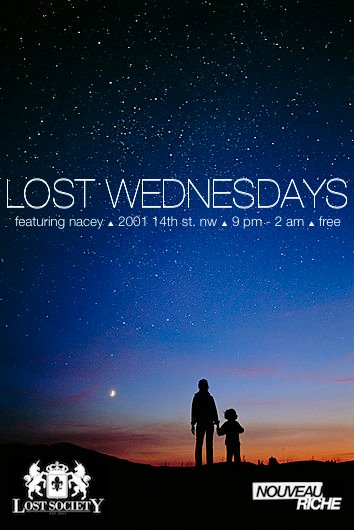
2012 begins as one of the musicians at the figurative center of the DC scene launches a residency at the literal center of the DC scene. This Wednesday, DJ/producer extraordinaire Nacey begins Lost Wednesdays at Lost Society, the lofty new hotspot that overlooks the intersection of 14th and U Streets.

Having established himself as a part of Nouveau Riche and KIDS (RIP), Nacey is branching out on his own this time around. He plans “to keep it deep, dark, and weird, but still dancey.” Whereas his other parties have been neon-drenched hipster havens, Lost Wednesdays promises a different feel from the maturing DJ/producer. It also fills the Wednesday night void left when DJ Lil’ Elle’s Ill Element ended over a year ago.

For a taste of what’s to come, download and listen to Nacey’s Lost Vol. 1 mix. Moody and melodic, the mix includes “The Look,” an unreleased original track that is ready for the dance floor. Don’t miss Lost Wednesday, and be ready to get weird.

Lost Wednesdays with Nacey is free at Lost Society (2001 14th St. NW) from 9pm – 2am.

Tracklist:
Trentemøller – Shades of Marble
Dapayk & Padberg – Island ft. Caro (Noze Remix)
Tomcraft – Room 414 (Citizen Kain Remix)
Massive Attack ft. Hope Sandoval – Paradise Circus (Gui Boratto Remix)
Blaqstarr – Get Up On the Floor
Zomby – Digital Flora
Eats Everything – The Size
Tabi Bonney – Nuthin But A Hero (Nacey Martin Brothers Rocket Surgery Edit)
Recloose – Antares
Mighty Dub Katz – Magic Carpet Ride (Teaser)
Style of Eye – Wiz Kid (Audiojack Remix)
Subb-an – This Place (Nic Fanciulli Remix)
Nacey – The Look
Maceo Plex – The Feelin’
Joe Alter – I Feel You
Trentemøller – Shades of Marble (Trentemøller Remix)

The Verge: Friends

Friends, apart from being the latest in a string of un-Googleable buzz bands, makes singularly tight pop songs. Not future pop or nightmare pop, but weird pop (as they call it).

The band’s music began as demos recorded by Samantha Urbani, who decided – after years of writing and recording music – to finally share her work with audiences. The Bushwick band came together through a mix of history (Urbani has known Lesley Hann since 2nd grade) and happenstance (fleeing bedbugs, Hann and Oliver Duncan stayed with Urbani). Along with Matt Molnar and Nikki Shapiro – and a few jam sessions – the band formerly known as Perpetual Crush played their first show, less than a week after their inception. The jam continues in the band’s live show, which finds the multi-instrumentalists exchanging roles on stage.

Despite designating it weird pop, there’s nothing too weird here. Urbani’s lyrics are sly, her vocals meander but always come back to a solid hook. There is a dance music groove that permeates, thanks to robust percussion and funky basslines. The video for lead single “Friend Crush” is a psychedelic kaleidoscope filled with glitter and costume jewelry.

While “Friend Crush” is a dreamy tribute to friendship, “I’m His Girl” is all swagger. The lyrics offer an empowered take on relationships, and the video feels like a hip-hop clip out of Brooklyn, circa 1988. The b-side is firmly in the next decade, however: a spot-on cover of Ghost Town DJ’s classic “My Boo.” One of the 90s most memorable hooks, it’s a perfect choice for a band whose music is nostalgic yet forward-thinking. And maybe just a little weird.

Friends open for Ganglians at the Red Palace on Tuesday, November 15.

The Verge: Purity Ring

For the last few years, the spectrum of outsider pop – all things indie and/or electronic – has been dominated by a specific type of power duo, comprised of a male behind the boards and a female singer upfront. Whether it’s a bit sexist and regressive, or simply expedient, the formulation doesn’t seem to be going away. The next in the line of such duos owes much to those before them, especially the likes of The Knife, Beach House, and even Sleigh Bells.

Purity Ring is a self-described “future pop” act formed by Corin Roddick (of electro band Born Gold) and vocalist Megan James (a classically trained pianist in her own right). Roddick’s background as a drummer is evident in the percussion-lead music. Over just a few songs, Purity Ring keeps the instrumentation of synth pop and discards the 80s dance instinct. Instead, the songs are dominated by the skittering of grooves of R&B and hip hop.

The Canadian duo’s first offering was this summer’s “Ungirthed,” a swirling mix of wobbling bass, back-masked, cascading percussion, and James’ airy vocals. The B-side, “Lofticries,” is the minor key flip to the major key of “Ungirthed,” with similar ghostly effects and vocals. James’ lyrics tend towards the vague yet sinister; lines like “weepy skin with trembling thighs” are disarmed by the childlike innocence of her tone.


The duo has also remixed a couple of songs, following the same formula of their own compositions. Their take on S.C.U.M.’s “Summon the Sound” strips away the original’s feedback-heavy shoegaze, but don’t be lulled – there’s still an invigorating, rumbling movement halfway through. Similarly, Purity Ring’s remix of Disclosure’s “I Love… That You Know” is more sparse than the UK garage original.


Purity Ring’s latest song is their strongest yet. “Belispeak” has a propellant groove throughout, only hinted at on their first single. Icy arpeggios and metallic programmed beats provide the edge they’ll need to break out of the dream pop box. Purity Ring’s setup might not be novel, but their eery tones and forward-thinking beats certainly do the trick.


Purity Ring plays the Black Cat on Wednesday.

Review: Drake – Take Care

On the cover of Drake’s sophomore album Take Care, the musician sits forlorn amid the trappings of his success: solid gold ornaments, plush cloths and works of art. The heavy-handed metaphor isn’t lost, and it remains the dominant theme for the singer-slash-rapper. Take Care is nothing new for Drake. So while “jealousy is just love and hate at the same time,” as Drake raps on opener “Over My Dead Body,”  boredom is just monotony and tedium at the same time.

For fans of So Far Gone and Thank Me Later, Take Care does not disappoint. It’s another powerhouse hour of millennial hip hop and R&B: meditations on fame and happiness, the two rarely meeting. Production is top-notch; Noah “40” Shebib’s mellow bass and wistful orchestration provide a strong counterbalance to the punchy radio rap of tracks from Lex Luger, Just Blaze, and Boi-1da. Drake picks his spots to shine, dropping witty lines like “shout out to Asian girls / let the lights dim sum” and sounding fierce on “Under Ground Kings,” an epic 9th Wonder-produced tribute to UGK.

Most of the features are thoughtful and well placed. Verses from Rick Ross (“only fat nigga in the sauna with Jews” a totally Ross pronouncement on “Lord Knows”) and Nicki Minaj (her weird-out punchline rap the highlight of grimey Top 40 hit “Make Me Proud”) are scene-stealers, as always. “Crew Love,” his collaboration with protege The Weeknd, may fit better in the latter’s oeuvre with its blasts of dissonance and atmospherics, but it’s a high point for the OVOXO crew.

The highlight of the record, the title track, combines all of these elements. The beat is a reworked version of the Jamie XX and Gil Scott-Heron collaboration “I’ll Take Care of U.” Rihanna takes the place of the Godfather of Hip-Hop and slinks through the chorus, which lets Drake sound more urgent that someone for once. The ghost of Scott-Heron looms large throughout, especially during the breakdown.

Unfortunately, the last third of Take Care is mostly comprised of slow jams and wasted guest appearances. Don’t get too excited about Stevie Wonder’s credit on the mournful “Doing It Wrong:” the soul legend only shows up as a harmonica player. Similarly, “The Real Her” is another syrupy slow jam of which Andre 3000’s verse is highlight by default, if only because fans are forced to grasp at the table scraps he deigns to share these days.

Take Care‘s Cash Money connection comes from an unexpected source, since Lil’ Wayne’s verses, both on “The Real Her” and “HYFR (Hell Ya Fuckin’ Right),” are mostly forgettable and feel tacked-on. Instead, Drake saves it for last, in his brilliant flip of what is arguably Cash Money’s most important song, Juvenile’s 1999 breakthrough Back That Azz Up. On “Practice,” Mr. Graham takes that unmistakable synth melody and chorus for a smooth ass ride through the 504.

On the spaced-out street single “Marvin’s Room,” Drake raps (or rather drunk dials) that “I’ve had sex 4 times this week / I’ll explain / Having a hard time adjusting to fame.” It’s a smart line, but it’s also something we’ve heard before, seemingly ever since he burst on the scene two years ago with So Far Gone. Drake doesn’t need to find happiness in his fame – he just needs something new to talk about.

Fatima Al Qadiri vs. the World

Fatima Al Qadiri is a child of the world. Born in Senegal and raised in Kuwait, the musician and artist globe-trotted for years before ending up in, where else, Brooklyn. Her global background is inseparable from her work, which spans several media. Her music confronts the conservatism she faced during her youth through reconstruction and reinterpretation. As a writer and photographer, she calls attention to issues of gender, sexuality and identity in the Arab world and beyond.

This fall, Al Qadiri has released two highly anticipated EPs. Under the pseudonym Ayshay (Arabic for “whatever”), she released WARN-U on label-of-the-year Tri Angle Records. WARN-U is an homage to the religious chants of Islam, comprised entirely of shifted and stretched samples of Al Qadiri’s voice. It is otherworldly and meditative, a tone poem both sacred and profane. And rather than handing over remix duties to a glut of producers, LA bass music duo Nguzunguzu animate the trio of songs with a breakbeat laden megamix. Similarly, Al Qadiri’s Muslim Trance Mini-Mix for Dis magazine (where she pens a column on obscure global pop) samples Sunni and Shia acappellas into an ecstatic mix.

Her latest effort, Genre-Specific Experience, is exactly that: instead of taking on religious chanting, each song is a recreation of a dance music sub-genres, with the same haunting quality of WARN-U and a distinct future bass sensibility. The first and foremost instrument on the EP is the steel drum, from the looping melody of the syrupy boom-bap of “Hip Hop Spa” to the shimmering tones of “D-Medley.” “How Can I Resis You” and “Corpcore” tackle a genre on the decline (dubstep) and one on the rise (juke), respectively. The biggest surprise is “Vatican Vibes,” which starts in a church and ends in a Pure Moods rave of ‘90s Gregorian trance.

Not just an album, Genre-Specific Experience is also a collection of collaborative music videos. The corresponding videos challenge the notions of genres and tropes in the same way her music does. The clip for “Vatican Vibes” is Catholicism as 3D video game experience; the one for “Hip Hop Spa” is a meditation on the solitary confinement of spa treatment versus that of incarceration, all under a layer of hip hop glamor.

Fatima Al Qadiri is a modern day Renaissance woman. From music and photography to fashion and the written word, her artistic vision is like Visa: it’s everywhere you want to be.