Category Archives: Film

Inception: Deciphering Christopher Nolan’s masterpiece


Inception is an unequivocal masterpiece. Written and directed by Christopher Nolan, the film is 150 minutes of non-stop action and intrigue, with an undercurrent of unflinching human drama throughout. The experience is akin to your first viewing of The Matrix, Mission: Impossible, and The Fountain – combined.

Nolan’s $200 million canvas allows him to meditate on the the duality of reality and fantasy, a theme throughout his work. In Memento, Leonard fights to separate truth from lies; in The Prestige, the protagonists toy with illusion; in Inception, the crux is dream versus reality. Furthermore, Nolan continues to twist the narrative structure to reflect themes and meaning. Instead of the non-linear time of Memento, Nolan goes to an even deeper level – a fifth dimension, dream space, where the fabric of space and time folds back on itself in unimaginable ways.

On an emotional level, Inception – like Memento, The Prestige, and the Batfilms before it – is about how we cope with loss: loss of memory, loss of control or loss of loved ones. Some reviewers alluded to an emotional coldness in Inception, a claim I find entirely off the mark. Even in scenes that are constructed by the characters, deep in the subconscious, the emotional resonance is striking. Nolan’s passion project took 8 years to finish, due in part to repeatedly rewriting, strengthening the human element of what is essentially a sci-fi, heist thriller.

But what will make this film linger in the collective consciousness is not just its impressive scope but its ambiguous ending, a cut to black that calls what we thought we knew about entire film into question. As in the finale of The Sopranos – the clues to deciphering the ending are in the text, yet open to discussion and debate. But even when deciphering the ending, it’s important to note that solving the mystery doesn’t end the story. There is value to interpretation beyond a simple, definitive answer. With that said, I’ll give my two cents on the mystery.

Working backwards from the ending, the first key is the finale. The denouement of the action: Dom returns home, victorious, to be re-united with his children. He spins his totem, but we don’t see it fall (perhaps it wobbles?). However – the children that Dom sees are exactly the same as the avatars that have appeared throughout his subconscious. On its face, it would seem that this “too good to be true” ending must be just that.

The film’s antagonist is Mal, the projection of Dom’s deceased wife that haunts his life and dreams alike. As Dom finally confronts her (in the deepest level, limbo), she continues to cast doubt on the nature of Dom’s reality. Dramatic, Bondesque chase sequences? Persecution by a mysterious company (whose name, Cobalt, is suspiciously close to Dom’s last name, Cobb)? Are these the elements of real life, or of fantasy?

The final key is a scene that occurs relatively early in the film. Yusef the Chemist proves the strength of his sedatives by bringing Dom and crew to a drug den of dreamers, reminiscent of the opium houses in Once Upon a Time in America. “They come here to sleep?” asks Dom. “No,” answers the keeper of the dream addicts, “They come here to wake-up. Who am I to tell you which is dream and which is reality?” This philosophical approach to the film’s underlying theme is instructive. Like the sleepers – and like DeNiro’s Noodles in Once Upon a Time… – is Dom’s narrative a drug-induced dream by someone unable to cope with the loss of a loved one?

Whether or not you attempt to “solve” it, the film is still an epic undertaking that takes time to wrap your head around. Nolan is an undeniable master of suspense: with each successive dreamscape – the urban chase, the zero-gravity hotel, the arctic stronghold, the dystopian limbo – he raises the stakes. Yet he also knows when to drop in a well-placed joke, to ease some of the tension. Combine that with Hans Zimmer’s chilling score and cutting-edge visual effects and you have a piece of film art. What makes it a masterpiece, however, is on a deeper level. Inception achieves what its protagonists attempt to do, creating a thought in the viewer’s mind, leaving us with a half-remembered dream – a haunting, virus of an idea: what is reality?
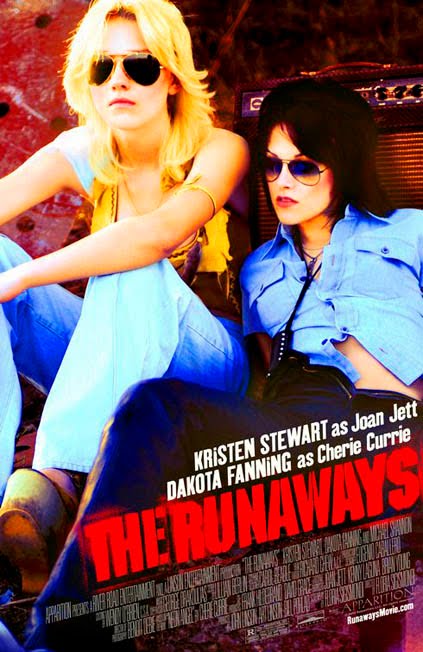
Film Review: The Runaways


As a film genre, the biopic is a well-worn standard. There’s the meteoric, rags-to-riches story, followed by the inevitable fall and hard-earned redemption. If Joseph Campbell was alive today and lived in Hollywood, he’d write biopics.

In particular, biopics about musicians suffer even worse fates, always relying on the same tropes: abusive or absent families, drug and alcohol abuse, and failed personal relationships. These form the building blocks for what we know about the rock and roll lifestyle, after the band leaves the stage.

With this in mind, I wasn’t expecting much from The Runaways, a film that chronicles the ephemeral career of the groundbreaking band of the same name. But unlike recent classics like Ray and Walk the Line, The Runaways fails to rise above the limitations of genre to craft a captivating film.

For the uninitiated, the Runaways was an all-girl rock band that lasted for less than four years (1975 to 1979), while the members were in their teens: lead singer Cherie Currie, rhythm guitarist Joan Jett, lead guitarist Lita Ford, drummer Sandy West, and various bassists (a fact glossed over in the film, due in part both to narrative ease and legal difficulties). Kim Fowley, a cult legend in the 60s and 70s music scene, helped assembly, produce, and manage the band.

The film does a good job of contextualizing the setting: the glammed out 1970s in LA, where the boys look like girls and the girls look like trouble. Jett (Kristen Stewart) is a leather-clad glue-huffer and Curie (Dakota Fanning) is a barely legal starchild searching for an identity. Fowley (Michael Shannon) is a true degenerate, assembling a group of teenage girls that sell sex in a way that would make Britney Spears blush. Fowley gets it, and Shannon is given the best lines: “This isn’t women’s lib, it’s women’s libido;” “This is press, not prestige;” and “Jail fucking bait. Jack fucking pot.” Shannon steals his scenes, much as he did in 2008’s Revolutionary Road, and Stewart totally embodies Jett, from her singular look, to her mannerisms and voice. Their performances are the highlights in a film where other characters are two-dimensional placeholders.

The film is based on Cherie Currie’s autobiography, Neon Angel, and predictably, she is the central character. Still – the film never provides an emotional connection to her tortured existence, due at times to the writing and at others to Fanning’s performance. Jett comes across much better (in real life, she produced the film). The lack of a sympathetic main character gives the film a disjointed feeling.

Stylistically, writer-director Floria Sigismondi relies heavily on the style she established directing music videos, like Marilyn Manson’s “The Beautiful People.” Unfortunately, the shifting focus, camera tilts, and heavy-handed visual metaphors (a bathtub becomes a deep abyss, broken glass during a fight, etc.) that work in wordless music videos comes across as tired clichés over the course of a two hour film. Yes, when the camera is tilted, the characters are disoriented. If you didn’t get it the first time, maybe you will by the sixth time.

Also, for a movie about music, there is precious little to be found. Sure, David Bowie’s “Rebel Rebel” and the Stooges’ “I Wanna Be Your Dog” show up (the latter over a lesbian scene that is more exploitation than empowerment), along with the Runaways’ hits, but a fuller sense of the era’s sound is missing. Maybe I’ve been spoiled by a soundtrack like the one for Almost Famous, but too much of the film goes by without what should be at its core.

The story of the Runaways is perfect for a musical biopic, and the band deserves a film that is as fun and volatile as it was. Unfortunately, The Runaways buries phenomenal performances by Stewart and Shannon under clichés that are even too much for a genre film to handle.

Two out of five stars. The Runaways is in theaters everywhere on Friday, April 9.

For Your Consideration: Big Fan


The word “fan” is short for “fanatic,” a casual abbreviation that doesn’t imply the extreme, uncritical zeal of a fanatic. Most people are fans of a musician, TV show, or sports team, but a rare few would cop to being fanatics.

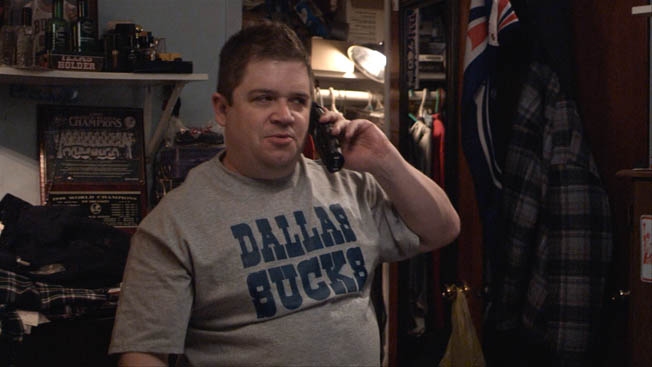
Big Fan, the directorial debut of The Wrestler scribe Robert Siegel, is a character study of a fanatic. The titular character is Paul Aufiero (Patton Oswald), a NY Giants devotee who works as a parking garage attendant and lives in Staten Island with his mother. Siegel (who also wrote the film) painstakingly illustrates the sad life Paul has crafted for himself, from the shrine to his favorite player to the moisturizer on the nightstand. The minutiae and the cinema vérité style give us a well-formed character in a very specific place. The same can be said of Paul’s friend (singular, Kevin Corrigan perfectly cast as Sal) and family, from his bus bench defense lawyer brother to his orange-tanned, fake-titted sister-in-law. Siegel’s grip on Staten Island is as tight as it was on Elizabeth, NJ in The Wrestler, with a wintery, jaundiced palette.

Paul’s life revolves around the Giants. Paul and Sal are too broke for tickets, so they tailgate and experience the game from the parking lot. The highlight of his day is calling sports talk radio and spitting out his rehearsed diatribes, even if his mother interrupts his late night calls, without fail.

A chance encounter with Quantrell Bishop, Giants linebacker and Paul’s idol, should be the highlight of his pathetic life. Following Bishop’s crew from Staten (“Maybe he’s here to see the Wu-Tang,” Paul ponders unironically) to a NYC strip club, Paul and Sal embark on a homoerotic Hardy Boys adventure. They try to get Bishop’s attention, and when buying him a drink doesn’t do the trick, Paul improvises. However, when the ruse of this chance encounter is revealed, Bishop flies off the handle and viciously beats Paul.

The beatdown doesn’t affect his fanaticism. On waking from a three day coma, Paul’s first questions are Giants related. Much to his dismay, Bishop has been suspended indefinitely. Without their playmaker, the foundering G-men can’t keep it together – and neither can Paul. A case study in battered woman syndrome, Paul still wears his attacker’s jersey, and even blames himself for the assault. He lies to the cops to protect Bishop, and refuses to sue, which is the first instinct of his scumbag brother, who instigates a lawsuit anyway. Things are spiraling out of control. The after-effects of the hematoma are not pretty; Siegel utilizes a disorienting, feedback-heavy soundtrack to great effect here.

Whats left of Paul’s life is ruined when his on-air nemesis, “Philadelphia Phil,” outs “Paul from Staten” as the victim of the attack. Paul finally takes things into his own hands, going undercover in an Eagles bar, armed and ready to confront Philadelphia Phil (Michael Rapaport in another bit of choice casting: as a loud-mouthed d-bag). What does Paul have left to lose, as the clocks ticks and the “Giants suck” chants crescendo? Suffice to say, the film takes a bit of a film-school turn during the finale, but stays true to its characters.

Big Fan isn’t Misery or The Fan; Paul isn’t a psychopath, he’s a man-child, very happy with a life others find unfulfilling. Maybe watching the film in a post-Jersey Shore world tainted the experience. I’ve definitely had my fill of douchebags from NY/NJ. But still, it probably says more about the quality of the “real” people of Jersey Shore than the caricatures that Siegel has crafted. As a character study, it presents a modern, less exploitative look into fanaticism. As a film, however, it displays some of the paint-by-numbers filmmaking expected from a first time director – the only thing that kept me from enjoying it more.

Three and a half out of five footballs.

For Your Consideration: Up in the Air


In returning to my roots and blogging about film, I’ve decided to start a “For Your Consideration” series about the best films (based on the consensus of critics, audiences, and clever marketers) of 2009, in advance of the Oscars. I really slacked on seeing films in the theater in ’09, so I’m making do with the help of the Internet. Forget winter, it is (bootleg) screener season! Without further ado…

Up in the Air

Up in the Air is the first true film of the 2009 recession, a happy accident thanks to writer-director Jason Reitman‘s early successes. Rather than making this film in 2002 as originally intended, the director’s work on Thank You For Smoking (2005) and Juno (2007) pushed this film to the backburner, causing the recession to dominate the tone of the film in a way that the economy wouldn’t have during better times. With double digit unemployment, only the ever-charming George Clooney could make corporate downsizer / motivational speaker Ryan Bingham a sympathetic character.

Ryan is a creature of habit, constantly flying around the country and doing the work that managers and executives are too afraid to do. The precision of his routine is captured by Reitman’s smooth cuts and repetitive sequences as Ryan packs, moves through security, and jets to the next destination. Even his predictably Spartan apartment is basically a hotel room. His obsession with brand loyalty and the elite perks of corporate dedication is an easy target for satire, as Ryan and fellow frequent-flyer Alex Goran (Vera Farmiga) trade cards in a scene that recalls the business card exchange in American Psycho. Alex is a perfect foil, as she tells Ryan to think of her as himself “with a vagina.” Farmiga is as cool and cocky as Clooney, and their no-strings-attached relationship gives new meaning to the term lay-over.

Ryan’s world is thrown into chaos as his firm decides to go digital, bringing in Natalie Keener (Anna Kendrick, of the Twilight series) to make their business “glocal,” corporate-speak combining global and local. They take the show on the road, as Ryan teaches Natalie how to lay-off someone face-to-face before the new system goes live. The majority of the film follows a familiar pattern, as old and young learn from each other; Ryan’s romantic notions of his job versus the cold calculations of this twentysomething with a Myspace page. When Natalie’s boyfriend breaks up with her via text, the irony isn’t lost on Ryan. But Natalie also lands her punches, eviscerating his “cocoon of self-banishment” and total dedication to not connecting to possessions, people, or places.

Except for notable sequences with Zach Galifianakis and J.K. Simmons (among others crucial to the plot), the appearances of the newly-unemployed are of real people who had been laid off. The veracity is heart-breaking, with reactions that run the emotional gamut. When Natalie tests her system (with the target in the adjacent room), the real reaction is hers, not the grown man crying next door. Will she be able to cut it in this world, or is Ryan’s cocoon a necessary evil?

As Ryan heads home to attend his sister’s wedding, he brings along Alex, as the life lessons and questions about the future start to pile up. The wedding sequence moves from objective to subjective and feels more like a home video than a corporate instructional one, a tonal shift reflected in Ryan’s character. The last act of the film finds Ryan finally making decisions, with a turning point at a seminar called GoalQuest (the name is too cute by half). Unfortunately, the twists are a little too by-the-numbers for me, which lessens the emotional punch as the film ends.

George Clooney is the only actor of our time who comes close to mirroring the range and talent of Cary Grant: confident and cool, but multi-dimensional. His casting, along with Vera Farmiga as Alex and Jason Bateman as middle-manager Craig Gregory (is he getting type-cast, or what?), works well, although I couldn’t help but see someone like Kristen Bell in the Natalie role. Reitman continues to develop his directorial style, although the script’s satire isn’t as sharp as that of Thank You For Smoking. Still, this is a very entertaining film with cleverly crafted characters and, with the context of the recession, real resonance.

Four out of five frequent flyer miles.

Review: In Bruges


This won’t be a long review, because I can’t imagine speaking at length about this godawful waste of celluloid. While I hadn’t expected much, it received a respectable 77% on Rotten Tomatoes and looked better than any of our other options. Obviously, dumping season has begun.

The movie fails in many, many ways. It is not sharp enough to match the verbal ratatat and dark situational irony of a Quentin Tarantino or Guy Ritchie flick, which it tries desperately to be. It never establishes how dreadful the titular city is, instead substituting fat Americans in Yankee caps and bitchy Canadians for real satire. And it can’t decide what kind of film it wants to be: the dialogue isn’t funny enough for straight comedy, the action isn’t any good for a crime caper, and the dark moments are played for drama instead of black comedy. Also, the screenwriter thinks midgets, racism, and senseless gore are comedy gold.

Colin Farrell and Brendan Gleeson are wasted as a pair of hapless hitmen, as is Ralph Fiennes as their dreadful boss. They all play on the criminal stereotypes that have been done to death in every ironic crime movie since Pulp Fiction.

If you’ve already seen every Tarantino or Ritchie film and you want some of the style but none of the substance, see Smokin’ Aces or Layer Cake. But stay the hell away from In Bruges.

My Rating: 0 out of 5 midgets

Review: There Will Be Blood


Yesterday, I re-watched There Will Be Blood at the E Street; my initial vantage point of somewhere under the screen didn’t really do the film justice, necessitating another viewing.

There Will Be Blood is Paul Thomas Anderson‘s oilman epic starring Daniel Day-Lewis, who simply dominates the film as Daniel Plainview. Much like he did with Bill the Butcher in Scorsese’s Gangs of New York, Day-Lewis creates an unrelenting, monomaniacal man obsessed with advancing himself and his ideals. Ironically, it takes a British actor to capture these two monuments to the American character.

The film is a character study set against the desolate background of the turn-of-the-century West. The barren land, dotted with derricks, ranches, and near ghost towns lets the film focus on Plainview and those with whom he interacts, removing all but what Anderson wants the viewer to see. When all that was known about the film was the people involved and that it was based on an Upton Sinclair novel Oil!, I expected a more complex film involving the Teapot Dome Scandal and the politics of the oil fields: something resembling Boogie Nights or Magnolia in the sense that it would weave together a diverse group of characters and their story lines. Instead, the film is more in line with Punch-drunk Love, decidedly smaller and more personal. As PDL was my favorite Anderson film until this one, I was surprised but pleased by the similarities.

While the easiest comparison to Plainview is Bill the Butcher, I also saw in him shades of Patrick Bateman, but drawn without irony for a satire. Here is a man who only sees others as impediments to his success; business, and his life, are zero-sum games in which only he can prosper. For this reason, he thrives on his hatred for people. The only person he loves is his adopted son HW, whom he immediately casts aside when he no longer fills a convenient niche. And when a grown HW attempts to stake out on his own, entering Daniel’s sphere of business, Daniel renounces him, re-imagining his parentage as a business maneuver of great foresight.

The central conflict of the film is between Daniel and evangelist Eli Sunday (Paul Dano). Daniel views Eli and his faith with great contempt, especially as his control of the town through the church rivals Daniel’s control through the oil. Daniel spurns Eli at every point – refusing to pay him a promised amount, beating him up, and even undercutting him by blessing the well himself. Dano is definitely skilled and keeps up with Day-Lewis as well as he can, and Eli is a challenging character. However, he cannot outlast the fierceness of his rival, and is ultimately consumed by the worldly pursuit of wealth that leaves Plainview a tragic, drunken waste.

Watching There Will Be Blood you cannot help but feel that you’re watching something important, and not just another pretentious independent film that strives for past greatness by making vague, symbolic gestures. Not to overstate this film’s importance or significance, but I couldn’t help but think of Citizen Kane at many points, especially as we see how far Daniel has fallen in his Xanadu-esque mansion. Anderson’s script is sharp (and gets a few nervous laughs) and his directing is masterful, the performances are deep and expressive, and Jonny Greenwood‘s score is vibrant, exciting, and new. The contrast between the expansive setting and the narrow focus of the film lets every piece of work together, drilling home some cinematic Oil.

My Rating: 5 out of 5 Milkshakes (I drink it up!)

Review: Juno


Last Saturday, I saw Juno from the second row of a sold-out E street auditorium.

The retro look of the cell-shaded credit sequence reminded me of that of You can’t Do That on Television, the first of many 80s references. The tone is immediately set with a scene between Juno (Ellen Page) and a convenience store counter jockey (Rainn Wilson): with lines like “this is one doodle that can’t be undid, homeskillet,” it’s clear that the dialogue will be stylized hipster-ese. Luckily, I think the script balances the hypercool jargon with enough realism, preventing it from falling over the cliff of self-parody like Napoleon Dynamite.

The tight script is held together by great performances from nearly everyone involved, which is definitely a testament to the casting. Ellen Page is a developing star with range, as evidenced by the contrast between this role and her breakout one in Hard Candy. Arrested Development alumni Jason Bateman and Michael Cera (who are never on-screen together, unfortunately) both play guys affected by pregnancy who have difficulty adapting to the circumstances. Bateman, as the castrated former rocker, is too nice to root against, even if the character is less than admirable. If anything, Cera is underutilized, leading the love story element of the film to be a bit unfulfilling. Allison Janney and JK Simmons are the Best Parents Ever, quickly getting beyond the hangups of teen pregnancy and looking out for their daughter. Even newcomer Olivia Thirlby contributes, going beyond the typical best friend role.

The lone exception to the skilled casting and acting, and the film’s glaring weakness, is Jennifer Garner as mother-to-be Vanessa. Her bad acting distracts, especially against everyone else, and it unnecessarily complicates matters. Whether or not she actually has an unquenched maternal drive, or if she justs feels compelled by the pressures of suburban adulthood, is unclear due to a particularly flat performance (its probably the former). I would have loved to see Amanda Peet in this role, or anyone able to both emote and deadpan.

Jason Reitman turns in another solid satire, albeit one with a less biting script than Thank You For Smoking. While I don’t recall any specifics about his directorial style, I attribute the balanced structure of the picture to him. Keeping it grounded in character and story gives the film a lot of heart.

The press coverage of Juno has focused on the hype (“it’s the next Little Miss Sunshine!”), reading into it pro-choice/pro-life arguments, and comparing it to Knocked Up (from the girl’s perspective). However, I think that all misses the point: at it’s core, Juno is a simple, sweet story about less-than-perfect circumstances with an irreverence that is endearing and not mean-spirited. I’ll definitely be looking forward to the next efforts from everyone involved.

My Rating: 4 out of a possible 5 Fetuses

My Golden Globes Picks

I wanted My First Post to be about something important. Unfortunately, I’ve opted instead for breadth over depth.

The ongoing WGA strike leaves the Golden Globes reduced to a press conference on Jan. 13. I think most people can agree that the Globes are a pretty superfluous awards show, allowing studios and networks to squeeze a little more free advertising (“press”) out of their prestige pieces. I don’t remember ever watching the awards ceremony on purpose, and I can’t recall specific winners. With that in mind, a press conference is a bit disrespectful for the winners who actually deserve awards for their craft. But I’m sure true artists don’t need the validation of the Hollywood Foreign Press Association (yes, I did look that up). And anything that keeps Bruce Vilanch out of work is good in my book.

So, here are my picks for most of the categories, omitting those for which I can’t make a well-informed choice; apparently I didn’t see many leading women films last year. These are personal favorites, and not my guesses at the winners. I’m curious how much overlap there will be in 3 days.

MOTION PICTURES

  • Best Motion Picture – Drama : There Will Be Blood, American Gangster, Atonement, Eastern Promises, The Great Debaters, Michael Clayton, No Country for Old Men.
    • I actually saw 6 of 7 in this category, and while they were all very well done, none had the gravitas of the epic PT Anderson flick (expect a review after a second viewing). I’d be happy with any of these winning, except for Atonement and The Great Debaters.
  • Best Motion Picture – Musical or Comedy : Sweeney Todd / Juno, Across the Universe, Charlie Wilson’s War, Hairspray.
    • And it only takes 2 awards before I’m equivocating. I’m reserving judgment until I see Juno, because of my anticipation and the buzz. I did enjoy Sweeney Todd, but I think Juno will be more up my alley. Only in the GG does an Aaron Sorkin picture end up with this company. It’s moot – CWW was disappointing on all fronts.
  • Best Actor – Drama : Daniel Day-Lewis, George Clooney, James McAvoy, Viggo Mortensen, Denzel Washington.
    • Once again, Daniel Day-Lewis dwarfs the competition in a role more intense, determined, and sadistic than Bill the Butcher.
  • Best Actor – Motion Picture – Musical or Comedy : Johnny Depp, Ryan Gosling, Tom Hanks, Phillip Seymour Hoffman, John C. Reilly.
    • Johnny Depp nailed the title role, but this ridiculous category doesn’t put up much of a fight.
  • Best Actress – Motion Picture – Musical or Comedy : Ellen Page, Amy Adams, Nikki Blonsky, Helena Bonham Carter, Marion Cotillard.
    • Placeholder vote – I need to see Juno!
  • Best Supporting Actor : Tom Wilkinson, Casey Affleck, Javier Bardem, PSH, John Travolta
    • This is a toss-up between him and Bardem, and while Bardem hulked and killed his way through No Country, Wilkinson’s role actually surprised me and punctuated a rather methodical film.
  • Best Supporting Actress : Amy Ryan, Cate Blanchett, Julia Roberts, Saoirse Ronan, Tilda Swinton.
    • Helene McCready is the “white trash Southie broad” for the ages – compare that to the sedate Beadie Russell and you can’t even tell it’s the same actress. By the way, does Horse Teeth get everytime she wanders on screen?
  • Best Director : The Coen Brothers, Tim Burton, Julian Schnabel, Ridley Scott, Joe Wright.
    • Where is PT Anderson? Not very often does a film get mentioned in the same breath as Citizen Kane and The Treasure of the Sierra Madre, even if only for scope and subject matter, not significance. The Coens get it by default for putting sweltering West Texas on film and ending up with molasses and whiskey.
  • Best Screenplay : Aaron Sorkin, Diablo Cody, The Coen Brothers, Christopher Hampton, Ronald Harwood.
    • This is a homer pick, straight-up. The dialog was sharp enough but the film fell flat for whatever reason. This might end up being Diablo Cody if I actually like Juno as much as I anticipate.

TELEVISION

  • Best Drama : Big Love, Damages, Grey’s Anatomy, House MD, Mad Men, The Tudors.
    • I’m abstaining here but thought it was worth mentioning. I’ve heard good things about Mad Men, but can’t pick it by process of elimination. No Dexter, Sopranos, Shield, Rescue Me, The Riches, or Brotherhood is just unacceptable. TV drama is in a new Golden Age and this is the best they can do? Good job guys!
  • Best Musical or Comedy : 30 Rock, Californication, Entourage, Extras, Pushing Daisies.
    • This is definitely more acceptable. Pushing Daisies is charming, as if Tim Burton decided to do a crime procedural, and it’s a close second. But 30 Rock is the funniest thing since Arrested Development, and it might actually have network support.
  • Best Actor – Musical or Comedy : Alec Baldwin, Steve Carell, David Duchovny, Ricky Gervais, Lee Pace.
    • Alec Baldwin takes his role in Glengary Glen Ross and turns it into a deadpanning straight man. Jack is one of the best roles on television while illuminating its worst aspects. The fact that your typical Hollywood Liberal plays a market-testing, soulless corporate shill like Jack is just another layer on the meta cake that is 30 Rock.
  • Best Actress – Musical or Comedy : Tina Fey, Christina Applegate, America Ferrera, Anna Friel, Mary-Louise Parker.
    • And it’s 30 Rock for the trifecta. Weeds has fallen into a funk and Mary-Louise suffers for it. For a comedic role, Liz Lemon is just sad, but she is best leading lady in a comedy since Mary Tyler Moore (That’s an example of a reference that I pull directly out of my ass, because it sounds right).
  • Best Actor – Drama : Michael C. Hall, Jon Hamm, Hugh Laurie, Bill Paxton, Jonathan Rhys Meyers.
    • Dexter is the role of a lifetime, and Hall brings the cynical detachment of David Fisher. Instead of being a homophobic gay man, he’s a charming serial killer – with a heart of gold. Sadly, I don’t know which one most Americans find scarier.
  • Best Actress – Drama : Minnie Driver, Patricia Arquette, Glenn Close, Edie Falco, Sally Field, Holly Hunter, Kyra Sedgwick.
    • File this with Amy Ryan. Seeing an actress capture a character that we don’t often
      see on screen, yet making it feel vivid and real is always award worthy. Plus, its The Riches only nod.
  • Best Supporting Actor : Kevin Dillon, Ted Danson, Jeremy Piven, Andy Serkis, William Shatner, Donald Sutherland.
    • This is a surprisingly weak category, and while Johnny Drama will probably split votes with Ari, only one of the characters is still entertaining. They should end Entourage and spin-off a show for Johnny Drama, but instead he’ll have to carry a show from a supporting role.

For the most part, the voters did pretty well. There are only a few glaring omissions from the entire list (Zodiac?), and clear winners in each category. Ironically, I’ve now contemplated the Golden Globes more than ever, and the presentation is a mere formality. Hopefully, I’ll be able to see Juno soon and vindicate picking it three times on spec.