Monthly Archives: September 2011

DC Duos: Cam Jus and Billy the Gent

As Dave Nada’s accidental creation continues to grow, spurned on by a vibrant, global underground fan base, DJs and producers of all stripes are finding their voice with moombahton. Thanks to a simple formula and a rich palette of sounds, the genre is whatever you make of it. That seems to be the philosophy behind two of the biggest names in the scene, DC’s own Cam Jus and Billy the Gent.

Cam Jus has been DJing in DC for a few years now, and his trademarks continue to be his chilled-out personality and musical versatility. Depending on the crowd and venue, Cam is at ease spinning Top 40, electro, dancehall and all points in between. Appropriately, he’s also fluent in that fusing of hip-hop and house music from our neighbors up I-95, Baltimore club. His first remixes were Bmore versions of songs by DMV stalwarts Wale and Blaqstarr, and he’s continued to flip tracks into the frenetic style, like this breakbeat driven remix of R&B crooner Miguel’s “Sure Thing.”

[wpaudio url=”/wp-content/uploads/2011/09/Miguel – Sure Thing (Cam Jus remix).mp3″ text=”Miguel – Sure Thing (Cam Jus remix)” dl=1]

For a DJ with such an expansive repertoire and diverse audience base, moombahton was a natural fit for Cam. Similarly, his remixes touch on everything from Jay-Z and Frank Ocean to MIA and Sleigh Bells. His knowledge of R&B, new and old, is paying off as the moombahton derivative moombahsoul takes off; he massaged Lisa Fischer’s classic ballad “How Can I Ease The Pain” into something for a new generation of party-goers.

[wpaudio url=”/wp-content/uploads/2011/09/Cam Jus – Ease the Pain.mp3″ text=”Cam Jus – Ease the Pain” dl=1]

Cam is also coming into his own as a producer and songwriter, due in no small part to going back to school for audio engineering last fall. Combine his musical knowledge, ear for a hook, and technical skill and you get a moombahton anthem song that screams DC, “Metro Center (Step Back),” off his Nightvision EP.

[wpaudio url=”/wp-content/uploads/2011/09/Cam Jus – Metro Center (Step Back).mp3″ text=”Cam Jus – Metro Center (Step Back)” dl=1]

As Cam Jus was making a name for himself in the DC DJ scene, Billy the Gent was doing the same in different sonic territory. A tattoo artist at Adams Morgan’s Tattoo Paradise, the heavily-inked Billy Bennett cuts an imposing figure that is immediately undermined by his laid back nature. Originally performing as DJ Billfold, Billy was throwing parties from Richmond to DC and dropping dubstep that owed more to its UK roots than its arena-filling ambitions.

But like all DC DJs, it was only a matter of time before Billfold started dabbling in moombahton. The transition was sudden and a bit surprising, but after seeing him man the decks at a few Yuh Sundays with Dave Nada at U Hall, it was clear he had the chops to handle bass from the tropics as well as that from the UK. His production work only reinforced this. His Fr33ky Moombahton EP dropped at a time when everything in the nascent scene was “fr33ky” (a leet-speak version of “freaky”). The highlight of the EP is his syrupy remix of Torro Torro’s electrohouse banger “Knockin’ Boots,” which seems better suited for knocking boots than the original ever did.

[wpaudio url=”/wp-content/uploads/2011/09/Torro Torro – Knockin’ Boots (Bill’s fr33ky Moombahton Edit).mp3″ text=”Torro Torro – Knockin’ Boots (Bill’s fr33ky Moombahton Edit)” dl=1]

Somewhere along the way, Billfold became Billy the Gent, and began focusing almost exclusively on tropical bass. Moombahton’s no pretension, collaboration-heavy ethic is evident in his biggest contribution to the scene. Along with Virginia’s Long Jawns, Billy morphed a sexually charged Petey Pablo sample into a moombahton mating call, “Vibrate.” Then the two sent the track to Miami’s DJ JWLS – an inspiration for the original – who contributed his own remix.

[wpaudio url=”/wp-content/uploads/2011/09/Vibrate 2.0.mp3″ text=”Billy the Gent / Long Jawns – Vibrate” dl=1]

When it comes to moombahton in DC, all roads lead to the Velvet Lounge. Dave Nada’s Moombahton Monday parties are already legendary, with their early adopter swagger and too-cheap tequilla shots. When Dave moved to LA, the party’s absence left a noticeable mark. A few months later, Cam approached Billy about doing a Sunday monthly at Velvet. With promoters Rookies and Nrdgsm in tow, Tropixxx was born (with three Xs, you know it’s fr33ky).

Since January, Tropixxx has quickly grown into a must-attend event. The video for “Pendejas” by Tittsworth and Alvin Risk – filmed at Tropixxx – is indicative of what to expect. Falling on the first Sunday of the month, it’s not for the average weekend warrior, and the pro-am nature of a Sunday night party keeps it packed with only true moombahtonistas.

They might have taken very different paths to get there, but Cam Jus and Billy the Gent are carrying the flame for the moombahton movement, finding their voices just as the city finds its own.

The next Tropixxx is October 2. Before then, the guys will be opening for London house producer Jesse Rose at U Hall on Thursday, September 29. They’re also on the bill for The Rave at the Warehouse Loft (411 NY Ave) on October 8, with special guests Nina Sky.

TV's new "girls" undermine the Year of the Woman

After a few years of think pieces about the women of comedy (Tina Fey, Amy Poehler, Sarah Silverman, et al) and that eternal question, “can women be funny?,” we got Bridesmaids. To the industry, $283 million at the box office proved what we already knew: of course, women are funny, and audiences want to see them.

Capitalizing on this development, this season was supposed to be The Year of the Woman, where shows created by and starring women would returned to the forefront of TV comedy. Unfortunately, this fall’s first offerings rely too heavily on tired stereotypes and tropes, missing their chance to build interesting, relatable female characters.

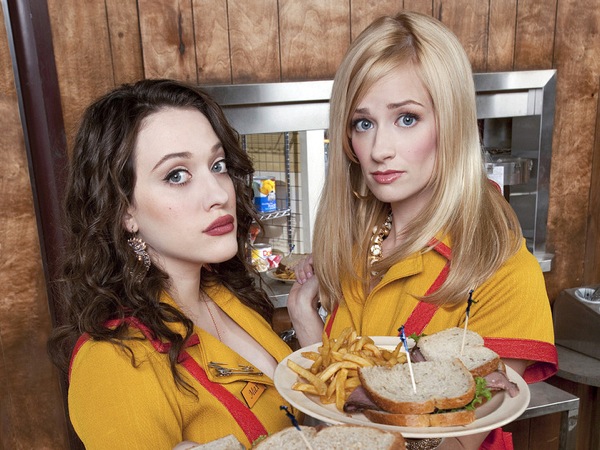
2 Broke Girls, from Sex and the City mastermind Michael Patrick King and it-girl Whitney Cummings (more on her later), stars Kat Dennings and Beth Behrs as the titular broke girls, Max and Caroline, a pair of mismatched waitresses at a dingy Brooklyn diner. The premise is both “odd couple” and “fish out of water:” Max is street smart and razor tongued while Caroline is a naive “Manhattan socialite diva,” and you can tell by her pearl necklace and hooker heels.

The rest of the diner is rife with lazy stereotypes that range from stupid to offensive. There’s Earl, the jive-talking cashier with puns and one-liners for every occasion (“Don’t talk to him unless you want to feel whiter than you already are,” Max warns Caroline). The diner is owned and operated by Han Lee, who swaps his L’s and R’s and changes his name to Bryce Lee — see what they did there? The gang is rounded out by Oleg the horny Russian line cook.

While a few jokes aim for twisted (“Are you sure we can’t get the meth addict back? She was really good at cleaning.”) most go for the easy gross-out (a clam chowder / semen joke, twice) or Amelia Bedelia-type idiocy (Caroline doesn’t know what “marry the ketchups” means). When Caroline accidentally tazes Max on the train, the ensuing rape joke feels misguided.

Apart from obvious, stereotypical characters and lazy humor, the worst part of the show is how Max is characterized. She works two jobs with low pay and no perks and is clearly on her own. Yet when she gets home, she’s putty in the hands of her scummy, slacker boyfriend, characterized only by his 8-pack abs. Not only does The Boyfriend make a move on Caroline, but he’s also screwing around. After dumping him, Max confesses that his muscles “make smart girls stupid.” No, bad TV writers do.

In the same vein, Fox adds New Girl, keeping things simple and sticking with the working title. From “Fempire” member Liz Meriweather, New Girl is a starring vehicle for indie fave Zooey Deschenal in the role she’s most comfortable in, that of the Manic Pixie Dream Girl.

For the uninitiated, the Manic Pixie Dream Girl is “that bubbly, shallow cinematic creature that exists solely in the fevered imaginations of sensitive writer-directors to teach broodingly soulful young men to embrace life and its infinite mysteries and adventures.” Deschanel’s Jess is Quirky in a entirely predictable way – she sings her own theme music, wears a bathing suit in the shower, and generally carries herself with the gravitas of a cartoon character. But in classic fashion, take off her glasses and put her in a black dress, and it turns out this girl is a knock out!

The show’s inciting incident is a striptease gone wrong, as Jess catches her boyfriend in flagrante. Tired of living with her friend Cece because she’s a model (which makes no sense, by the way), she moves in with three men, mistakenly thinking their ad was written by an apartment full of women.

Nick (Jake Johnson) is the most redeemable of the three, a recently-dumped bartender with a dour look on life. Schmidt (Max Greenfield) is a self-obsessed, misogynistic frat boy, whose bro-tastic antics are penalized by his roommates with a Douchebag Jar. Coach (Damon Wayans Jr., who will be replaced by Lamorne Morris due to his spot on Happy Endings) is a personal trainer who has no idea how to talk to women, or worse, without yelling.

In the pilot, the three guys do their best Pygmalion, trying to get Jess out of her post-breakup stupor and back in the dating game. The results are predictable; even when she gets a date, she overtexts her way to loneliness. When Nick finds this out, he chooses Jess over a chance to reignite a relationship with his ex; his bros come along too. The producers seem intent on getting their money’s worth for the licensing on “Time of My Life,” as the cast all sing the Dirty Dancing theme in a crowded restaurant. One episode in, and Jess is already teaching these guys to “embrace life and its infinite mysteries.” Let the adventures begin.

Predictably, both shows are already hits. 2 Broke Girls notched 19.2 million total viewers; 10.1 million watched New Girl. Numbers like that will certainly lead to more of the same. Already, there’s Whitney Cummings’ abominable Whitney, which rode an Office lead-in to 6.71 million viewers, more than both Parks and Rec and Community. At mid-season, NBC will add Are You There, Vodka? It’s Me, Chelsea to the list. Unfortunately, while created by and starring women, these shows don’t share much with 30 Rock and Parks and Recreation. It may be the Year of the Woman, but the networks are determined to give audiences the same old girls.

The truth about Lana Del Rey

Brooklyn singer-songwriter Lana Del Rey seemingly appeared out of nowhere with lead single “Video Games.” The mournful love song, and the self-compiled clip for it, concisely capture a singular experience. With her 60s-style blowout and impossibly thick lips, she pouts and vamps like a YouTube cam girl (the clips of a drunken Paz de la Huerta are appropriate). Intercut is footage of the dichotomous aesthetic she’s so carefully aiming for: Los Angeles, past and present. 8mm clips of Golden Age Hollywood nostalgia, mashed with skateboarders and live-and-die-in-LA escapades, under the song’s swaying piano, twinkling harp, and funeral march drum rolls. All of that, and the most compelling aspect is Del Rey’s raspy Stevie Nicks meets Cat Power voice.

The B-side to “Video Games,” “Blue Jeans,” is the next logical step in her look and sound. Sonically, “Blue Jeans” is built on the tremolo guitar of Chris Isaak circa “Wicked Game,” while Del Rey’s lyrics dabble in urban vernacular: “you so fresh to death and sick as cancer / You were sorta punk rock, I grew up on hip hop… I told you that no matter what you did / I’d be by your side / Cause imma ride or die…” Yet in this video, Del Rey is impeccably styled, whether wearing bling and an off the shoulder sweater or throwback shades and a floral skirt.

On the strength of these two songs, Lana Del Rey seemed poised to reach Next Big Thing status in a hurry. Describing herself as a “gangsta Nancy Sinatra” and her music as “Hollywood pop” and “sad core,” she was doing half the work for bloggers and journalists everywhere. Is Lana Del Rey, indie Youtube sensation, too good to be true?

According to the indie blogosphere, yes. It turns out that Lana Del Rey (or Lizzy Grant, her real name) has major record label backing and has undergone major changes since her self-released (and no longer available) debut album dropped last year. Hipster Runoff satirically documented the evidence and predictable blogosphere backlash. In short, Lana Del Rey was branded and marketed with a receptive audience in mind, and the audience didn’t appreciate the charade. The record industry, not transparent? An artist undergoing physical enhancement to be more marketable? Color me shocked!

[wpaudio url=”/wp-content/uploads/2011/09/09-Pawn-Shop-Blues.mp3″ text=”Lana Del Rey – Pawn Shop Blues” dl=0]

[wpaudio url=”/wp-content/uploads/2011/09/02-Queen-of-the-Gas-Station.mp3″ text=”Lana Del Rey – Queen of the Gas Station” dl=0]

And while Lana and her label might want her early album to disappear, it’s not for the nefarious reasons the blogosphere assumes. This is a simple case of supply-and-demand; building buzz by trickling out singles and videos is Music Business 101. The album actually shares many of the touchstones of Del Rey’s new material. “Pawn Shop Blues” and “Yayo” are crafted in the same moody pop style, if not with the same finesse, and apart from a few synth-pop missteps, even the more generic songs don’t stray too much from her sound: “Queen of the Gas Station” and “Gramma” would work for most Hotel Cafe singers. For what it’s worth, the video for “Kill Kill” is the same type of Youtube collage she still employs. It appears that all her “secret industry support” has done is tighten her image and sound for a mainstream audience – exactly what the music industry has done for each and every pop act for the last sixty years.

Lizzy Grant – Kill Kill by wiredset

While Lana Del Rey might not have been “born bad” as the swagged-out surf pop of “Kinda Outta Luck” posits, some of the less-murderous lyrics ring true: “You never cared what I did at all / Motel singer at a silver ball / I did what I had to do.” Lana Del Rey is a singer-songwriter in 2011, and we should forgive a little system-gaming if it results in songs like “Video Games” and “Blue Jeans.” Blogosphere haters, upset with being complicit in record label machinations, should take heed of the chorus of the song: “Is it wrong that I think it’s kinda fun / When I hit you in the back of the head with a gun?

Thoughts on "Up All Night" and "Free Agents," NBC's new comedy bloc

When NBC rolled out its upfront plan, the network revealed a slew of new comedies. Among regrettable multi-camera schlock (Whitney, Are You There Vodka? It’s Me, Chelsea) and boring mid-season fodder (Bent, BFFs) were two sitcoms that would fit right in with NBC’s revitalized Thursday night bloc.

Up All Night stars Christina Applegate and Will Arnett as new parents Reagan and Chris Brinkley, beleaguered by parenthood and the tenuous work-life balance. Created by Emily Spivey (SNL, Parks and Recreation), the show has the documentary feel popularized by The Office and Parks and Rec, although Up All Night forgoes the talking head testimonials of those shows. Tight shots and quick cuts give the show a manic quality: the kind of over-tired energy one gets from being up all night. As Chris struggles with his new life as a stay-at-home dad, Reagan returns to work for Ava (Maya Rudolph). Ava stars in an eponymous talk show that is equal parts Oprah and Tara; Reagan is the Liz Lemon to her Jenna Maroney. While 30 Rock has beaten that dynamic into the ground, it fares better here: Ava is over-the-top and self-obsessed, but with some vulnerability and sweetness.

This is Christina Applegate’s third sitcom foray since Married… with Children, after the short-lived Jesse and Samantha Who. With her comedic timing (and age-defying good looks), it’s just been a matter before she finds a well-suited vehicle; this might be it. The same can be said about Will Arnett, minus the age-defying good looks. One of the funniest men on television, Will Arnett gets a role that is more grounded than his on Arrested Development, Running Wilde, and 30 Rock. As always, his deadpan delivery slays: “Your beats are so tight after three Jager Bombs.” As a couple, their chemistry is real, and the pilot ranges from twisted (Matt Lauer breaking the fourth wall) to sweet and vulgar (neither can get over how “fucking beautiful” baby Amy is).


Free Agents is an adaptation of a British workplace comedy (sound familiar?). Helmed by original series creator Chris Neil and John Enbom (Veronica Mars, Party Down), the dialogue is as sharp and quick-witted as anything NBC has done – while also decidedly darker. Alex (Hank Azaria) is recently divorced and the tiniest thought about his children sets off the waterworks. Helen (Kathryn Hahn) is dealing with the death of her fiancee, and despite constant reminders (a staggering 22 portrait-style photos in her apartment) and an over reliance on wine and frozen meals, she’s handling things a bit better than Alex. In true sitcom style, the two have a drunken one-night stand, yet are determined to keep things professional at the PR firm they both work at.

The “will they, won’t they” formula has been done before, but hopefully it is a plot device and not the entire premise. There is a wealth of situational and character humor to mine here, with a fantastic ensemble of comedic talent. Free Agents actually reminds me of Newsradio in that way, with the sexual tension between the leads, an off-beat secretary (Natasha Leggero), off-putting co-workers (Al Madrigal, Joe Lo Truglio), and a zany boss (Anthony Stewart Head, reprising his role from the UK series). Newsradio as a single-camera black comedy? Sign me up. The reference to Party Down (“I have no plans to DJ at an Armenian man’s acquittal party”) is icing on the cake.


NBC’s strongest new offerings, Up All Night and Free Agents officially premiere next week (the network is calling the airing of these pilots a “preview”). While these might be the network’s best efforts at eventually replacing the aging flagships The Office and 30 Rock, they’ll have to build an audience on Wednesdays first, against Survivor and ABC’s surprisingly strong comedy bloc (including powerhouse Modern Family). Hopefully, NBC gives them the support they’ll need to do that.

Future Grooves: Two Inch Punch

The rhythm and bass movement continues. Every day, a new future bass producer emerges, or an old favorite returns with a clutch of R & B edits (as Hudson Mohawke just did on his Pleasure bootlegs). But with the rush new material, the question of who can repeat early success lingers (for more evidence, look to moombahton).

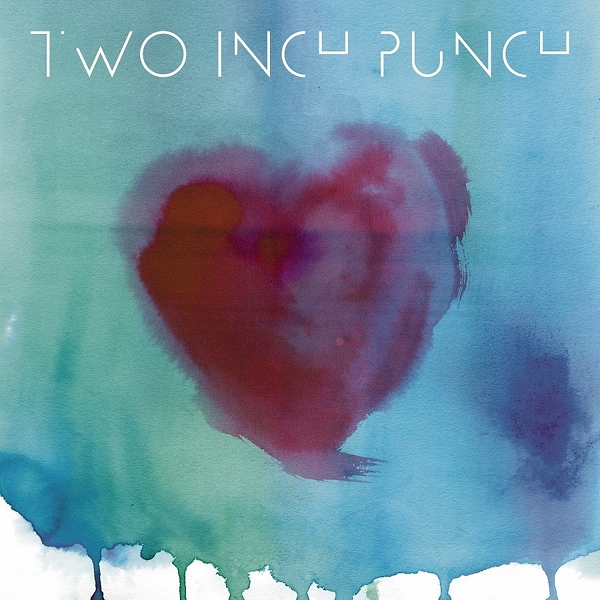
West London’s Two Inch Punch seems up to the challenge. After breaking through with his brilliant – and in vogue – Brandy edit, “Love You Up,” Two Inch Punch is set to release an EP of the same name on PMR Records, home to UK bass favorites Julio Bashmore, Javeon McCarthy and Jessie Ware. Here’s that track, which appeared on this year’s Luvstep 2 mixtape.

[wpaudio url=”https://postcultural.com/wp-content/uploads/2011/09/01-love-you-up.mp3″ text=”Two Inch Punch – Love You Up” dl=0]

A self-described “frustrated Soul / RnB singer,” Two Inch Punch wears his influences – and his heart – on his sleeve. “My mum and dad brought me up on soul & vocal harmony groups – so I was inspired by short love songs by the Beatles, the music of Keith Sweat and Otis Redding… Sam Cooke’s heartfelt melodies and Donny Hathaway’s incredible vocal tones,” he shares. His inspHERation mix jams over thirty songs into just 20 minutes, shining a light on Two Inch Punch’s more recent influences and contemporary favorites.


While “Love You Up” strutted and bounced, Two Inch Punch’s latest offering “Up In Your Mix” pulses with call-and-response samples (one of which may be of Dru Hill). That track’s space-funk keys and swirling synths make a triumphant return, as well. If the rest of the Love You Up EP (out on October 31) sounds like what we’ve heard so far, Two Inch Punch will soon be keeping company with heavyweights.


Thoughts on "Moneyball," a true inside baseball story

With any film adaptation, the question of the film’s reverence to the source material is inevitably raised. When the source material is as controversial as Michael Lewis’ Moneyball, this is doubly true. But this is a film review, not a comment on “Moneyball” or sabermetric analysis* so I’ll leave the criticisms of the original book, from both sides (the merits of sabermetrics, whether Billy Beane’s contributions are overstated, etc), alone.

The two films that come to mind when viewing Moneyball are The Blind Side (also adapted from a Lewis book) and The Social Network (also adapted from a Aaron Sorkin script).

In the same way that Michael Oher’s story breathes life into a book about the development of the left tackle, the colorful characters that made up the 2002 Oakland Athletics illuminate the most important development in a generation of baseball: the reliance on advanced statistics over business-as-usual scouting and intuition. While the film of The Blind Side focuses on the emotional melodrama of Michael Oher’s life, the film version of Moneyball is the opposite: those characters are largely absent from the film, with the notable exception of Scott Hatteberg (Chris Pratt). Instead, the film’s protagonist is GM Billy Beane (Brad Pitt), with a major supporting role for the fictional Peter Brand (Jonah Hill). And despite a few key scenes with Beane’s daughter, the film doesn’t rely on the smarmy, inspirational tone favored by The Blind Side.

Moneyball is both a baseball movie and an underdog story, yet it never is reduced to the cliches of those genres. For the most part, this is the story of what happens in the front office – not the field. Like The Social Network, the film is a dynamic take on what should be a bland topic, at least on paper. Even with Sorkin’s rewrite, unfortunately, the dialogue isn’t as snappy as that of The Social Network – and maybe that’s alright. These aren’t Harvard entrepreneurs. The lone Ivy grad character is Brand (the Yale economist who resembles the real life Paul DePodesta) and Hill’s dweebish portrayal is heavy on awkward, not assertive. Pitt’s Beane is as cocky and direct as his real life counterpart, with the fiery temper that doomed his professional career.

Still, the film feels incomplete, with many character arcs reduced to just a few points. Take Hatteberg, for example: the film shows his meeting with Beane, some awkward first base training, a little confidence building, and a winning home run. Manager Art Howe (an underutilized Philip Seymour Hoffman) opposes Beane’s new approach to baseball, has a few confrontations with him, and finally relents. Even Beane’s journey leaves the audience wanting: a few angry drives in his truck aren’t enough to fill in the blanks of his character. It’s as the script tries to do too much, leaving it disjointed.

But like the 2002 A’s, Moneyball is fun to watch. The relationship between Beane and Brand is never sentimentalized; Pitt and Hill have surprisingly good chemistry, which is reassuring since the pair have the most scenes in the film. Director Bennett Miller gives the film an almost documentary-like precision, relying on the romance of the sport film only where appropriate. I would have liked to see what Steven Soderbergh and Steve Zaillian (American Gangster, Gangs of New York, among others) would have done with the project, but the Miller-Sorkin pairing is more than capable of telling the story of Moneyball, scoring by stringing together a couple of singles but never hitting a home run.

Moneyball hits theaters on September 23.

*I’m a true believer when it comes to the importance of sabermetrics, even if Beane wasn’t the first one in baseball (or even in his own organization) to utilize such advanced statistics. A clip of Joe Morgan’s boneheaded dismissal of Beane and sabermetrics plays over a key scene in the film like nails on a chalkboard.

Ready for the weekend #27

Like most things in DC during August, this column took a bit of a vacation, but we’re back with a rundown on a busy weekend in the DMV.

Image courtesy FFFFOUND, as always.

The Plan

The Soundtrack

I’m a little late on this one, but here’s DJ Lil’ Elle’s latest mix “Miles From Nowhere.” Plenty of hip-hop and bass jams, with great offerings by Brenmar, Canblaster, and SBTRKT; also includes Diplo’s remix of my favorite track of the moment, Kelly Rowland’s “Motivation.”

Download: DJ Lil’ Elle’s “Miles from Nowhere” mix

"Sons of Anarchy" gets back to basics in season four

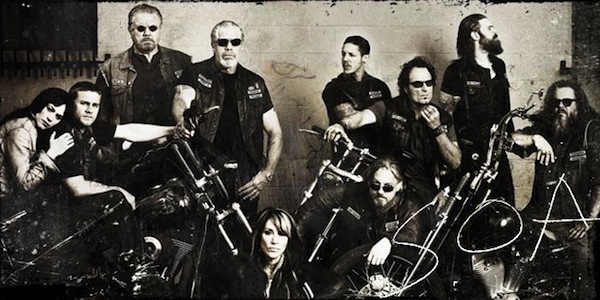
Sons of Anarchy has ridden the combination of bikes, babes and bad-assery to become a favorite of both critics and fans. Entering its fourth season, it looks to get back to basics after a season-long arc that took the California outlaws all the way to Belfast.

It’s an approach that should do the show some good. The fourth season, despite a few impressive sequences, got bogged down in True IRA politics and a convoluted investigation headed by a corrupt sociopath. Left behind was the rich internal drama about the true path of SAMCRO.

When Sons of Anarchy began, it was best described as Hamlet on motorcycles. Jax’s personal struggle with the club’s methods, and therefore with his stepfather Clay, has always served as the show’s dramatic undercurrent. There was no higher point of tension than at the end of the first season, as Jax held both the truth of Donna’s murder and the message of his father’s manuscript in his hands. By the second season, Jax was ready to go nomad, until the truth of Gemma’s assault was revealed, uniting the club against a common enemy. Last season, his single-minded pursuit of Abel was another factor in the club’s coalescence. Now, as the gang finishes their 14-month stretch in the clink, Jax once again returns his focus to his family’s future, especially with a new baby in tow.

In the season premiere, Jax lays out his too-good-to-be-true plan during a predictable yet awkward proposal to Tara (“we should get married” isn’t quite “will you marry me?”). He’ll bide his time, save his money, and wait for Clay’s hands to finally give out, taking Tara, Abel and Thomas far away from the crime and destruction of the Sons. His prison time gave him new clarity on his father, as well. While he knows JT father was right about the club, and about how far it has strayed from its original purpose, he also sees his father as a coward: a man who ran off to Belfast rather than saving his children from the life he chose. Jax is determined not to make the same mistake, setting up an inevitable confrontation with Clay and Gemma.

As for the club, they quickly get back into gun-running in a major way, solidifying some alliances and destroying others. Charming law enforcement has a new face in Sheriff Eli Roosevelt (Rockmond Dunbar, last seen on Terriers), and there is a strange AUSA in town, Linc Potter (Ray McKinnon), who has his sights set on a major RICO case against the Sons. In a perfect bit of casting, Danny Trejo will appear as a former Mexican military commando, hopefully with shades of Machete. For fans of The Shield, David Rees Snell (formerly Strike Team member Ronnie) and Benito Martinez (formerly David Aceveda) will make appearances as well.

Sons of Anarchy is an over-the-top cocktail of testosterone and adrenaline, and that shouldn’t change this season. But the show can be true to its character without the overwrought story lines that culminated in season three. Season four looks to right the ship and get back to the “sins of fathers” theme that has served it so well in the past. Whatever is in store for SAMCRO, it promises to be one helluva ride.

The Verge: Neon Hitch

Another day, another UK singer-songwriter. But unlike contemporaries Adele, Leona Lewis and Jessie J, this one didn’t attend the BRIT School, Croydon’s prestigious star-maker academy.

English by birth but a gypsy by nature, Neon Hitch (yes, her real name) grew up traveling across Europe – by bus – as a street performer and trapeze artist. She ran away to India at the age of 16 before returning to London, where she took up singing and songwriting. Before she even released a song, she was touring with The Streets and 50 Cent.

Hitch caught the ear of pop hitmaker Benny Blanco (Britney, Katy, Bieber, Ke$ha, etc.), who helped her sign a production deal with EMI and a record deal with Warner Bros. She’s already written songs for Ke$ha (“Blah Blah Blah”) and Sky Ferreira (“Traces”), and her own material has that same type of sexy, electro-pop sheen.

She’s currently working on her debut Beg Borrow and Steal with Blanco, and two advance singles give a taste of what listeners can expect. Hitch covers her pop bases: “Get Over U” is the female empowerment anthem and “Bad Dog” is the slut-pop jam (“You know I’m yours so rip my clothes off… Just come inside my cage you bad dog”). Like Fugative before her, her singles have been remixed by notable underground producers including DJ Chuckie, Borgore, and Dave Nada, the latter of whom gave a “moombahbased” twist to “Get Over U.”

[wpaudio url=”https://postcultural.com/wp-content/uploads/2011/09/03-get-over-u-dave-nada-moombahbased-remix.mp3″ text=”Neon Hitch – Get Over U (Dave Nada Moombahbased Remix)” dl=0]

While her singles have generated a bit of buzz, it’s her genre-hopping cover songs that are really making waves. After taking on songs by Wiz Khalifa (“On My Level“) and Mac Miller (“Donald Trump“), Hitch tackled the hit-of-the-moment, Kreayshawn’s “Gucci Gucci.” Her version is more soulful, with pounding drums and a mellow melody. It’s the kind of cover that stands on it’s own legs, and should have this gypsy living on the grid soon enough.

Making the most of this year’s Virgin Mobile FreeFest

This Saturday, Virgin Mobile brings it’s FreeFest to Columbia’s Merriweather Post Pavilion. Three stages of music, art and attractions, food and drink, and plenty of free swag, FreeFest is as sure a bet as any for a memorable festival experience – if you’re prepared. First, check out the Edukatorz guide to music festival survival, and then read how to maximize your musical intake during a schedule packed with conflicts and trade-offs.

Clubs, Crosses, and Rivers

Alberta Cross, Bombay Bicycle Club, Two Door Cinema Club, and Okkervil River are the opening acts, alternating between the Pavilion (main) and Festival (side) stages. See Alberta Cross and then Okkervil River if you like your rock blues- and folk-based; see the two Clubs for indie rock that is a bit poppier.

Blister in the sun

While the Dance Forest can more accurately be described as the Dust Bowl, it still presents a great value for revelers who want to catch dance-orientated acts in a relatively intimate setting. But who’s ready to dance while the sun is still beating down? All but electronic music fanatics can probably skip audio-visual remixers Eclectic Method and electro house wunderkind Porter Robinson and head to the Forest when Calvin Harris takes over at 3:15 (opting against Big Sean; hip-hop at festivals being hit-or-miss at best).

Dance, punk, dance

Two bands that play in the same sandbox face off at around 5:00. Both !!! and Cut Copy (at the Dance Forest and the Festival Stage, respectively) make aught-astic dance-punk, one with house grooves (!!!) and the other with Balaeric hooks (Cut Copy). Either way, make sure you’re at the Pavilion for the Poet Laureate of Punk, Patti Smith.

Stage hopping

After Patti Smith, you can stick to some combination of the Pavilion and Festival stages. Those who already miss LCD Soundsystem will flock to see James Murphy at the Dance Forest, but don’t be fooled – this is probably a DJ set, and not some new solo adventure. Cee Lo Green is a consummate performer, but how much is seeing “Fuck You” live worth to you? Stick with TV on the Radio and then head back to Festival stage to catch synthpop act Empire of the Sun for a rare US appearence.

Dancing the night away

The Black Keys do a lot of things right, but they are not festival headliners; Deadmau5 is. Forget what that says about the state of music and end the night with a little trance raving. You’re probably too old for it, but you’re probably getting too old for a music festival. Take solace in the fact that you’re not paying for it.