Category Archives: TV

Real World: Boston #5: Stereotypes suck, but so does Syrus

syrus-luetta

Episode 9 – “Dating Policy (aka Syrus Plays by the Rules, part 1)” – September 3, 1997
Episode 10 – “The Girls in the House … (aka Syrus Plays by His Own Rules, part 2)” – September 10, 1997

Two character tropes that The Real World frequently portrays are the Horrible Roommate and the Angry Black Man. The Horrible Roommate is typified by Puck, whose long list of aggressive asshole behaviors got him evicted from San Francisco; Hawaii’s Justin is a close second for his sociopathic manipulations. The Real World relied on the Angry Black Man from the start, pitting activist-writer Kevin against “fish out of water” Southerner Julie and watching Los Angeles comic David come into conflict with his housemates until he was evicted for infamously pulling the covers off an underwear-clad Tami.

Boston’s Syrus is portrayed as a combination of the two types: someone who is constantly in conflict with his housemates over his bad behavior, and someone who is quick to see racial differences as the cause for everything that happens to him in the house. The Real World is certainly responsible for casting, shooting and editing in a way that conforms to these stereotypes — but Syrus definitely does not help himself.

In the first third of the season, Syrus is defined largely by two things: his habit of bringing home women at all hours of the night, and the fact that he thinks that women “cry rape” because of an incident that happened in college. The first is an issue of respect (or lack thereof), the second seems to be a sign of some deep-seated misogyny, and both are problematic on their own. When his disrespect of his housemates and his disrespect of women intertwine, though, things go south quickly.

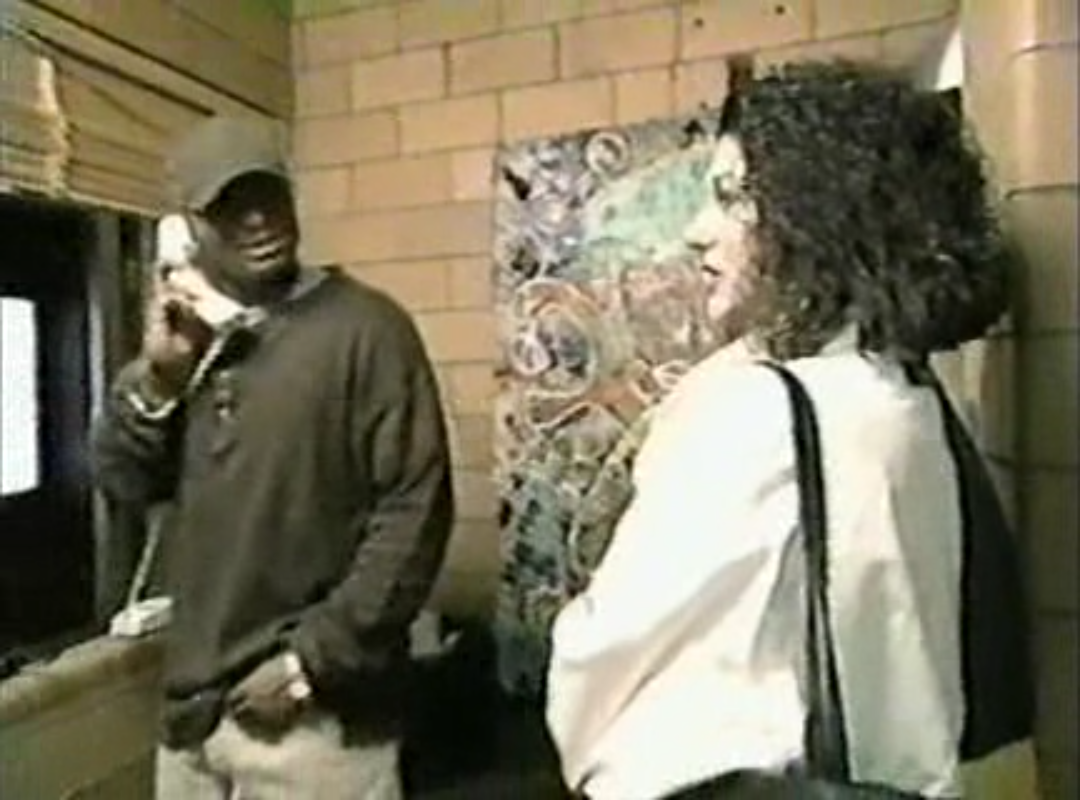
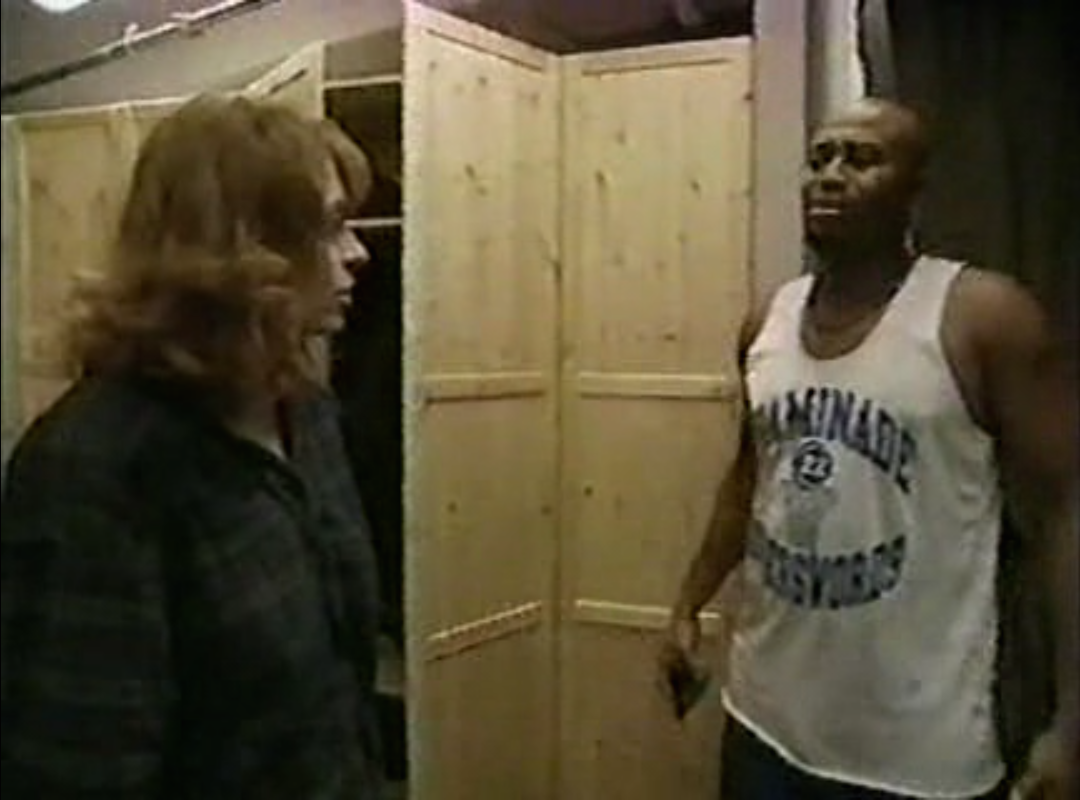
At the after-school program, Syrus hits it off with Luetta, the mother of one of the kids. His logic is simple: half the mothers are single, and it’s a matter of “supply and demand.” When Syrus brings Luetta to the firehouse, Kameelah’s shocked face says it all. “I don’t care what Syrus does, I’m not his mother,” she explains, “but when it concerns all of us — like that mess right there — that’s when I have a problem.” Kameelah — to be honest — does care what Syrus does in his personal life, but she’s not alone: Elka thinks him dating Luetta is unprofessional, if it’s even allowed at all. Unsurprisingly, Syrus’s most vocal critic is Montana, who doesn’t think he should use the after-school program as a way to pick up women. She also doesn’t think he’s taking the program seriously: the two argue when he jacks his ankle playing basketball and decides to call in sick, and she calls him an “embarrassment.”
syrus-montana

Syrus and Sean have bonded as the house’s two bros (and, to their credit, they’ve also started a dialogue about race), and Sean gives him a heads-up that people are talking, and that his dating Luetta could get him fired from the program. The gossiping and debate continues behind his back. Elka says he isn’t adding anything to the house or the program, and Kameelah says that if he gets fired, he should have to leave the house; Montana agrees, in a nice bit of foreshadowing.

Kameelah and Elka seem to think it’s a bridge too far to straight-up tell on him, but Montana is undeterred: she tells the program director, Anthony, that he “better have a talk with Syrus” about the policy. Kameelah thinks that Montana is a “troublemaker” who wants Syrus out of the house; she later confesses as much, saying, “If he didn’t live here, I’d be ten times happier.” For Syrus, the feeling is mutual: “If I get a chance to take her down, I’m going to take her down.” As we’ve seen before, when Syrus’s persecution complex crops up (“It’s like I’m in prison!”), it isn’t pretty.

Anthony eventually speaks with him about dating a parent. “I think it’s unprofessional, it’s a huge conflict-of-interest, it could be a pending lawsuit,” Anthony says, adding that “common sense” should have told Syrus not to do it. First, Syrus tries to weasel out of it on a technicality, saying he didn’t read or sign anything that said he couldn’t date a parent, and when Anthony tells him to think it over, he plays the race card. “Being a minority, I’m used to giving in to stuff I don’t agree with, so I don’t have to agree with it to do it,” he says. “I’ll do what you need me to do. I’ll take care of it.” Syrus has no doubt seen his share of racial injustice — and this definitely isn’t that.

Syrus tells everyone that he’ll stop seeing Luetta, and then promptly continues to do so behind their backs (but, as always, on camera). He doesn’t limit his bad behavior to seeing the mother, as he continues to treat the house like — in Montana’s words — “an hourly-rate motel.” The last straw for Kameelah is when one of Syrus’s friends, Ed, hooks up with a random woman in their bathroom. She kicks them out and isn’t buying Ed’s “let’s be friends” bullshit. “I’m about to get mad,” she tells him. “This is the end of the conversation.”

kameelah-ed

Syrus thinks he’s getting singled out, that the other housemates are allowed to have company and he isn’t. Again, he’s conflating the issues: no one else is bringing the party back home once the club closes, no one else’s guest are hooking up with each other all over the house. He argues with Montana about getting calls at 2am, and he argues with Kameelah about this alleged hypocrisy. “All my female roommates are bitches, except for the blonde girl,” he tells his fellow revelers. “Other than her, fuck ‘em all.”

Montana may have been a “troublemaker” when she ratted out Syrus at the after-school program (STOP SNITCHING), but his behavior in the house is the real problem. “The part I’m not happy with,” she explains, “is being threatened and being called a bitch and told to fuck off.” She confronts him in the light of day, and explains that it seemed like he was about to hit her. Syrus says that definitely wasn’t the case — he’d never hit a woman — but he apologizes for coming off that way.

While he apologizes and tries to mend fences (“Did you do something with your hair?”), their confessionals tell the true story. “I don’t see how the biggest bitch in the house can be threatened by words,” he says dryly, as he continues to completely miss the point. “He can apologize until the cows come home, but I’m not going to forget it,” says Montana, echoing what she said after their rape discussion: these issues don’t go away with an apology — they linger in the back of their minds, ready to crop up during the next battle.

Montana’s fear of a physical confrontation with Syrus is real, but what part did her history of abuse, her uneasy relationship with Syrus, the incident itself, and a socialized, irrational fear of black violence play? These are questions unasked and unanswered by The Real World — and the real world, too, for that matter.

Best Music: The Indigo Girls’ ‘Shame On You’ soundtracks the Big Reveal that Syrus is still seeing Luetta, despite all the drama, and while its “shame on you” chorus is a bit on the nose, the song’s anti-racist message is oddly appropriate.

Real World: Boston #4: “I have a little problem being monogamous…”

montana-vaj

Episode 6 – “200 Things a Guy Has To Be To Date Kameelah” – August 13, 1997
Episode 7 – “If A Tree Falls In The Firehouse…” – August 20, 1997
Episode 8 – “He Loves Me, She Loves Me Not” – August 27, 1997

The Real World is a crucible for relationships, adding the heat of constant temptation to the pressure of long-distance dating. Turning the cameras on a relationship is one of the easiest ways to get good television: tearful break-ups and full-throated fights, either on the phone or in person, are on the horizon of any relationship that goes through the Real World gauntlet. Over this stretch of episodes, we see relationships at their beginnings, middles and ends.

We first met Montana’s boyfriend Vaj in the season’s first episode; he seemed like a jerk and was openly peeved about Montana doing the show. They’re open to seeing other people while they’re apart, with the intention of continuing their relationship after the season; Montana doesn’t want “some little stupid mistake” to derail their plans for a life together. “I don’t have any problems being monogamous,” she claims. “Well, I have a little problem being monogamous, but not when we’re in the same city.”

If this all seems delusional and doomed, it’s because it is. I’ve never known anyone who has tried the long-distance, see-other-people thing and remained unscathed, and I’d bet The Real World has never helped matters, either. Montana wants to believe that Vaj isn’t jealous, like he says, but she guesses that “he isn’t as cool as he says he is” with their arrangement.

While she intends to marry Vaj one day, she sees Boston as her “extended bachelorette party” and she’s unapologetic about it. “I want to go live in the rainforest, man,” she tells Sean. “I want to take all my clothes off and wear a little belt made out of beads and live among the Yanomami.” Her confessional is even more succinct: “I want the best of both worlds” — a safe relationship later and some fun now — “so what?”

ramen

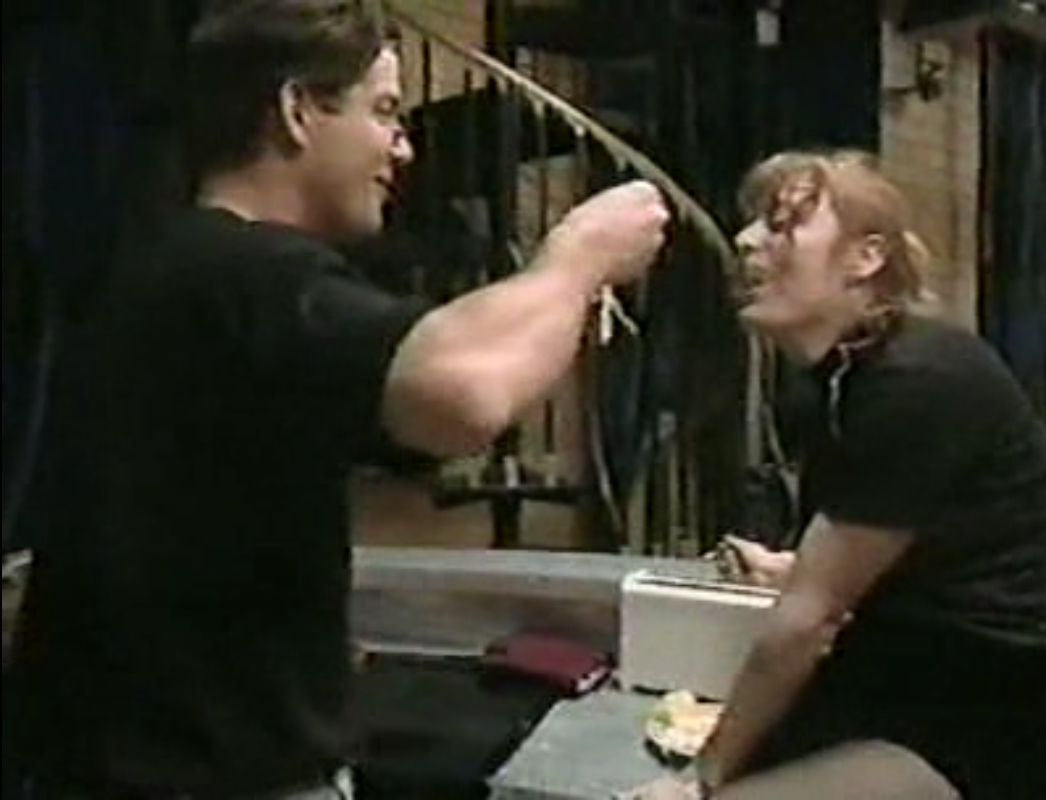
The first person to test Montana’s theory is Sean. They flirt and play fight constantly, and not just to annoy Elka; Syrus picks them as the two housemates that will eventually hook-up. As they playfully share a bowl of ramen, Sean even acknowledges their energy, wondering aloud what Vaj will think about their relationship. (This scene also provides possibly the best Montana Anecdote™: “Female monkeys, I swear to god, will lay down and masturbate for the male monkeys to get them to give them oranges,” she giggles. “I’m not lying, I’m an anthropology major, I know how the world works!”)

When is comes to Vaj, Sean is prescient. Vaj visits and he’s the same soul-patched ass that we met the first time around, this time with a skateboard and a Che poster. He either doesn’t like Sean’s all-American attitude or does indeed feel threatened because of Sean’s friendship-plus with Montana. When Sean tries to make smalltalk, he cracks stupid lumberjack jokes and sarcastically says his tattoo came from an extra-large Cracker Jack box; his shrill laugh haunts my nightmares.

Montana and Vaj put up a “Gone sexin’” sign (literally) and get the physicality of their relationship back on track. But their emotional and mental relationship is still uncertain. Vaj doesn’t want to know if Montana has seen anyone else: “Do everything under your power to allow me to labor under the illusion that I’m the only one,” he pleads, “even though it’s not true.” At approximately this line of contrived dialogue, I realized that Vaj is the amalgamation of the Jason Lee’s characters in Mallrats and Chasing Amy, if only the bad parts.

Montana wants to keep Vaj’s visit short-but-sweet. The same goes for their phone conversations, because she always feels worse when they talk. Clearly, having Vaj at the forefront of her mind only underscores their distance, and reinforces the cognitive dissonance of wanting to see other people while in a relationship with someone you love.

lovegeo1

“She needs attention from men even if it destroys her life,” Sean explains in his confessional. This becomes clear when Montana meets Matt, a Bostonian law student that looks like a New Kids on the Block reject and has “more stories to tell” than even Montana. They hit it off and trade numbers, but Montana feels guilty: she knows talking to guys and getting numbers would hurt Vaj’s feelings.

When she next talks with Vaj, Montana prods for information about dates that he’s gone on and seems surprised that he’s dated “so soon.” She admits that he has mixed feelings: Vaj dating stings, but it also alleviates her guilt for the same behavior. To his credit, Vaj says this is exactly what he didn’t want to happen; he’s happy to stay monogamous and wait for her to return, an offer Montana refuses; he seems like Casey on Sports Night, going on dates because Dana made him.

While Montana’s relationship with Vaj is on the rocks (“it brings me no pleasure because it bring me pain”), her relationship with Matt is going so well that it gets a falling-in-love montage (to the tune of Gina G’s ‘Ooh Aah… Just A Little Bit’). Matt wants to know if he should “practice for the New York bah” (phonetic Boston accent) but is shocked when he finds out Montana lives with Vaj. “If I’m putting myself on the line, I’m the only one that has something to lose,” he says, but Montana disagrees: “I have a lot to lose… you’re rocking my world.”

Montana is struggling as she juggles relationships with Vaj, Matt and Sean. The show cuts the tension with a credit-sequence about Montana’s Love Geometry, charting her move from love triangles to love parallelograms. Jason is a similar position, but thankfully his problem is just a love line: he left his “incredible” girlfriend Timber back in Boulder, and unlike Montana and Vaj, he didn’t work out an arrangement in advance.

jazzpoet

Jason admits that he’s never been faithful in a relationship, and while it doesn’t seem like he’s going to start now, he says he wouldn’t cheat without telling her. It’s not a particularly brave stance, but it’s an honest one: he’s a poet-writer searching for answers and human connections, and he can’t do that while in a relationship. “I don’t want my girlfriend around because I’ve got to learn some things about myself and I’ve got to go through some crap right now.”

Timber shocks him with a surprise visit; no matter how well he fakes it (not very), he definitely does not want her to visit. While admitting that it’s “very awkward to have someone from the outside world” visit, he tries to make the best of it… with shower sex. The bliss doesn’t last, though: Timber “sometimes” becomes belligerent when she drinks, and “when she starts crying when she’s drunk, there’s no stopping her.” Inevitably, Timber gets drunk, belligerent and tearful; the two fight and Jason is pissed: “I love you but I hate you right now.”

Both Jason and Timber are carrying some serious parental baggage. Jason says Timber’s behavior reminds him of when his mother would drink, and Timber allegedly has abandonment issues because her father walked out when she was five. With their joint damage in mind, Jason wants to try to work it out; Timber considers moving to Boston to save the relationship, but Jason asks her to let him go it alone.

“It’s always easier to walk away than it is to deal, and I’m the king of walking away. Without my girlfriend around… it makes me feel like I’m in the wind by myself,” he says with both sadness and hope in his voice. “To be on your own, is very lonely but also very free.”

braces

Montana and Jason are not the only housemates dealing with a long-distance relationship. Genesis, 20, has been dating Tammy, 28, for three years, which means at no point did their relationship meet the tried-and-true “half your age plus seven” rule. It’s Genesis’ first serious relationship, and the familiarity of time has washed away attraction and sex; she says they haven’t had sex for two years and they feel more like sisters than lovers. But familiarity breeds not just contempt but also paralysis, as Genesis worries she may never be able to leave Tammy.

Much like the gay bookstore, Genesis finally visits her first gay bar, and — “like a bird that was let out of her cage” — her sense of freedom and belonging is palpable. That can’t be said for everyone: Sean was uncomfortable with everyone being so “sexually expressive in their gayness, and even self-styled progressive Kameelah isn’t ready for a gay bar with a drag show.

Genesis hits it off with a drag queen named Adam/Eve and with an unnamed girl on the dance floor, who she ends up making out with — the first person she’s kissed other than Tammy. “Tammy is going to kick my ass,” she thinks, but Tammy’s reaction couldn’t be anymore different: she asks if they should just be friends, and Genesis admits that’s all they really are at that point. A quiet, natural break-up: how un-Real World.

The Real World doesn’t care about pre-existing relationships. In fact, recent seasons have drifted further away from the original concept of the show to focus on the relationship angle specifically, moving exes into the house for the gimmicky Real World: Ex-Plosion season. There’s no footage in happy couples that remain intact despite time and distance: an on-screen graphic is perhaps the only mention of Sean’s girlfriend Becky, a person whose mere existence was the most shocking development in these three episodes. Maybe that love parallelogram was more complicated than even The Real World could deal with.

Best Music: Three episodes and about a dozen songs to choose from, including first run Robyn (‘Do You Know (What It Takes)’), a personal favorite (Fiona Apple’s ‘Sleep To Dream’) and an alt-rock staple I could never stand (Soul Coughing’s ‘Super Bon Bon’). Still, the pick has to be Savage Garden’s ‘I Want You’, an at-the-time guilty pleasure that still evokes memories of sixth-grade dances.

Some Wiki research reveals that the song would be an appropriate one for the sexually-fluid Genesis: Savage Garden lead singer Darren Hayes was married to a woman for five years before eventually coming out as gay; they remained friends and Hayes described her as more like a sister to him. He officially came out in 2006 when he announced a civil partnership with British artist Richard Cullen.

Real World: Boston #3: Virtual Insanity

aprilchrist

Episode 5 – “Elka’s Shell” – August 6, 1997

It was the summer before seventh grade, and I’d just hit a milestone: getting dumped by my first girlfriend, which quickly put an end to my first summer romance. Sometime around then, I had an even more important formative experience: I saw the video for Nine Inch Nails’ ‘The Perfect Drug’. While I had been a casual music fan until then (Discman checklist: Presidents of the United States of America, No Doubt, Space Jam OST), that’s the first time I realized that music could be more than just entertainment — it could be identity.

Seeing and hearing Nine Inch Nails hit a switch in my brain: “this is who I am now.” I didn’t go full-on Goth (either then or ever), but I found the next-best teen archetype: JNCOs, Airwalks, PacSun tees and a ball-chain necklace made me a “skater” (although my lack of skateboard also made me a “poser”). Nascent feelings of antiestablishmentism and an affinity for counterculture were crystallized in this readymade identity. Rather than being not-cool, I could define myself in opposition: I was anti-cool.

But as the proverb goes, the clothes don’t make the man. Skater style didn’t give me entre to a skater clique; I was stuck with the same neighborhood scumbags and the same handful of part-time school friends as I figured out how to establish a sense of self. I was getting by socially, but I was still an outcast, even from the other outcasts.

That’s probably why I was drawn (like seemingly everyone else I’ve spoken to about this season) to Genesis: even though I was a straight, male, seventh-grade skater and not a 20-year-old lesbian from Mississippi, outcasts can smell their own.


After coming out to them, Genesis seems at ease with her roommates, if not totally comfortable. Naturally, the (straight) men of the house are cool with the chill, lipstick lesbian, even if their ideas on homosexuality in general aren’t as progressive. Syrus is *this close* to saying something about “Adam and Eve, not Adam and Steve,” and even Sensitive Poet Jason can’t contain himself with thoughts of “soft lips” and “soft bodies” together: “Sexuality seems to inherently come from woman, and when I see two women joined, it seems really natural.” Gross. Genesis isn’t surprised, though, telling them stories of guys who want to tape her having sex with her girlfriend.

The women fare a little better. Kameelah claims that she “rarely” sees feminine lesbians, but Montana corrects her: Kameelah only thinks that because the butch, masculine stereotype is what she’s been conditioned to look for when identifying lesbians. Montana, naturally, also has the best lesbian anecdote: “I knew a woman that was inseminated with a turkey baster and the kid was born on Thanksgiving,” she claims. “I’ve just led an interesting life.”

While she’s letting the men open up about their fantasies (she even gives Sean a back massage) and helping the women move beyond stereotypes, Genesis is having her own crisis. “I’m about to die because I haven’t been around a gay person since I’ve been up here,” she tells a friend. “I’m going through withdrawals — I’m starting to find guys cute. I’m in a house full of straight people and I’m beginning to wonder if I’m turning straight myself.”

She quickly backpedals, but waffles: “No, I’m just joking. Well, actually I’m telling the truth. Kind of.” In her confessional, she admits that’s she’s sexually fluid, that it’s not impossible for her to fall in love with a man: she’s going to be in love with the person, regardless of gender.

chatroom

Alienated from the housemates, she finds herself up late at night in Internet chatrooms. Even that proves to be a challenge: when all the lesbians want to have cyber sex, she ends up in the transgender chat room, a classification she defines as “bisexuals, transvestites and crossdressers” (a definition that might not hold up these days). She quickly strikes up a friendship with Joe/Jolene, a bisexual transvestite that is married to a woman.

Until I rewatched this episode, I hadn’t thought about chat rooms or cyber sex in years; they are such ‘90s concepts! I definitely spent my fair share in AOL chat rooms (no cyber, though), eventually finding a specific tribe: Star Wars role-players. 1997 was the year of the Special Edition, and Star Wars fandom was resurgent. Who knows how I ended up pretending to be a character spun-off from Shadows of the Empire, but chat rooms provided an early refuge for outcasts of all stripes.

Soon, Genesis’ online chatting approaches obsessive levels. The housemates are concerned, if unsure what to do. Elka thinks she seems sad but doesn’t want to intrude; Kameelah tells her that Joe/Jolene — regardless of his bisexuality or transvestism — is a man who can still hurt her (her views on men well-established at this point). Only Jason recognizes that “she’s getting something from there that she can’t get here.” When Genesis confessed to him that she was “so lonely,” even Jason — possibly her closest friend in the house — didn’t have much to offer, other than vague metaphors about friendship.

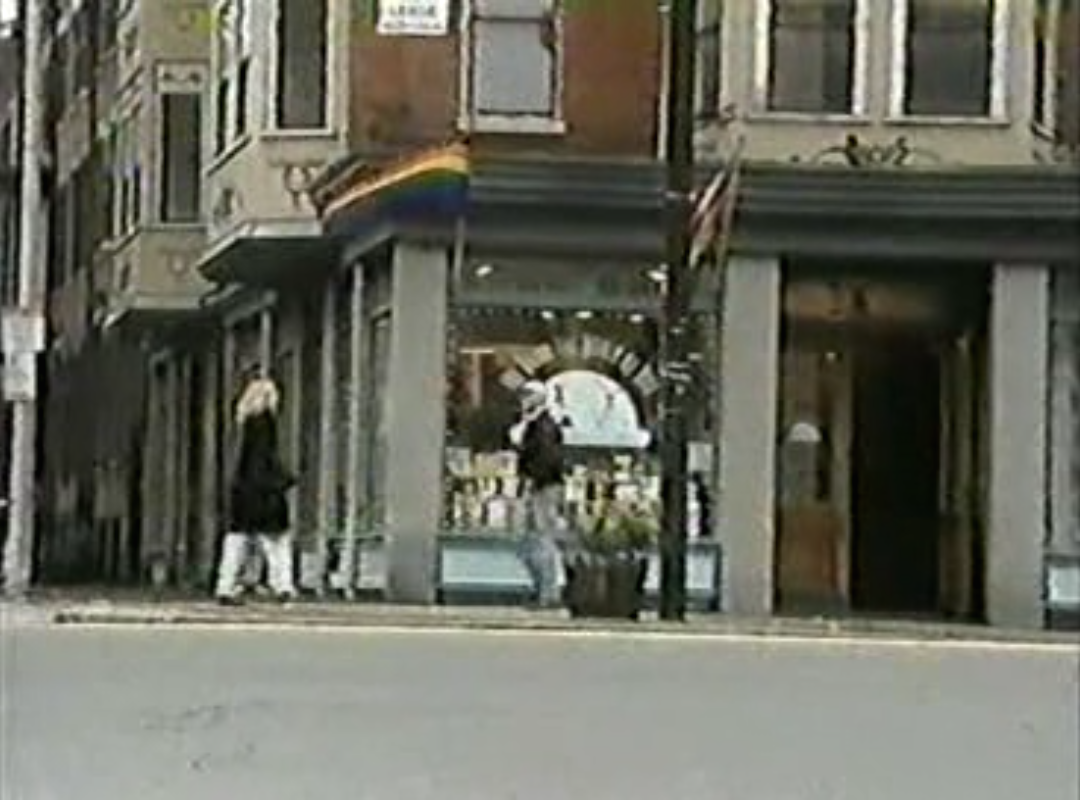
Ultimately, Genesis takes Kameelah’s earlier advice to “find her people,” venturing to a gayborhood and finding “her element” at a gay bookstore, something she wouldn’t have been able to do in Mississippi. “I’m still a little bit weirded out, but I’m okay, and it will only get better,” she maintains. Identity crisis averted — for now.

bookstore

Genesis wasn’t the house’s only outcast, though. Coincidentally, it was the person painted as her opposite: virginal, conservative, very-Catholic Elka. I remember thinking that Elka was sweet, but I didn’t identify with her. Even though her isolation is clear in retrospect, my budding atheism/agnosticism gave me a Jesus-sized blindspot to Elka’s trouble.

Elka is a prude: she doesn’t like Sean’s lame jokes about “crusty undies” and she is flabbergasted when, after a night of drunken carousing, Sean, Montana and Jason have a mock-threesome on the pool table, dry humping and dropping trou. (She’s watching this on the closed-circuit TV monitor, because of course the house has monitors — how else would you spy on your housemates and stir up shit?) Sean admits, “We did it just because it freaks Elka out,” and Montana goes even further: “Let’s go fuck on Elka’s bed!”

Montana says that taking the action to Elka’s bad was a “spoof,” a failed attempt to “pull her out of that shell.” It doesn’t work: Elka growls at them to get out — party over. “I have never seen drunk people be so crass and vulgar in my life,” she says, exasperatingly adding, “not even during spring break!”

Elka’s mother died of cancer just two months before the show began, and along with processing her grief, Elka is keeping her mother’s memory alive by maintaining the ladylike behaviors she taught her. But cracks are starting to form in her Girl Scout demeanor. She’s secretly smoking, and no one is supposed to know; Genesis keeps her secret and is promptly thrown under the bus when Elka doesn’t put out a cigarette in the bathroom. When Kameelah catches her smoking (on the monitors, naturally) and confronts her, she says that Elka is coming across like a spoiled princess: “No one in this house knows who you are.”

scotchtape

Montana and Jason finally crack Elka’s shell when they form Scotch Tape, a fake British-Irish-Scottish “band” that gives them an excuse to wear the Union Jack, sport eye glitter (Elka) and velvet belly shirts (Jason), smoke a few cigarettes and have an impromptu photo shoot. Elka is given the moniker “April Christ,” which she seems to get a kick out of, blasphemy be damned. In her confessional, the way she says “Scotch Tape” and laughs like it’s the most ridiculous thing anyone has ever said is heartbreakingly adorable.

As with Genesis, Elka’s quest to discover and accept herself is a process. “I think that there are certain qualities about me that no one else has, and other people have other qualities that I wish I had,” she says. “I feel out of place, but I think I’m adapting okay in Boston.”

Even if I didn’t identify with her, that sentiment should have hit a nerve for me: I was starting to figure out who I was, who I wanted to be and how to find comfort along the way. Whether smoking alone or staying up all night in chat rooms, outcast life is a lonely one — while it lasts.

Best Music: This episode was a parade of ‘90s curios and fascinations: swing revival (Squirrel Nut Zippers’ ‘Hell’), female singer-songwriters (Joan Osborne’s ‘Crazy Baby’ and Shawn Colvin’s ‘Sunny Came Home’) and whatever the hell Jamiroquai was (‘Virtual Insanity). The latter is a nostalgic joy now, but I couldn’t stand it at the time, mostly because it won the Video of the Year moonman at the 1997 VMAs — beating ‘The Perfect Drug’.

Real World: Boston #2: “Everyone is whacked in their own ways”

syrus

Episode 3 – “Black & White” – July 23, 1997
Episode 4 – “Blast From the Past” – July 30, 1997

For the show’s first decade or so — before it became just another reality TV flesh parade — The Real World was most notable for how it brought The Big Issues — race, gender, sexuality, religion, addiction — to homes across the world. While it did so by casting people with widely different perspectives and little-to-no filters, and then instigating situations that would make for good TV, that doesn’t make any of the hot buttons pushed any less real, the conversations around dinner tables and water coolers any less crucial to socialization of a generation (or two).

The Real World: Boston wasted little time before touching on some of these issues. While black housemates Kameelah and Syrus were given short-shrift in the first few episodes, their interactions quickly led to a house-wide discussion of race. While they initially hit it off, their conversation goes south when the topic of interracial dating arises. Syrus doesn’t discriminate: he dates “the whole rainbow” (including Asian “ninjas” — a line that will prove to be one of the least offensive things he says in these episodes). When he says he would marry a white woman, Kameelah goes cold.

When Sean broaches the subject, Kameelah cuts to the chase. “I personally don’t appreciate it when black men date outside of their race,” she says, pointing to the gender disparity between black students at her school, Stanford. “That hurts me, when I come home and I’m just like, I’m lonely, and I want a black man to be with me.” She’s not as open to the “rainbow” as Syrus, telling Sean that while he’s cute, “Y’all aren’t doing it for me — black men are beautiful!” Sean, ever the Midwestern bro, counters that he can meet her “emotional needs” as well as anybody, and almost immediately makes a joke about having never felt black hair. “You haven’t, you never have!” Kameelah erupts with a laugh — Sean has made her argument for her.

syruswomen

The issue comes to a head later, as Syrus provides the season’s first flashpoint with his habit of bringing women home after the club: usually a few, and — from what we’re shown — exclusively white. Kameelah calls them “groupies,” and she has a point: “I’m on The Real World” would certainly be a good pick-up line for a certain type of person, male or female. Syrus’s late night visits are deemed bad housemate behavior by the group, and while pretty reasonable ground rules are established, Syrus opts for a typical Real World overreaction: “It’s like I’m in prison!”

When speaking with Montana and Genesis, Sean connects the dots: Kameelah’s main issue is not really the visitors, it’s the interracial dating. He’s not wrong: Kameelah feels alienated from Syrus; she’s upset that she has “nothing” in common with him. “I was praying that I would not be the only black person in the house,” she admits, “[and] I am the only black person in this house!”

While Kameelah’s alienation from Syrus has a lot to do with race, it also has to do with gender. In the next episode, Kameelah and Sean fight over getting directions after the group gets lost: she thinks it “kills” him that she took control of the situation, while Sean is tired of her “attitude” and calls her a bitch. When they discuss it later, Sean says she has been rolling her eyes at him since Day One, and the well-edited montage of shade backs him up. “That’s how I dismiss people,” she confesses; she dishes out attitude “because [she] can.” Everyone in the house has encountered her no-fucks-given approach; they just deal with it differently. “As long as she uses her attitude for good and not evil,” Montana tells a few others, “I’m all for it.” Then and now, women who don’t take shit from men (especially women of color) are painted with the bitch brush.

eyeroll

But for Kameelah, her issues with men go deeper than Sean’s disrespect or Syrus’s dating preferences. As part of the team-building exercises at the afterschool program at which the housemates volunteer, she says that her father abandoned her and her mother, and that her stepfather was an abusive, “evil man.” “Men have basically jerked me around a lot,” she confides in Montana. “I just cannot deal with men… I don’t trust them.”

“I have issues with men,” she says, laughing through tears, and Montana establishes her feminist bona fides: “I think it’s hard to grow up a girl nowadays without having issues with men.” She somewhat sarcastically adds that “men are basically weak, stupid, base…” and Kameelah interjects: “And they’re everywhere!”

Montana has similar issues with men, both in the house and historically. After the Syrus incident, she notes that “he doesn’t respect women,” foreshadowing her next encounter with him. At the volunteer training session, the housemates discuss rape. “If a woman is raped, that’s going to affect her for the rest of her life,” Montana explains. “It’s like signing a piece of paper that says, ‘I’m signing to you years and years of pain, and part of you will never come back’.”

Syrus claims to have been falsely accused of rape during college. He says he was “tormented” because of the incident, and that he had to live the rest of his time at college in fear. “I didn’t rape that girl,” he maintains. “She lied – I didn’t lie.” Ever since the experience, he has “a problem believing women who say there were raped.”

Montana calls bullshit, thankfully. “Whatever it was, you knew that something was wrong and you chose to overlook it,” explaining the difficulty of even reporting rape and asking why anyone would go through that trauma just to “cry rape.” “I think that those [cases] are the minority. I don’t want you to think that most of the women that say they were raped or abused are lying,” she says, revealing that she not only knows women who were raped, but that she was sexually abused as a child.

Understandably, Montana isn’t going to give Syrus a pass for the incident in his past, or his persistent, misogynistic attitude about rape; while she doesn’t think he’s lying, she doesn’t (and can’t) know the accuser’s side of the story, either. Syrus apologizes, but only for how he expressed himself in a moment of passion; his “I would not have wanted to offend you in anyway” non-apology is an outrage culture staple. Still, it serves its purpose: they reach an uneasy detente, even as they acknowledge that the conflict will always be in the back of their minds.

working2gether

This discussion of rape is not new. However, it does feel especially timely, with the college rape epidemic — and rape culture in general — in the spotlight. The viewpoint that Syrus shares is still commonplace, and Rolling Stone’s UVA debacle has only fanned those flames. Similarly, the issue of interracial dating certainly wasn’t new in the mid-90s, and it remains a minefield for different people and for different reasons. While Syrus comes across poorly because he’s a bit of a player, his open-mindedness doesn’t — not during the original airing, and not now, even as the myth of “post-racial America” falls.

In the real world and The Real World, formative experiences shape our opinions, whether first-hand or via cultural representations. The abuse suffered by Kameelah and Montana, and what Syrus experienced at college, have obviously affected their viewpoints. In kind, seeing these personal stories explored on a show like The Real World affects viewers, especially pre-teens and teens who are able to contextualize these “hot button” issues. I can’t imagine that Montana’s point-for-point rebuttal of the “crying rape” myth didn’t affect my understanding of the issue. I also can’t imagine that there weren’t viewers that came away with the opposite opinion, especially considering the neutral-to-sympathetic treatment Syrus is given by the show.

But The Real World isn’t Game of Thrones, a show that exploits rape as a storytelling shortcut. While producers do have the power of editing to mold raw footage how they see fit, and the unseen power to provoke people into creating that footage, these conversations happened naturally (or as naturally as can be expected on reality TV). The issues of 1997 are in many ways the issues of 2015; The Real World just isn’t part of the conversation anymore.


Notable Music: Who thought it was a good idea to underscore Syrus’s story about being accused of rape with Korn’s ‘Blind’? The nu-metal fury is ridiculously tone-deaf. Still, this is as good an opportunity as any to revisit a song that I had on repeat at this time: my first garage band spent many hours trying to recreate this one, albeit without any seven-string guitars, or a bass player.

Real World: Boston #1: First Impressions

group

Episode 101 – “Moving In: Boston” – July 15, 1997
Episode 102 – “Religion” – July 16, 1997

As I watched the double-sized first episode of The Real World: Boston, I was amazed at how familiar the series is, and how readily it came flooding back to me. This season aired nearly two decades ago, and unlike The Simpsons, Scrubs and The Sopranos, I haven’t re-watched these episodes ad nauseam in syndication and streaming. I vaguely recall seeing these in repeats, but even if that’s not my memory playing tricks on me — we’re talking over a decade in between viewings.

The first episode of a Real World season is all about first impressions, as the housemates meet each other, and the audiences meets the housemates. By the sixth season, some of the broader character types had been established, if not yet calcified into caricature, and a few of the housemates slide right into their roles.

Elka is the conservative Christian who admits she has “a lot to learn” about herself and others; Sean is the flannel-clad jock in search of a hot tub and a good time. Interestingly, he’s also the one who seems most self-aware about the budding reality TV tropes: the future Congressman was already on the look-out for the gay housemate and the “Puck” housemate.

Sean thinks that Jason might be the “Puck,” but he’s wrong. Jason, with his nose-ring, wallet chain and going-out guyliner, is more a moody loner than the antagonistic San Francisco scene-stealer. He’s reminiscent of Gen X poster boy Ethan Hawke circa Reality Bites, dropping poetry bombs about the “midsized Honda sedan bandwagon” lifestyle. In retrospect, I probably identified most closely with Jason, with his outsider/outcast posture; this was right around my not-quite-goth-or-skater phase. Jason is done with the “white bread America” of his Boulder home, and he’s got “bad vibes” already, mostly about the Type A Sean. “I already see the whole game plan,” he tells Genesis, in hushed, conspiratorial tones.

Genesis is the requisite gay housemate that Sean is looking for, but not in the show’s previous molds. Not only is she the show’s first lesbian, but she’s not an activist like San Francisco’s Pedro or flamboyant like Miami’s Dan; she spends the entire first episode figuring out how to come out to each of her roommates, dipping her toe in the water rather than jumping right in. Her coming out to Elka is teased for the entire episode, but ultimately, it’s much ado about nothing: Elka’s reaction is a little overblown by modern standards, but she learns about lipstick lesbians and keeps the party going. “There’s a first time for everything” quickly becomes her motto.

Speaking of Real World requisites, Boston includes two black housemates for the first time since the inaugural New York season. Kameelah and Syrus are given relatively short-shrift in the first episode; she comes across as a little bougie, and she’s quickly given the “bossy” tag by a few housemates; alas, Ban Bossy was still 17 years away. Syrus quickly becomes running buddies with Sean; he toasts “may we have fun together,” which will quickly become his motto.

Rounding out the group is Montana, who — to be honest — I’m not sure fits one of the stereotypes that had been already established by the show. She’s an open-book oversharer, quick to expound on her views on Christianity (she ain’t fer it, she’s agin it) and tell tales about post-boob job, wandering-eye nipples. The first comparison that came to mind was Jessa of Girls, but on her best day and without the malice.

selfie

I don’t remember my first impressions of these characters, but I was shocked that they still seem so much older on screen, even though Elka and Kameelah were 19 when the show was filmed; Sean and Syrus were the oldest at 25. It’s as if they’ve been imprinted as “adults” in my brain, and even with the handful(s) of years I have on them now, I will forever be looking up to them like a middle schooler looking at college kids.

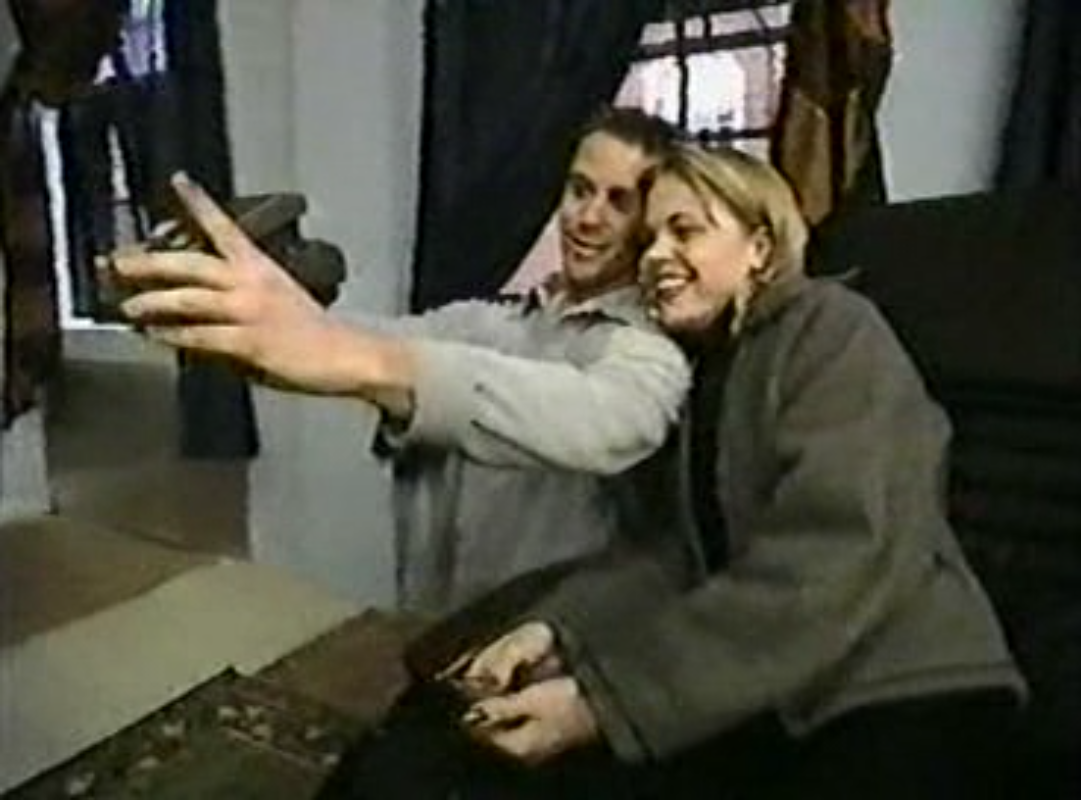
Maybe I felt 13 again because of how wonderfully ‘90s the show is, with its blurred logos and rollerblading intros. The house (a converted firehouse) is decorated with a mix of Friday’s flair and proto-Urban Outfitters artifacts, all lava lamps, fish tanks and phallic art. Jason and Genesis don’t know what a French press is (“I think it’s a tea thing”) but they quickly find a Polaroid camera, and — in a move that made my day — they take some selfies: a good reminder that “selfies” and self-portraiture are not some new thing millennials came up with to piss off boomers and Gen X. This was a few years before digital cameras became mass market consumer goods, and a decade from cameraphone ubiquity, but in this transitional period between analog and digital, I’m not sure if Polaroids were ironic yet.

In the same way that it was a transitional period for photographs, it was a transitional period for The Real World. The shock-of-the-new of the early seasons had worn off, and the self-awareness of both the housemates and the show was becoming apparent. I’m not sure how the editing and storytelling compared to earlier seasons, but watching it now, the foreshadowing is clear: Genesis notes that she’s only been attracted to guys in drag, and Montana’s relationship with boyfriend Vaj (with his soul patch, hipster workshirt and forced smiles) doesn’t seem long for this world. But perhaps the foreshadowing is only clear in retrospect.


Notes about music: Between the dialogue and the VHS noise, placing the musical cues is proving more difficult than I would think; most songs are familiar, but some titles are stuck on the tip of my tongue. When in doubt, however, on-the-nose artist names and song titles usually win out: Alice Cooper’s ‘House of Fire’ for the firehouse, Faithless’ ‘Insomnia’ during a night out and conversation about religion, and so on. I feel like I’m going to have to pick a “winner” for the best use of music each episode.

Best Music: Reel Big Fish’s ‘She Has a Girlfriend Now’ soundtracks Genesis’ first coming-out moment, but the punk-ska group (a personal favorite) must have been in heavy rotation: ‘Sellout’ and ‘Snoop Dog, Baby’ also make appearances.

13 going on 30: revisiting The Real World: Boston

realworldboston

When I think back to my coming of age in the second half of the ‘90s, a monolith of pop culture rises from a horizon littered with alt-rock CDs, Kevin Smith VHS rentals and all-black band tees: MTV. While we’d later reminisce about a time when MTV “still played music,” music is secondary in most of my MTV memories, even at a time when music videos were still a key part of the channel’s brand. It is episodes of the personality-defining Daria, the then-shocking True Life documentaries or even the MTV-after-dark drama Undressed that define this period, more so than increasingly-infrequent music videos caught at off-peak hours or on TRL (begrudgingly, of course).

Yet no matter when your peak MTV viewing took place, one show remained a constant, a stand-in for your first glimpse of adulthood: The Real World. Premiering in 1992, The Real World kicked off the modern era of reality TV and set the trope table, establishing everything from the identity and personality checklists favored by casting directors to the video vérité style and confessional interview segments that have become TV staples (in reality TV and beyond).

My earliest memories of The Real World are from the 1996 season, and the allure to a 12-year-old is obvious: good-looking twentysomethings living and loving in a Miami dream house, with the occasional clandestine bathroom threesome. My interest was piqued, to say the least, but I didn’t fully take the plunge until the show’s sixth season in 1997.

While I would go on to watch the show for a few more years — including the iconic Seattle season and the sociopathic Hawaii one, along with parts of the mostly-forgettable New Orleans and return-to-New-York seasons — The Real World: Boston is the season that registers most clearly as a Key Part Of My Youth. I’d like to think it’s because Boston is objectively better, whether in storytelling or “character” development, but it’s probably because anyone’s favorite season of The Real World is the one they watched when they were 13. I didn’t have a bar mitzvah, I had The Real World: Boston.

I recently watched the first several episodes of Lifetime’s UnReal, a much-better-than-it-should-be drama that peaks behind the curtain of a Bachelor-style dating show, with heavy doses of satire and dark comedy. The show got me thinking about the roots of reality TV, portrayals of reality TV in fiction, and moments when reality TV has broken it’s own fourth wall. Without spoiling UnReal, I was reminded of this key moment from Seattle: the tearful fight between cast-member David Burns and Bunim-Murray casting director Kira Gourguechon, the latter of whom lost her job for mixing reality with reality TV (the fact that this is the second most iconic moment of Seattle is probably why the season is near the top of most “Best Of” lists).

In a desperate, post-midnight search for more Real World episodes, I was faced with the cruel facts: apart from the first and most recent nine seasons, the show doesn’t exist online. Whether it’s because MTV has misjudged the nostalgia market, or doesn’t want to deal with the music licensing issues that delayed Daria and The State reissues, it’s a huge missed opportunity, especially when everything else seems so readily in-reach in the age of on-demand culture.

But this isn’t my first rodeo. I managed to track down grainy VHS rips of The Real World: Boston, diving back into a world that is immediately as familiar as any of the TV shows that I’ve lived with in the intervening years. Even in the first episode, I was struck by the moment that Boston captured, not just for me, but for the medium. Characters were developed, cliques were formed and plot lines were foreshadowed, right at the moment as The Real World cast became self-aware. This is excellent TV.

With that in mind (and a gentle nudge from a friend), I’ll be blogging my re-viewing of The Real World: Boston. I still hate recap culture, and while this may seem as asinine an endeavor as proving the Caine-Hackman theory, I’m intrigued by the novelty of visiting a cultural artifact, and seeing how my memories of watching it at 13 compare with the experience of watching it at 30.

Network upfronts in the Silver Era of television

network-logos

Apart from a few notable exceptions, the Golden Era of Television has been a cable phenomenon. Network TV has only had a handful of dramas (Buffy, 24, Lost, Friday Night Lights) that have been able to compete with cable. The score is more even when it comes to comedy (30 Rock, Parks and Recreation, peak Office, Community… so basically NBC for a few years, plus Modern Family), but network TV has mostly been playing a rigged game with an increasingly worse hand.

If it’s not already over, the Golden Era will finally conclude when AMC finally runs out of ways to prolong Mad Men. The Silver Era is and will be marked by loads of Very-Good-Not-Great shows across network, cable, and Internet channels. In that way, there’s almost a leveling of the playing field: The Good Wife is better than cable prestige simulacra (look how brilliantly it has skewered something like Low Winter Sun with its in-universe Darkness At Noon). So maybe the networks will be fine, after all.

Personally, I’m watching more network dramas than I have in years: not only Good Wife, but also the deliciously dark Hannibal and the harmlessly fun Grimm. The networks still run the sitcom game (Simpsons, Bob’s Burgers, Brooklyn Nine-Nine, New Girl, Parks), even as cable catches up (Archer, Broad City). So how’s 2014-15 looking? Here’s what the networks have, good, bad, and other (shows without trailers).


ABC: How Not To Name Shows

ABC has spent the last few years mismanaging its comedies (Happy Endings, Suburgatory) and becoming more and more reliant on Shonda Rhimes. Agents of S.H.I.E.L.D. was a glorified SyFy show for much of the season (although it apparently finished strong), and there’s nothing on the fall schedule that inspires confidence; the only hope for ABC is in a handful of midseason options.

The Good:

Fresh Off The Boat: It has a horrible title but a good pedigree, with Nahnatchka Khan (American Dad, Don’t Trust The B) writing and Lynn Shelton (Your Sister’s Sister, New Girl) directing the pilot. Based on Eddie Huang’s memoir, its Asian immigrant family in the suburbs and ’90s setting might pair nicely with something like The Goldbergs (or Suburgatory, RIP).

Galavant: Essentially Princess Bride, the musical. It’s a formula that Disney built its empire with, so why not try live action? ABC has had some success with the fantasy genre (Once Upon A Time), and musical fans only have a handful of Glee episodes left.

American Crime: It has Oscar winner and TV veteran John Ridley (12 Years A Slave) running things, an indie film cast (Timothy Hutton, Felicity Huffman, Benito Martinez), and a murder mystery premise. It looks promising, but with several red flags: expect heavy-handed treatment of race and drugs, and difficulty with extending the show beyond one murder mystery.

The Bad:

  • Selfie: Pygmalion for the social media age. It’s fucking called Selfie.
  • Black-ish: There’s a concept here (affluent black family struggles with racialized culture) but it’s being done about as poorly as possible. It’s fucking called Black-ish.
  • Manhattan Love Story: I don’t want to spend time with these characters, let alone hear their stupid thoughts.
  • Cristela: George Lopez ran for 6 seasons, I suppose.
  • Secrets and Lies: the same concerns as American Crime. How many of these murder investigation shows do we have to import (this one’s from Australia) before we realize they don’t work?
  • The Whispers: a sci-fi melodrama about aliens using kids to takeover.
  • Forever: House meets Groundhog Day with a touch of Pushing Daisies and none of the nuance.
  • How To Get Away With Murder: After medicine and politics, Shonda Rhimes hits Bingo with “legal drama.” Viola Davis deserves better.

The Other:

Agent Carter: I’d watch a competent noir homage, but can ABC support two Marvel also-rans?


NBC: RIP Must See TV

Thanks to the Olympics, The Blacklist and The Voice, NBC became a #1 network again. Comedy is now hour-long blocks on Tuesday and Thursday, sandwiched by more popular shows. Still wondering how About A Boy survived the annual comedy bloodbath.

The Good:

Marry Me: the trailer is 100% premise, but the combination of David Caspe (Happy Endings), Ken Marino and Casey Wilson is a winner, especially with The Voice lead-in.

A to Z: 500 Days of Summer meets How I Met Your Mother. A high concept comedy (series starts with meet-cute and ends with break-up) with two great leads in Ben Feldman (Mad Men) and Cristin Milioti (HIMYM), which means it’ll probably be dead by the time Blacklist comes back.

Bad Judge: Bad title and hacky Skinemax jokes aside, Kate Walsh is good as the titular character, who gets her life back together thanks to the love of a good man and a Magical Negro child. A Ferrell & McKay project.

Constantine: NBC is doing great with Hannibal and Grimm; this one has a plot like the latter and a look like the former.

The Bad:

  • State of Affairs: Katherine Heigl gets into the minds of terrorists after terrorizing audiences for years.
  • Zero Dark Thirty meets Blacklist.
  • Mysteries of Laura: She’s a detective… and a mom!

The Other:

  • Unbreakable Kimmy Schmidt: Tina Fey’s post-30 Rock project with Ellie Kemper as a fish out of water in the Big City.
  • Mission Control: The other Ferrell / McKay project, a 60s NASA workplace comedy with Krysten Ritter and — in the best casting of pilot season — Lem and Phil from Better Off Ted!
  • One Big Happy: Elisha Cuthbert in another New Normal (aka Modern Family rip-off).
  • Allegiance: The Americans in the present day. George Nolfi has done some real crap.
  • Odyssey: being described as Traffic for TV; didn’t that already fail once?
  • Shades of Blue: Jennifer Lopez’s vanity / procedural project.

FOX: RIP Animation Domination

Between running only two hours of programming a night and adding two hours of a new reality show, there isn’t much new here (yet). Sunday night adds live action for the first time in years, but they picked the right shows, at least. Kudos for figuring out that serialized mysteries benefit from short runs.

The Good:

Last Man on Earth: Will Forte reunites with Phil Lord and Chris Miller (Clone High!) in a super-high concept show that is probably too smart and weird for TV. How do you make a series out of a Twilight Zone episode?

Mulaney: John Mulaney is Seinfeld in a show NBC passed on. A great cast, including Martin Short, Elliott Gould and DC ex-pat Seaton Smith. By the way, who knew Nasim Pedrad had been on SNL for 5 years!?

Gotham: Fox gets into the Smallville game, and while the creative team is uninspiring, the adventures of Lil Wayne should be fun enough. Plus, Donal Logue!

Backstrom: Rainn Wilson is Detective House in a show CBS passed on. From the creator of Bones, so you know what to expect, but the casting is good.

Empire: A black family drama with tons of palace intrigue. Some star power from Terrence Howard and Taraji Henson, but expect Lee Butler to be heavy-handed.

Wayward Pines: a shameless Twin Peaks homage (read: “rip-off”) and a limited “event series.” Promising, but it’s M. Night so the Shocking Twist Ending will almost certainly feel cheap and unearned.

Gracepoint: I haven’t even had a chance to watch Broadchurch yet!

The Bad:

Red Band Society: The Breakfast Club in a hospital with a sassy black nurse. Are you inspired yet?
Hieroglyph: Actual palace intrigue, in Ancient Egypt. Don’t get attached.

The Other:

  • Weird Loners: Sitcom retreads Becki Newton and Zach Knighton from a guy who has been working since Family Ties.
  • Bordertown: Family Guy does American-Mexican cultural exchange. Can’t be worse than Dads… right?

CBS: CSI: NCIS: WTF

With How I Met Your Mother over and How I Met Your Dad DOA, The Good Wife is the only quality show on the schedule (which seems to be an in-joke over there).

The Good (by CBS standards):

Scorpion: The A-Team for nerds. It may be a show about geniuses, but the brand of fun is decidedly dumb.

Madam Secretary: The latest attempt at turning Hillary Clinton into a TV Show. The cast is solid but there’s no way this is done with the right touch. Let’s compare it to legal dramas: Best case is Good Wife, worst case is Judging Amy — guess which one the creator developed?

The Bad:

Stalker: Maggie Q and Dylan McDermott as Odd Couple cops on the stalker beat. This passes for psychological drama on CBS.
The McCarthys: Boston Irish family has gay son, hilarity ensues.

The Other:

A pair of Odd Couple shows that sound uninspired despite the talent involved: Vince Gilligan’s Battle Creek does cops, Matthew Perry and Thomas Lennon do roommates on an actual Odd Couple remake.


Bonus round!

Over in basic cable, TNT continues to churn out Mom Dramas, while TBS is turning The Island of Misfit Toys (Cougar Town, American Dad, Ground Floor) into a decent comedy block. They’ve each got one promising show, while USA’s Benched has an impressive creative team and the very funny Eliza Coupe (it has a series order but no trailer, strangely).

Angie Tribeca: a surreal cop parody a la Naked Gun, with the very good Rashida Jones and executive producers Steve and Nancy Carell. Literally nothing like it on TV and a weird fit on TBS.

Public Morals: Ed Burns writes/directs/stars as the Cowboy Cop/Dirty Cop in New York, 1967. The world could be a lot of fun, but it has the same problem as Mob City: how “gritty” can you get on TNT?


When I started, I didn’t realize it had been three years since I last attempted this, and not much has changed: a handful of promising sitcoms that will inevitably struggle, plus a couple of dramas that just might be worth watching. See you in the Fall.

Where Was I? Plotting the essential moments of How I Met Your Mother

HOW I MET YOUR MOTHER

How I Met Your Mother is a show I came to late, catching up right before the fourth season. I’m not sure why I started watching it, but I know why I avoided it: it was a multi-camera, laugh-tracked sitcom, on CBS, where humor goes to die. Thankfully, I was wrong, because HIMYM is the best multi-camera, laugh-tracked sitcom since Newsradio, and it balances silly gags and tear-jerking moments as well as personal-favorite Scrubs. It also has accidentally become the definitive show about the important moments of your late twenties and early thirties, the romanticism of New York City, and (especially considering the show’s flashback conceit) the elasticity of memory.

The show will reach its long overdue conclusion tonight. While the show has struggled at times to stretch the story to fit the demands of a successful show (if the numbers justified it, CBS could care less if Ted struggles for 20 years to find his soulmate), it has kept a surprisingly level of quality over its 200+ episode run. Obviously, it has one of the strongest, tightest ensembles in years, and some of the most clever writing on network TV, but it also has Pamela Fryman as its rock. The unsung hero of HIMYM’s success, Fryman has directed more than 150 (!) episodes, making the most out of two apartments, one bar, and an obviously sound-staged street.

Without further ado, here are the most important moments of How I Met Your Mother, with an emphasis on the dramatic highs and lows that the characters have taken on this long journey. Because over eight years, audiences have had these moments, too.


himym-s1

Season 1: Ted and Robin

In the ‘Pilot’, Marshall and Lily’s engagement sends Ted on his journey for love. He meets Robin, and the foolhardy idiot says “I love you” on the first date and undertakes his first of many grand romantic gestures. Learning that Robin is The Aunt rather than The Mother is the first in a series of reveals and reversals that have fueled the show’s plot development. Even if he doesn’t end up with her, Ted’s relationship with Robin is the engine of the show.

  • ‘The Limo’: A bit of truth-telling: “the thing about New Year’s Eve is that it sucks.” This episode marks the first return of driver Ranjit, and has some great gags (Not Moby, Barney’s Get Psyched mix), but Marshall emerging from the smoke to the sounds of ‘You Give Love A Bad Name’ makes this a classic (plus, Ted and Robin kiss).
  • ‘The Wedding’ / ‘Drumroll, Please’: In a show defined by a series of weddings, this is the first. We meet Victoria, Ted’s most important love after Robin (and The Mother, presumably). Ted running into the bakery as Victoria lets out a sigh of relief — what a moment.
  • ‘Zip Zip Zip’: a rare episode where even the C-story proves important. Ted and Victoria’s “firsts” contrasted with the (supposed) end of Lily and Marshall’s “firsts” is a nice bit of juxtaposition, but this episode also plants the first seeds of Robin and Barney’s relationship, complete with cigars, scotch, and laser tag.
  • ‘Nothing Good Happens After 2 A.M.’: The title says it all: a lesson we’ve all had to learn, hopefully before our 30th birthday. In the first of many stupid moves, Ted breaks up with Veronica and blows it with Robin in the same night.
  • ‘Come On’: Ted’s grand gestures, #2: a rain dance to keep Robin close. Of course it works — that’s what kind of show this is — but Marshall holding the ring to the soundtrack of Bloc Party’s ‘This Modern Love’ is still devastating.

himym-s2

Season 2: Marshall and Lily

Marshall and Lily remained broken up for about six episodes, which was plenty. The show’s romantic ideal for a couple got accidentally married for 12 seconds in ‘Atlantic City’ — the last time they would take a shortcut instead of doing things the right way.

  • ‘Slap Bet’ : The episode that introduces Robin Sparkles and the titular Slap Bet. ‘Nuff said.
  • ‘Bachelor Party’: The reveal that Barney tried to save Marshall and Lily’s relationship gives him a heart, for the first time.
  • ‘Showdown’: Barney goes on Price is Right to meet his “father,” a plotline that would loom large in season 6.
  • ‘Something Borrowed’ / ‘Something Blue’: Marshall and Lily’s wedding gives hope to everyone who must plan a wedding: even as everything goes wrong, the couple still manage to have their perfect ceremony. Ted and Robin’s fake out (they’re broken up, not pregnant) deserves the season-ending “Legen – wait for it…”

himym-s3

Season 3: Meet Stella

In retrospect, this season is mostly forgettable. ‘How I Met Everyone Else’ is an interesting look at the mutability of memory, between Ted’s “eating a sandwich” euphemism and confusion over a hook-up that might have happened with Lily. ‘Slapsgiving’ has the wonderful sight gag, but it’s more important for Ted and Robin allowing themselves to be friends again. ‘Ten Sessions’ is essentially the only romance we see in the Ted-Stella relationship before he proposes in ‘Miracles’, an episode more significant for Barney acknowledging his feelings about Robin.

himym-s4

Season 4: Beat Ted

This season is tough for Ted — he’s left at the altar, beat up by bartenders and goats, and fired from his job — but it’s not all bad news. ‘The Best Burger in New York’ is both a testament to the power of nostalgia and a statement about the ever-changing nature of New York. Ted’s relationship with Robin (which will doom future relationships) is a red herring in his engagement to Stella, but his attempt at being friends-with-benefits mostly hurts Barney. The season closes with some very literal “leaps” — Robin and Barney finally hook-up, and Ted takes a new job.

himym-s5

Season 5: Some closure

By season 5, the show must finally address some lingering issues. In ‘Rough Patch’, Barney and Robin can’t survive their rough patch, but choose not think of it as a break-up, but as two friends getting back together. ‘Girls Versus Suits’ finally establishes some facts about The Mother, while musical number ‘Nothing Suits Me Like A Suit’ is one of the show’s finest moments.

‘Say Cheese’ confronts Ted’s parade of girlfriends; after about 100 episodes of wondering why Ted can’t make a relationship work, Ted is sympathetic when with the audience realizes that everyone has to hope that the relationship you’re in is The One. ‘The Wedding Bride’ gives closure to the Stella storyline, with a great visual metaphor for emotional baggage. In the season finale, Marshall and Lily finally decide to have a baby, Robin finally chooses love over career, and Ted (whose blonde hair hilariously prevents him from hooking up with Robin) distills one of the show’s (and reality’s) core truths: “Over time, we all become our own doppelgängers: these completely different people who just happen to look like us.”

himym-s6

Season 6: Fathers

‘Big Days’ introduces a wedding “a little ways down the road” that has now been stretched way beyond good taste. Since Ted meets The Mother at wedding (which will finally happen in Season 9), the last three seasons have often felt like the characters are running in place. Despite that, Season 6 is one of if not the strongest season yet.

  • ‘Natural History’ : A perfect episode that balances the touching, the silly, and the romance. While Marshall and Lily confront the “extinction” of past selves, Ted and Zoey have their first tete-a-tete, and (as in ‘Zip Zip Zip’), Robin and Barney’s prank war is a date night in disguise.
  • ‘Bad News’ / ‘Last Words’: While worried about fertility, Marshall is blindsided by his father’s death. Personally, ‘Last Words’ perfectly expresses the frustration and anger of losing a loved one (and it gets me every time, obviously).
  • ‘A Change of Heart’: Barney realizes he has feelings for Nora, but the fake-out (that he couldn’t bring himself to see her) is just heartbreaking.
  • ‘Legendaddy’ : After raising the issue several times, Barney finally meets Jerome, but his resentment is too great. He finally learns a lesson from his father, giving Ted the “stolen” basketball hoop: “a kid needs a hoop.”
  • ‘Challenge Accepted’: Lily is finally pregnant, but the big story is another love triangle, as Barney pursues Nora and Robin pursues Barney. Bookending the wedding of ‘Big Days’, Barney is revealed to be the groom.

himym-s7

Season 7: Things get messy

If the eighth season had been the last (as planned), this season would seem much less frantic. Instead, relationships are built up and dashed (and Barney “almost” marries Quinn!): characters can’t move on when the end game boxes them in. Barney/Nora and Robin/Kevin are doomed relationships, but they have their moments, even if “you’re almost as messed up as I am” is not a good enough reason for Barney and Robin to start dating. Barney’s hilarious long con makes ‘Ducky Tie’ the season’s funniest episode, while Robin’s fantasy of children is a devastating reveal in ‘Symphony of Illumination’.

himym-s8

Season 8: Wheels Spinning

What a forgettable season! Barney and Robin get back together in the most convoluted way possible and Ted’s friendship with Robin continues to dominate his life. Only Marshall and Lily’s storyline is realistic: the show’s grown-ups continue to face the challenges of adulthood. Only ‘The Time Travelers’ has been important, and only in retrospect, as the foreshadowing to The Mother’s death makes Ted’s speech one of his Grandest Gestures.

himym-s9

Season 9: Wheels Down

An ambitious plan goes awry. Having the final season take place over the weekend of Barney and Robin’s wedding required a few more tricks than Bays and Thomas had up their sleeves, unfortunately. Marshall spent most of the season in subplot purgatory, while most episodes followed a predictable rehashing of the Ted-Robin-Barney love triangle. The Mother was a refreshing new character, but was criminally underused, except in season (and series) highlight ‘How Your Mother Met Me’.


With How I Met Your Mother set to end tonight, I can’t think of a finale (and certainly not one for a sitcom) that had stakes this high. How Ted and The Mother finally meet (my money is on a callback to Ted’s meeting with Robin via Barney’s “have you met Ted?”), how much more we see of their relationship, and — thanks to ‘Vesuvius’ and Ted’s speech in ‘The Time Travelers’ — how much time the two have together before something tragic happens. This post will be updated when I process the finale.

But whatever happens tonight, How I Met Your Mother will go down as one of the best sitcoms of all time. Those first few seasons, plus the highlights — both comical and emotional — between then and now are unimpeachable. Not bad for a multi-camera sitcom with a laugh track.


Well, it’s over. As predicted by many, The Mother (Tracy McConnell) dies before Ted’s long-winded chat with his kids, leaving him free to reunite with — who else? — Robin. The reviews I’ve read think this is a huge betrayal of the show, the characters, and the audience, like getting out of jail on a technicality, but I don’t see it that way.

This show has always been about five friends, growing up, falling in and out of love, and navigating young adulthood together. The Mother’s identity has always been a red herring: the plot device that gave the story gravitas and a sense of purpose. But even as the audience came to love The Mother, with each successive week of the flawed final season, it became clear that there would be no way for us to know her the way we know Ted, Robin, Marshall, Lily and Barney. And as the clues that The Mother would die young piled up, it was clear that we never would.

I have joked that the show should be called How I Fell In Love With Your Aunt Robin, because that has been its through-line since the pilot, misdirection and all. The finale recognizes that, while keeping The Mother pristine, unlike Ted’s previous loves (Victoria, Stella) that the show worked to make undesirable.

Is it tragic that Ted and The Mother spent only a decade together? That their kids’ are left motherless? Of course it is. But the show has always been about how lives change and, yes, even end before they should. Is Robin and Barney’s three-year marriage feel short and unfulfilling? Of course it does. But the show has always been about how relationships change, and, yes, even end before they should. This ending doesn’t change any of that retroactively.

When shows end, they’re often disparaged for not being completely true to what came before, to not being plotted out in such a way that every question is answered, every loose end tied. How I Met Your Mother stayed true to its original plan (even when its success brought additional seasons), and it’s not perfect (this season’s reach exceeded its grasp, clearly). But if a 50-year-old Ted bringing Robin a blue French horn doesn’t warm your heart, I’m not sure that we’ve been watching the same show.

A fat-free muffin of sociopathic detachment: ‘Dead Inside’ as the perfect episode of Girls

A fat-free muffin of sociopathic detachment: ‘Dead Inside’ as the perfect episode of Girls

Since premiering almost two years and twenty-something episodes ago, Girls has demanded attention and opinions. Engineered to be polarizing, it divides people along familiar lines of bias: it’s either too white, or it’s a function of privilege, or it’s too obsessed with Lena Dunham’s body. These are the arguments of countless think pieces, and I’ll leave it to the professionals. This is not a think piece.

I’ve watched Girls since it premiered, and I’ve generally enjoyed it for what it is: a hilarious, satirical appraisal of a very specific culture in a very specific time and place. It has consistently out-performed its Sex in the City-for-millennials log line, thanks to unmatched comedy writing and some pitch-perfect performances from previously-unknown actors. The fact that it comes from the mind of a 27-year-old, as jealousy-inducing as that may be, is just astonishing.

Girls has rebounded from an uneven second season with some of its best episodes yet. Everything has been fascinating: Hannah’s attempts at domesticity and responsibility, Marnie’s descent into viral video celebrity, Jessa’s rehab bomb-throwing, and Shoshanna’s… well, I’m not sure what she’s doing, either. Yet it wasn’t until the fourth episode, ‘Dead Inside’ (written by Dunham and Judd Apatow, directed by Jesse Peretz) that I was reminded how brilliant this show can be at its best.

From the first shot of the episode — Hannah pratfalling in the lobby of her publisher — everything is kinetically-charged with failure and anxiety. Comically harried employees, gasps and tears, an under-siege receptionist, and the audience can probably guess what is coming next. It’s the first of many moments where we await the drop of the other shoe. David, Hannah’s editor, is dead (David being cranked on who-knows-what in the last episode was a solid clue, too).

The episode becomes not only a litmus test for the characters’ feelings on death, but the clearest portrayal of who these characters are at their core. Hannah’s self-aggrandizement and narcissism are even starker than usual: as she recounts the story of David’s death, her outrage that no one has updated her on the status of her e-book is — as expected — either at or just below the surface at all times. Like a sociopath trying to mimic normal human behavior, she keeps looking for the best way to describe David, her often-distant editor who is then upgraded to close friend and collaborator in later retellings. As she tells Caroline, when her OCD flared up, she couldn’t see outside herself, and now medicated, she doesn’t want to. Ray, whose only encounter with David was getting knocked on his ass, stands in for the audience: “Why don’t you place just one crumb of basic human compassion on this fat-free muffin of sociopathic detachment and see how it tastes?”

As ever, Jessa is blasé (death is like “jury duty, floods”) and pseudo-intellectual (her time-space bullshit). David’s death has shaken up memories of Season, “her favorite friend” who she’s a bit shaky on the details (is she buried in a tomb, a sarcophagus, or a grave?), and for the second time in the episode, the dramatic irony is too rich: Jessa is such a bad person (taking an addict to an Ayahuasca) that people would fake their own death to remove her from their lives. It didn’t even take too much work: they knew that Jessa wouldn’t even attend the fake funeral. Her reaction to a very-alive Season is predictable: indignant and bitter, she lashes out with more of her rehab-trained venom before finding peace in her self-satisfaction.

Shoshana, busy finding her identity in a bandana collection, has a death story, too. After grieving through poetry, she took over her friend’s position in the friend group; they really only needed on “practical yet goofy confidante,” after all. Shoshana continues to see her life through possessions, imagined hierarchies, and fictional tropes; unlike Hannah and Jessa, her delusions only hurt herself.

Elsewhere, Marnie doesn’t have to ponder death: she’s getting into fighting-shape, gasping the “faster, better” lyrics of her cringeworthy ‘Stronger’ performance. She doesn’t really get zen, though: her Oprah-approved self-help book-on-tape is drowned out by the blending of a coconut water smoothie. Despite her efforts, she can’t focus on her job because of how her Edie Brickell cover video (her “music-fail”) has had a life of its own. Marnie is even more delusional than the others: “Do you know what kind of work I’m qualified to do in the world?Tthe kind of people who want me?” She’s about to be reminded that no one does (whither the “fancy people?”), as she quits her job.

When Caroline — Adam’s unplucked, unshaven manic pixie dream girl parody of a sister — tells Hannah a Sad Story from Adam’s past, Hannah’s reaction (or lack thereof) is frightening. Even the obviously damaged Caroline has to ask, “what is wrong with you!?” Later, in a brilliant play on the first two instances of dramatic irony in the episode, I was convinced that Hannah’s retelling of the story to Adam would blow up in her face: surely, Caroline had lied about lying, for whatever reason, and Hannah was about to look like the monster she is. Instead, like a blind man grasping in the dark, she finds a way to look human for her painfully earnest boyfriend.

If ‘Dead Inside’ simply used death to peer behind the curtain of the show’s characters, it would go down as one of the funniest and most illuminating episodes of Girls. But that’s not all: there’s also a scathing takedown of the show’s (and Dunham’s) frequent critics on and around sites like Gawker and Jezebel. Describing herself as “a media-ist,” Hannah paints Gawker as a “web portal” that “celebrates the written word” and Jezebel “as a place feminists can go to celebrate each other, where we need in this modern world of slut-shaming,” rose-colored appraisals when compared to Adam’s take: “judgmental creeps, celibate against their will, snarkily [reporting] on every fucking detail of your body decomposing,” “a bunch of jealous people who make a living appealing to our basest desire to see each other kicked while we’re down.” Which sounds closer to Dunham and Apatow’s true feelings?

Best television, 2013

justified-1231

On the eve of 2014, I thought I’d collect some long-gestating thoughts about the year in television. As the list of shows I watch continues to dwindle, I’ve come around to what Grantland’s Andy Greenwald hypothesized last year, that the so-called Golden Age of television is over, due to a variety of causes: genre-driven shows coming into favor over showrunner-driven ones (The Walking Dead), the proliferation of what Greenwald calls “prestige simulacra” (House of Cards, Low Winter Sun), the rise of gussied-up, reality-agnostic soap operas (Scandal, Homeland), and the demise of shows suffering from overlong runs (Dexter, Sons of Anarchy, How I Met Your Mother).

With all that said, it was still a great year for television. Even though I haven’t caught a handful of shows that could have made this list, both old (Game of Thrones) and new (Orange is the New Black, Masters of Sex, Broadchurch, etc), I still found myself consuming more television than most other media. Hopefully, I’ll have more time/energy to write about a topic that I spend an inordinate amount of time enjoying, digesting, analyzing, and discussing in 2014. Until then, here are some of my favorites (I’m saving my favorite discovery of the year, The Good Wife, for its own post).

Justified

I will try to write this without punning on the title, but four seasons in, Justified continues to entertain and surprise more than I ever thought it would, remaining at the top of my recommendations list. While the third season stumbled when it replaced Margo Martindale’s Mags Bennett with Neal McDonough’s Robert Quarles, shifting focus from a Hatfield and McCoy grudge match to a convoluted set of wheeling and dealings, the fourth season recovered its balance with a compelling season-long arc that weaved in Raylan’s father issues and Boyd’s quest for respectability. Throw in a storyline about the post-war support (or lack thereof) for soldiers, excellent character work all around, and dialogue as poetic as anything since Deadwood, and you’ve got a show as captivating as any of its more prestigious company.

Boardwalk Empire

The show with the hardest shoes to fill. True, Boardwalk Empire will never be that other New Jersey crime show or that other sprawling analysis of corrupt and broken institutions, but it has certainly become its own beast. Like The Wire’s second season, this season changed the poles of the show, shifting the protagonist from Nucky to Chalky and letting the Chicago plotline stand on its own. Michael K. Williams was certainly up to the challenge, with an equally adept sparring partner in Jeffrey Wright; once again, the show bucked expectations by leaving both men broken but alive by season’s end. After Richard’s Taxi Driveresque superheroics last season, his arc closed beautifully: another soldier who died a long time ago. As the show heads into its fifth season, watching the rise of Capone, the Syndicate, and even J. Edgar Hoover is sure to be a treat.

Mad Men

Mad Men’s penultimate season gave us Draper’s Infero: 13 episodes of an increasingly-unraveling Don Draper in a nosedive towards redemption. His grasps at controlling his fate were increasingly haphazard and cringeworthy, from a harried merger that was the antithesis of the SCDP founding to his desperate, soul-baring Hersey’s pitch. A one-night stand with Betty only looks favorable in light of his debased affair with Linda Cardellini’s Sylvia Rosen, which ends when Sally literally catches her father with his pants down (the lowest point in a brutal coming-of-age). While the 60s aren’t over, the combination of MLK, RFK, and the DNC is certainly the turning point as the show heads into its final season. However, after witless fans spent the whole season pondering the meaning of Bob Benson (he’s a serial killer!) and Megan (she’s already dead!), I am not looking forward to a year of speculation that Don will tumble out his window in the finale.

Bob’s Burgers / Archer

Bob’s Burgers quietly became the best family sitcom on television, finding its singularly strange voice and fleshing out its quirky characters. In its first full season, it tackled genre staples like mother-daughter relationships and first crushes, but also found the family shanghaied on a cruise ship, visiting a swinging seniors home, and dealing with espresso addiction. With spot-on parodies of Jaws and ET (the latter of which featured Jon Hamm as a talking toilet), Zach Galifianakis as a Christmas mannequin come to life, and Kevin Kline’s increasingly-bizarre Mr. Fischoeder, the show is also hitting its stride with its secondary characters and guest stars (reminiscent of The Simpsons, pre-stunt casting).

Transitioning to the other animated show which stars H. Jon Benjamin, Archer opened its season with a Bob’s Burgers reference inside A History of Violence reference (or is it the other way around?) — a meta moment during which I almost exploded with glee. With references so layered and esoteric that they need a Vulture column to decode (seriously), Archer is still the best joke-per-minute show on television. And even as the season’s throughline was wanting, the individual episodes (Archer’s homoerotic love with Timothy Olyphant’s Lucas, Ron Cadillac’s gangster past, border battles with Justified’s Nick Searcy) were as hilarious and twisted as ever. Lana’s pregnancy was foreshadowed nicely, and even if Adam Reed has promised that Season 5 is “a radical departure” for the show, I’m curious where they take it.

Best New Drama – The Americans – Another feather in FX’s cap, The Americans is a show about a failing marriage, disguised — with spirit glue, a fake moustache, and a wig — as taut, Cold War-era spy thriller. It fell into the escalation trap a few times too many, but “Gregory” felt like something between The French Connection and Ronin.

Best New Comedy – Brooklyn Nine-NineParks & Recreation at a police station. Featuring the strongest (and most diverse) ensemble cast on television, this one gets a lot of laughs from the duo of Andy Samberg and Andre Braugher, the latter of whom is a surprisingly hilarious straight man.