Artist Spotlight: Little Bigheart and the Wilderbeast


As their name suggests, DC rockers Little Bigheart and the Wilderbeast is all about the chaos and juxtaposition of colliding influences. Attempts to classify their sound with a one-size-fits-all genre are futile; from freak folk to progressive rock, Little Bigheart distills the disparate influences of its four members into something soulful and vital.

At a recent gig at the Velvet Lounge, the band’s surprisingly robust sound was on full display. Bryn Bellomy (bass/keys/samples), Russell Joye (drums), Patrick Mulroy (guitar), and John Russell (guitar) cover a lot of sonic real estate while staying cohesive. Bellomy, Mulroy, and Russell share vocal duties, belting our three-part harmonies and soaring, theatrical melodies. Each brings a different character to the vocal sound: Bellomy’s is breathy and falsetto, Mulroy’s soulful and gravelly, Russell’s earnest and crisp. And while they don’t always nail the harmonies, they leave it all on the stage, like any rough-around-the-edges rockers worth their salt.

The band’s set kicked off with the four-part suite on their concept EP The Assassination of Julius Caesar and its Barbarous Aftermath. Little Bigheart moves from mournful Americana to funky, Thin Lizzy riffage and back again. Complete with epic lyrics (retelling the fall of the Roman Republic), the performance of the EP resembled a jam session, anchored by Roye’s steady, behind the beat drumming. However, the band sidesteps the pretension that usually accompanies prog rock or jam bands, and the medley simply rocks for 13 minutes.

Little Bigheart’s songs are well crafted, and again, while most feature some soloing, it isn’t unnecessary noodling: the band puts the song over the solo. Standouts in the set included “Little Boat,” a rollicking crowd-pleaser, and “Metropolis,” which alternates between throwback hard rock and a worldbeat jam, a la Vampire Weekend. Playing for a crowd of fans, friends, and family, Little Bigheart put on an impressive show and left the crowd wanting more.

Catch Little Bigheart and the Wilderbeast at DC9 on Wednesday, March 17 for a show that promises to be experimental but soulful, with something for fans of honest rock music of all flavors. This is definitely a band to watch in the DC scene.

“The Assassination of Julius Caesar and its Barbarous Aftermath, pts. I-IV”

“When I Went Down”
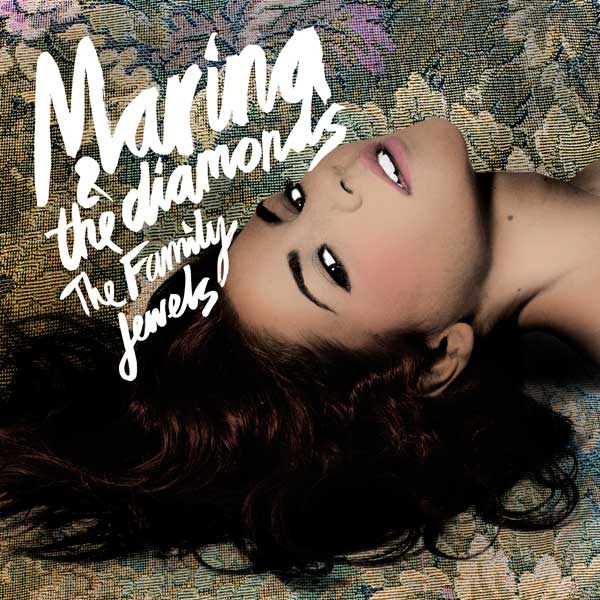
Album Review: Marina and the Diamonds – The Family Jewels


The BBC “Sound of…” poll is an annual attempt by leading UK tastemakers to find the pulse of the upcoming year in music. Chart toppers have included everyone from Adele to 50 Cent, with artists like the Yeah Yeah Yeahs, Vampire Weekend, and Santigold rounding out the top ten lists. However, the list may be a self-fulfilling prophesy, and the individual rankiangs leave a bit to be desired; 2009 clearly belongs to Lady Gaga (#6), while Little Boots (#1) didn’t even release her album stateside.

Even with those caveats, the poll is generally a good tool for discovering artists on the edge of a breakthrough, like Sound of 2010 runner-up Marina and the Diamonds, who is set to release her debut record The Family Jewels on February 22.

Marina and the Diamonds is the stage name of Marina Diamandis, a half-Greek, half-Welsh chanteuse with a deep, rich voice and a unique take on pop songwriting (unlike Florence and the Machine, the Diamonds are not her backing band, but her fans). After bouncing around universities and teaching herself piano, she ended up in London to pursue a musical career. In 2007, she released her self-recorded demos, Mermaid vs. Sailor, and was eventually signed to 679 Records, home to electropop stars Little Boots and Annie.

The Family Jewels is a stunning debut, with thirteen shining examples of piano-driven songwriting. Marina is quirky and theatrical, bringing a mature, cerebral edge to what is basically a pop record (only one song clocks in over the four minute mark). Stylistically, she’s equally adept with singer-songwriter ballads (“Numb”) and new-wave throwbacks (“Shampain”). Her compositions are aided by dense production that begs for live performance without trampling over catchy melodies and hooks.

After releasing brooding, down-tempo songs like “Obsessions” and “I Am Not a Robot” as singles, Marina got the message about what works in 2010 pop music. “Hollywood,” the first proper single off the record, balances both of her sensibilities, building from dark synths and strings to a shimmering chorus that belies the tone of the lyrics: “Hollywood infected your brain / You wanted kissing in the rain / Oh oh, I’ve been living in a movie scene / Puking American dreams / Oh oh, I’m obsessed with the mess that’s America.” The cynicism doesn’t stop there: “you look just like Shakira, no no, you’re Catherine Zeta, actually, my name is Marina,” nails the industry need to classify and pigeonhole.

Marina’s ability to juxtapose musical and lyrical content is also apparent on “Oh No,” a danceable jaunt with lyrics that paint the picture of a reluctant pop star: “Don’t want cash / don’t want card / want it fast want it hard / don’t need money / don’t need fame / I just want to make a change.” Propelled by an insistent kick drum and bassline combo, the song bounces along as Marina tears down what we expect from a 23-year old pop starlet.

Every year brings another crop of female singer-songwriters; the road to Fame is paved with would-be Next Big Things. So what makes Marina and the Diamonds any different? With dance pop dominated by Gaga (and flavor of the week Ke$ha), pop music as a whole is in dire need of a songstress who can pull together the disparate strands of piano-based music to craft something new, like a quilt made of Regina Spektor, Amanda Palmer, and Siouxie Sioux. With Marina and the Diamonds, those Brits may be on to something.

FOUR STARS

Artist Spotlight: Gills and Wings

Richmond pop-rockers Gills and Wings are all about surprises. While their band name suggests an airy, twee-pop sound, it’s a misnomer: their music is dynamically rich and densely orchestrated, a throwback to a time when Queen ruled arena rock. Not content to simply rehash the songs of Freddie Mercury and Brian May, however, Gills and Wings add to their sound with the progressive electronic streak of Muse and the symphonic sensibility of Jon Brion. Playing on Saturday at DC9, they had no trouble painting the small venue with a major key palette of sounds.

The quintet augments standard rock instrumentation with Korgs and a drum machine, allowing the band to play with melody outside the range of your run-of-the-mill indie band. It also allows them to faithfully recreate the arrangements of their self-titled EP. Guitarist Alex McCallum manipulates his ax into making sounds that are more string quartet than Fender Jaguar (thanks to the trusty eBow, an electronic take on what Jimmy Page tried with the real thing). Santiago de la Fuente’s harmonies complement the impressive vocal range of lead singer Danny Reyes, whose powerful singing voice is unrivaled in modern rock music

The setlist covered their EP, along with a few new songs. Contrasts keep the listeners guessing, as sing-song lyrics over arpeggiated chords turn into full-throated cries, backed by chugging riffage and the pounding drumming of Andrew Hackett. As their songs take dramatic turns, the dynamic ebb and flow lends an operatic feel to the whole performance. Closing the set was standout track “Rebirth of a Nation,” a satirical look at the American Dream, with a chorus that calls for fists-in-the-air rocking out.

Modern pop-rock, or anything that could crossover these days, is usually too paint-by-numbers to really excite anyone, but Gills and Wings have the talent to surprise audiences, and shouldn’t be missed. Catch them tonight at Jammin Java in Vienna. You won’t be disappointed.

The Drive-by Truckers and the Southern Rock Opera


Part of TGRI Goes Country Week at TGRIOnline.com.

I’ll admit it. The idea of a country music week on TGRIOnline took the form that many ideas on this site do: entirely out of left field, counter-zeitgeist, yet totally necessary. We’re all music snobs to some degree, and if you answer “what type of music do you listen to?” with “everything… but classical/rap/country,” that’s a deal-breaker. So, with my musical depth of country music knowledge in the shallow end of the pool, I decided to let a band that understands country music to do the heavy lifting.

The Drive-By Truckers released The Southern Rock Opera on September 12, 2001, when Ground Zero was still an open-wound on the American psyche. Ironically, the album’s dramatic arc focuses on a plane crash that happened nearly 25 years earlier: the October 20, 1977 crash of Lynyrd Skynyrd‘s charter in Gillsburg , Mississippi. The album is a meditation on Southern history, culture, mythology and music: a meta concept album very much of the 2000s but heavily rooted in the generations preceding it.

The Truckers are based in Athens, Georgia, but most of its members hail from Muscle Shoals, Alabama, a place where some truly classic soul, R&B, and country rock music was made. The Shoals even show up in “Sweet Home Alabama:” “Muscle Shoals has got The Swampers, and they’ve been known to pick a song or two.” And since band leader Patterson Hood is the son of Swamper bassist David Hood, the Alabama-Skynyrd -Truckers connection is deeper than any concept record gimmick. Call them alt-country, call them southern-rock, but the Drive-by Truckers haven’t just lived the Southern, country music experience – they’re a part of it.

Like many great concept albums, The Southern Rock Opera tells a familiar story: the rise-and-fall of a band called Betamax Guillotine (a stand-in for Skynyrd), formed through Hood’s life experiences. Act I is about a Southern kid growing up in Alabama, trying to reconcile his love of the South and Southern rock with the ghosts of the South. In Act II, the kid grows up and gets to be like the rock stars he idolized, with the same bad decisions and tragic consequences.

The music is a modern take on the Skynyrd tradition: a three-guitar attack that lays down crunchy riffs and soaring solos. Hood’s vocals have the gravelly, whiskey-washed tone of classic country, not the pop-twang of anything on CMT . And when he’s not singing, Hood’s spoken words literally narrate the story. The lyrics hit the traditional cultural touchstones: hard living and hard drinking, joy riding with loose women. But the greater story is an honest look at class and poverty that informs the Southern experience, laid out as the “duality of the Southern Thing:” the pride and shame of a region (and country) still feeling the repercussions of centuries of racism. “The Southern Thing” is Southern Rock Opera’s “Another Brick in the Wall,” paying tribute to rock operas past, and can be summed up in one lyric: “To the fucking rich man all poor people look the same.”

If Lynyrd Skynyrd / Betamax Guillotine are the heroes of the opera, the villain is George Wallace, Alabama’s governor for life who will forever be known for his work for the segregationist cause. Wallace’s eponymous song is a bluesy number, narrated by the Devil (a fellow Southerner, according to Hood), who welcomes him to Hell, not for his political record, but for his blind ambition and for being a pawn for most of his life. Hood knows that racism will forever be associated with the South because of men like Wallace; for this, he cannot be forgiven.

The album is filled with musical and lyrical references to the greats of the arena rock era, before it got silly and bloated and turned into cock rock and hair metal. “Ronnie and Neil” explores the controversy between Ronnie Van Zant and Neil Young (another look into the duality of the South). And while the narrator never saw Lynyrd Skynyrd , he saw .38 Special, AC/DC, Molly Hatchet, Ozzie Osbourne (with Randi Rhodes), and dropped acid at a Blue Oyster Cult show. A life both saved and doomed by rock and roll.

The final three songs of Act II, “Shut Up and Get On the Plane,” “Greenville to Baton Rouge,” and “Angels and Fuselage” find Betamax Guillotine following the path of their idols to the logical conclusion. When life is “dirty needles and cheap cocaine / some gal’s old man with a gun,” death is a cold bitch right around the corner, and there’s no use fighting it. So as the engines start failing, our narrator can only think of “smoking by the gym door, practicing my rock-star attitude,” and how for a Southern man, your dreams can only take you so far.

For Your Consideration: Big Fan


The word “fan” is short for “fanatic,” a casual abbreviation that doesn’t imply the extreme, uncritical zeal of a fanatic. Most people are fans of a musician, TV show, or sports team, but a rare few would cop to being fanatics.

Big Fan, the directorial debut of The Wrestler scribe Robert Siegel, is a character study of a fanatic. The titular character is Paul Aufiero (Patton Oswald), a NY Giants devotee who works as a parking garage attendant and lives in Staten Island with his mother. Siegel (who also wrote the film) painstakingly illustrates the sad life Paul has crafted for himself, from the shrine to his favorite player to the moisturizer on the nightstand. The minutiae and the cinema vérité style give us a well-formed character in a very specific place. The same can be said of Paul’s friend (singular, Kevin Corrigan perfectly cast as Sal) and family, from his bus bench defense lawyer brother to his orange-tanned, fake-titted sister-in-law. Siegel’s grip on Staten Island is as tight as it was on Elizabeth, NJ in The Wrestler, with a wintery, jaundiced palette.

Paul’s life revolves around the Giants. Paul and Sal are too broke for tickets, so they tailgate and experience the game from the parking lot. The highlight of his day is calling sports talk radio and spitting out his rehearsed diatribes, even if his mother interrupts his late night calls, without fail.

A chance encounter with Quantrell Bishop, Giants linebacker and Paul’s idol, should be the highlight of his pathetic life. Following Bishop’s crew from Staten (“Maybe he’s here to see the Wu-Tang,” Paul ponders unironically) to a NYC strip club, Paul and Sal embark on a homoerotic Hardy Boys adventure. They try to get Bishop’s attention, and when buying him a drink doesn’t do the trick, Paul improvises. However, when the ruse of this chance encounter is revealed, Bishop flies off the handle and viciously beats Paul.

The beatdown doesn’t affect his fanaticism. On waking from a three day coma, Paul’s first questions are Giants related. Much to his dismay, Bishop has been suspended indefinitely. Without their playmaker, the foundering G-men can’t keep it together – and neither can Paul. A case study in battered woman syndrome, Paul still wears his attacker’s jersey, and even blames himself for the assault. He lies to the cops to protect Bishop, and refuses to sue, which is the first instinct of his scumbag brother, who instigates a lawsuit anyway. Things are spiraling out of control. The after-effects of the hematoma are not pretty; Siegel utilizes a disorienting, feedback-heavy soundtrack to great effect here.

Whats left of Paul’s life is ruined when his on-air nemesis, “Philadelphia Phil,” outs “Paul from Staten” as the victim of the attack. Paul finally takes things into his own hands, going undercover in an Eagles bar, armed and ready to confront Philadelphia Phil (Michael Rapaport in another bit of choice casting: as a loud-mouthed d-bag). What does Paul have left to lose, as the clocks ticks and the “Giants suck” chants crescendo? Suffice to say, the film takes a bit of a film-school turn during the finale, but stays true to its characters.

Big Fan isn’t Misery or The Fan; Paul isn’t a psychopath, he’s a man-child, very happy with a life others find unfulfilling. Maybe watching the film in a post-Jersey Shore world tainted the experience. I’ve definitely had my fill of douchebags from NY/NJ. But still, it probably says more about the quality of the “real” people of Jersey Shore than the caricatures that Siegel has crafted. As a character study, it presents a modern, less exploitative look into fanaticism. As a film, however, it displays some of the paint-by-numbers filmmaking expected from a first time director – the only thing that kept me from enjoying it more.

Three and a half out of five footballs.

For Your Consideration: Up in the Air


In returning to my roots and blogging about film, I’ve decided to start a “For Your Consideration” series about the best films (based on the consensus of critics, audiences, and clever marketers) of 2009, in advance of the Oscars. I really slacked on seeing films in the theater in ’09, so I’m making do with the help of the Internet. Forget winter, it is (bootleg) screener season! Without further ado…

Up in the Air

Up in the Air is the first true film of the 2009 recession, a happy accident thanks to writer-director Jason Reitman‘s early successes. Rather than making this film in 2002 as originally intended, the director’s work on Thank You For Smoking (2005) and Juno (2007) pushed this film to the backburner, causing the recession to dominate the tone of the film in a way that the economy wouldn’t have during better times. With double digit unemployment, only the ever-charming George Clooney could make corporate downsizer / motivational speaker Ryan Bingham a sympathetic character.

Ryan is a creature of habit, constantly flying around the country and doing the work that managers and executives are too afraid to do. The precision of his routine is captured by Reitman’s smooth cuts and repetitive sequences as Ryan packs, moves through security, and jets to the next destination. Even his predictably Spartan apartment is basically a hotel room. His obsession with brand loyalty and the elite perks of corporate dedication is an easy target for satire, as Ryan and fellow frequent-flyer Alex Goran (Vera Farmiga) trade cards in a scene that recalls the business card exchange in American Psycho. Alex is a perfect foil, as she tells Ryan to think of her as himself “with a vagina.” Farmiga is as cool and cocky as Clooney, and their no-strings-attached relationship gives new meaning to the term lay-over.

Ryan’s world is thrown into chaos as his firm decides to go digital, bringing in Natalie Keener (Anna Kendrick, of the Twilight series) to make their business “glocal,” corporate-speak combining global and local. They take the show on the road, as Ryan teaches Natalie how to lay-off someone face-to-face before the new system goes live. The majority of the film follows a familiar pattern, as old and young learn from each other; Ryan’s romantic notions of his job versus the cold calculations of this twentysomething with a Myspace page. When Natalie’s boyfriend breaks up with her via text, the irony isn’t lost on Ryan. But Natalie also lands her punches, eviscerating his “cocoon of self-banishment” and total dedication to not connecting to possessions, people, or places.

Except for notable sequences with Zach Galifianakis and J.K. Simmons (among others crucial to the plot), the appearances of the newly-unemployed are of real people who had been laid off. The veracity is heart-breaking, with reactions that run the emotional gamut. When Natalie tests her system (with the target in the adjacent room), the real reaction is hers, not the grown man crying next door. Will she be able to cut it in this world, or is Ryan’s cocoon a necessary evil?

As Ryan heads home to attend his sister’s wedding, he brings along Alex, as the life lessons and questions about the future start to pile up. The wedding sequence moves from objective to subjective and feels more like a home video than a corporate instructional one, a tonal shift reflected in Ryan’s character. The last act of the film finds Ryan finally making decisions, with a turning point at a seminar called GoalQuest (the name is too cute by half). Unfortunately, the twists are a little too by-the-numbers for me, which lessens the emotional punch as the film ends.

George Clooney is the only actor of our time who comes close to mirroring the range and talent of Cary Grant: confident and cool, but multi-dimensional. His casting, along with Vera Farmiga as Alex and Jason Bateman as middle-manager Craig Gregory (is he getting type-cast, or what?), works well, although I couldn’t help but see someone like Kristen Bell in the Natalie role. Reitman continues to develop his directorial style, although the script’s satire isn’t as sharp as that of Thank You For Smoking. Still, this is a very entertaining film with cleverly crafted characters and, with the context of the recession, real resonance.

Four out of five frequent flyer miles.

Freddie Gibbs and the Return of Gangsta


Part of the Alpha Male Music Week at True Genius Requires Insanity.

You could probably write a thesis on the alpha male in hip-hop (if be_gully hasn’t already written said thesis, there should at least be an abstract on the subject here soon). Some combination of money, women, drugs, and guns are lyrical mainstays of rap for a reason. Reveling in such pure id is escapism of the highest degree. When it comes to lyrics that are exciting and engaging, transgression is better than introspection.

Which brings us to the class of 2009. The much-debated freshman class of hip-hop as editorialized by XXL (alphabetically: Ace Hood, Asher Roth, B.o.B., Blu, Charles Hamilton, Cory Gunz, Curren$y, Kid Cudi, Mickey Factz, and Wale), for the most part, are big into beta. So, for fans of hip-hop that demonstrates both street authenticity (Gucci Mane) and rapping talent (not Gucci Mane), who is out there fighting the good fight?

Enter: Freddie Gibbs. Born and raised in Gary, Indiana, the 27-year-old is out to prove that gangsta isn’t dead. After being dropped by Interscope Records, Gibbs produced and released two mixtapes within months of each other this year: The Miseducation of Freddie Gibbs and midwestgangstaboxframecadillacmuzik (a third, The Label’s Trying to Kill Me, is a compilation tape that cuts-and-pastes from both). Right off the bat, the title references touch on a desire to be a part of the pantheon of rap classics rather than on the level a mere mortal.

Gary, Indiana is fucking hard. The crack age coupled with the decline of American industry have left Gary harder hit than either East St. Louis or Baltimore. There is no silver lining. And this is the crucible in which Gibbs has been forged: “Sixty percent unemployment / Why you think we sellin’ dope?” The facts of his environment are inescapable, physically for many and mentally for all. Gibbs’ lyrics are unapologetically about this life, not to glorify or to educate, they just exist, familiar stories that are so outrageous they seem fictional. The themes are classic alpha male rap: dealing drugs and smoking weed (“Boxframe Cadillac”), scamming chicks (“Bussdown”) and killing dudes (“Murda on My Mind”).

Stylistically, Gibbs’ hardened voice and smooth flow take many forms: at times, it’s the Southern syrup of UGK, at others the rat-a-tat of Midwesterners like Bone Thugs-n-Harmony. The beats range from pure g-funk (“Talkin’ Bout You”) to trap-hop (“Summa Dis”), paying reverence to a by-gone era with tasteful samples (Biggie’s “Beef” shows up on “Standing Still”). Contrast this with the constant, braying namedropping of the Game: which is a better (and more alpha) tribute to the golden age of gangsta?

For a song that encapsulates Freddie Gibbs the artist, take this alpha male manifesto from the chorus of “Womb to the Tomb:” “From the cradle to the grave / the womb to the tomb / Imma get it win or lose / I’m just out here making moves / from the womb to the tomb / the cradle to the grave / till I jack up out this bitch / I’m out this bitch / get paid.” Sure beats “Man, I love college.”

Dispatches from Suburbia: Rusko in Miami


As the cliché goes, all good things must come to an end: my nearly two week vacation in South Florida is over. I’ve gone from 70 degrees at the beach to 40 degrees in DC, from a nascent scene to a more developed one. And while the DJ nights, singer-songwriters, and local bands were pleasantly surprising, I’m happy to be home.

But before I left, I trekked down to Miami once more, this time for Rusko: DJ and dubstep producer extraordinaire, and one of the winners of 2009 (a more complete list of things that didn’t suck in 2009 is coming tomorrow – procrastination for life!). The 24-year-old is one of the driving forces in a style that we at TGRI Online think will be huge next year, and while I have seen Rusko rock a room before, I couldn’t miss a stateside gig in my backyard.

Ever since 2 Live Crew decided to be as nasty as they wanted to be, Miami and bass have been forever intertwined, influencing local scenes and styles from Atlanta to Baltimore. So I was interested to see how bassheads in the 305 would react to the distinct wobble crunk that the Leeds-born, LA-based Rusko generates.

Just down the street from the Vagabond in Miami’s Design District is White Room. The venue is basically a warehouse adjoined to a large open-air space that holds canopy lounges that wouldn’t get much use anywhere else this time of year. After a few local dubstep producers and MCs warmed up the crowd, the mullethawked feature DJ took the stage.

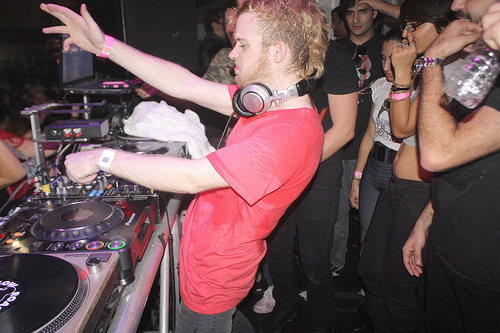
Rusko is one of the most active DJs I’ve ever seen. At all times, he’s either jumping up and down or air conducting, convulsing as if his movements control the treble, mids and overwhelming bass pouring out of the speakers. The crowd eats it up, doing their best to dance along to a style that is admittedly not the most dance-centric electronic music. The few kids trying to light show with glow sticks were dismissed out of hand: “Why don’t you wait for fucking Ultra for your twirly little shit?!” However, the pseudo-ravers were hardly the worst audience members: a few couples decided to demonstrate crowdfucking – or something close to it – and it wasn’t pleasant.

Still, we were able to enjoy the dubstep clinic that Rusko put on, much like he did at Hard NYC. From contemporaries Zomby and Doorly, to remixes of Gucci and Kid Sister, the set included everything that demonstrates dubstep’s promise right now. The best part is initially recognizing a song, before it devolves into the glitched out sounds of the apocalypse that have come to define dubstep. And it was good to see it work where bass was born.

Dispatches from Suburbia: Miami’s Design District


While my first night back in South Florida took me to West Palm Beach, my second found me in the opposite direction, deep in Miami’s Design District. The neighborhood is across Biscayne Bay from South Beach, and gentrification has spawned over a hundred galleries, showrooms, boutiques, and eateries in a formerly run-down section of downtown Miami.

The first stop of the night was the Wynwood Social Club, a mixed-use arts venue, for acoustic duo Raffa and Rainer’s album release party. The Wynwood has an open, community room vibe, with local art on the walls and found furniture throughout; I enjoyed the show from a PanAm airplane seat. Opening the show was (not that) Danielle Steele, a singer-songwriter not even out of high school, with a quirky sound that evokes Regina Spektor. Next up was scene veteran (not that) Jesse Jackson, who played a combination of banjo, ukulele, and harmonica in a short set that found him covering both Elton John and James Taylor; standout number “If Wishes Were Horses” was as haunting and bluesy as ever.

Confession time: trying to experience the Miami scene like eating from sample plates at Whole Foods was a mistake; I left the Wynwood way before I had my fill. Still, it was worth it to see a bit of Miami’s burgeoning folk scene. For the brevity, I’ll blame the night’s second destination: the Vagabond, to see Surfer Blood. I’m all about nightlife on a budget, so when I saw “free before 11” and “$1 PBR and Rolling Rock,” I made the fateful decision to leave early and hustle down North Miami Avenue. When neither of these promises was true, I was already inside the venue and pissed off. I hate being nickel and dimed and I hate false advertising, so the Vagabond gets poor marks for both.

ANYWAY, once inside the club and easing my spirits with America’s Best 1893, I was able to objectively judge my surroundings. Unlike Respectable Street, Vagabond is all about the décor and hipster chic; if you want a more upscale clientele, you invest in the look and feel of your club. The bar’s DJ was spinning the usual fare, and the only difference between the crowd and one at say Nouveau Riche was the smoking (something I could have sworn was banned in civilized society, but I digress).

A bit after midnight the crowd migrated to the back room, which was another dance floor with a small stage set up. Tallahassee’s Holiday Shores opened the show and play lo-fi, surf pop. Heavy on the Brian Wilson influence, the band could stand to tighten up their ambitious arrangements. Still, the music was light and danceable, and not unpleasant. What was unpleasant was the blaring electro/techno between sets – wasn’t this a rock show? Luckily, Surfer Blood quickly took the stage, and the Palm Beach quintet showed the crowd how it’s done.

Together for less than a year and riding a wave of buzz from their performances at CMJ, the band plays a catchy mix of indie pop and garage rock. The songwriting reminds me of Blue album Weezer and early Shins, without the pretension of Vampire Weekend, or the host of other blog bands that have gone to this well before. The vocals are drenched in reverb, the guitars unleash waves of fuzz, and the percussion even touches on the Afro-pop flavor that is so en vogue right now. Their debut album, Astro Coast, was recorded in a University of Florida dorm room, and drops in January. They’ll be doing a few dates in the US before heading to the UK, and by the time they return, Astro Coast will be the sound of 2010. Mark your calendar for February 24, when Surfer Blood, Holiday Shores, and Turbo Fruits descend on DC9, bringing a little bit of Florida sunshine to the DMV.

Next Dispatch from Suburbia: Rusko at White Room.

Photo of Surfer Blood at the Vagabond by Ian Witlin, Miami New Times.

Dispatches from Suburbia: Flaunt @ Respectable Street


While I grew up in South Florida and went to college in Miami, I never really immersed myself into the nightlife. As you can guess by my output here, I grew up on rock shows. So, with a Christmas break of nearly two weeks, I decided to be an investigative reporter and search for The Scene, an ever-elusive alternative/indie/underground culture, in South Florida. Something, anything, that proves my old stomping ground is more than retirees and South Beach superclubs.

Like any good reporter, I did my research, scouring the Internets for venues, performers, and promoters, without much luck. There lacks any cohesive resource for finding out what’s going on in South Florida, the nearly 75 mile stretch of communities off of I-95. Love it or hate it, at least BrightestYoungThings exists. The closest thing I found was The Honeycomb, which, while helpful, is far from comprehensive.

My search took me to Respectable Street Cafe, the “oldest alt music club in the SE USA,” for the Thursday night weekly Flaunt, which bills itself as an Indie / Hip Hop / Electro / Dance party. Nothing says “hipster bait” like $1 PBRs, so I was off to Clematis Street.

While DC was preparing for Snowpocalypse 2009, South Florida was being assaulted by torrential downpour. Ever go to The Living Seas at Epcot? The weather reminded me of how oceans were born: “the deluge.” So I’ll forgive Clematis for not exactly being at its finest on Thursday.

Respectable Street is a mid-sized venue, complete with a stage, dance floor, patio, and rows of couch/booth hybrids. The crowd was a disparate mix of tattooed punks, hipsters, and dress-to-impress kids who got lost on their way to Miami. Unity in the scene or a lack of options on a Thursday? You decide!

Musically, I was expecting something along the lines of DC9’s Liberation Dance Party: a mix of Pitchfork-approved dance tracks. I wasn’t disappointed; the DJ collective of Marvelous Kendall, The Commissioner, JJ Contramus, Glowtape, and Ozwaldus started the night with some indie-dancers like Girls’ “Lust for Life” and the Jokers of the Scene remix of “Little Secrets” by Passion Pit. As the night progressed, the music traversed down the La Roux-Calvin Harris axis, and the dance floor was packed and moving. A bit of hard techno was out of place and unwelcome to most (“What is this, the Jersey Shore?”), but after the brief Guido-foray, things were back to normal. Headlining DJ Jason Tyler brought a trumpet into the mix, a welcome but unusual addition to a DJ set. And when West Palm got down at Major Lazer O’clock, I felt at home.

I would definitely check out Flaunt again: cheap drinks, interesting crowd, above-average playlist, and a 3am close. Well done, West Palm. Well done.

Next Dispatch from Suburbia: Miami’s Design District